Blogs

Upaniṣads: The Foundation of Vedas

The Upaniṣads are the root or foundation (mauli) of all Vedas (śruti), the sacred scriptures of Hinduism. Each Veda is divided into four parts: saṁhitā, brāhmaṇa, āraṇyaka, and upaniṣad, which are meant for different stages of life: brahmacārīs (students), gṛhasthas (householders), vānaprastha (retirees), and sannyāsīs (renunciants). The Vedas comprise rituals (yajñas), hymns (stutis), and praises (stotras).

The Science of Vedas

The Upaniṣads describe the science of yajñas, stutis, and stotras–why yajñas must be performed and how one can be purified by chanting stutis and stotras. For example, the first stuti of Ṛg Veda is dedicated to Agni, the fire god. The Upaniṣads raise the question of how by chanting Agni stuti, one’s heart will be purified. Because the Upaniṣads speak about the science of the other three portions of Vedas, they are considered the basis or foundation of Vedas.

The Gītopaniṣad

The Bhagavad Gītā, also known as the Gītopaniṣad, is a part of the epic Mahābhārata. It is divided into three parts consisting of six chapters each. The first six chapters deal with karma yoga, the path of action; the second six chapters deal with bhakti yoga, the path of devotion; and the third six chapters deal with jñāna yoga, the path of knowledge. The saṁhitā and brāhmaṇa portions of Vedas deal with karma yoga, which consists of yajña, dāna (charity), and tapa (austerity). The āraṇyaka portion of Vedas (also known as the upāsana khaṇḍa) deals with bhakti yoga, which involves meditation and worship. The Upaniṣads (also known as the jñāna-khaṇḍa) deal with jñāna yoga, which reveals the ultimate truth. The teaching pattern of the Gītā is precisely according to the Vedas. The last six chapters of the Gītā describe why the first twelve chapters were spoken and how karma and bhakti yoga work.

The Confidential Knowledge

The Bhagavān, the Supreme Lord, gave confidential knowledge to Arjuna, his friend and disciple, because He knows that we get the desired result quickly if we act with proper understanding. We want the result of bhakti quickly. The desire to get mukti (liberation) quickly is technically called mumukṣu, which is a concept in Śrī Sampradāya philosophy. Such a person wants to understand how bhakti principles work to follow them appropriately and achieve perfection quickly.

The Number and Essence of Upaniṣads

We don’t know how many Upaniṣads were there originally as we have lost most of them. Two hundred and thirty-two Upaniṣads are available, and one hundred and eight Upaniṣads are the main ones listed in Muktikā Upaniṣad, which describes the way to attain liberation. The Upaniṣads together worship the holy name of Bhagavān. They worship a ray of light that emanates from the tip of the toenail of the lotus feet of the Bhagavān’s name. All the Upaniṣads loudly proclaim that the essence of life is to take Bhagavān’s name and there is nothing equal to Bhagavān’s name. The essence of Upaniṣads is Bhagavān’s name and worshiping the lotus feet of the holy name, indicating that Bhagavān has a form (Śyāma Sundar).

The Universal Message of the Holy Name

The Bible also states, hallowed be thy name: let Bhagavān’s name be worshiped. In the Old Testament, which the Jews follow, it is stated that one should take Bhagavān’s name. But the Jews thought Bhagavān’s name was so tremendous and respectable that they were unqualified to chant. Consequently, they did not take Bhagavān’s name in the past, and today, they forgot that they were supposed to take Bhagavān’s name.

The holy name is the universal message for all people of all times and places. One should glorify the holy name and take shelter of the holy name. One should practice chanting all the time. Then one will achieve all perfection. Gradually, Bhagavān’s name will guide us on the path of bhakti.

New Year Resolution!

Saṅkalp ‘samyak kalpa itisaṅkalp’is a Sanskrit word that means a vow or a resolution. It is a strong and sincere desire to achieve something, even at the cost of one’s life. Saṅkalp is mentioned in the Bhagavad Gītā and the Garuḍa Purāṇa as a powerful tool for spiritual advancement.

Saṅkalp and the New Year

According to the Vedic calendar, the New Year begins on Makara Saṅkrānti, the day when the sun enters the sign of Capricorn. In Punjab, this day is celebrated as Baisākhī, the harvest festival. For Gauḍiya Vaiṣṇavas, the New Year starts on Gaura Pūrṇimā, the appearance day of the Lord. Some people believe that every day is a New Year’s Day, as it is a new opportunity to serve the Supreme Lord. In the Lord’s abode, every day is a festival of love and joy.

On the occasion of the New Year, many people take saṅkalp to improve their material situation, such as earning more money or advancing their career. However, these saṅkalp are temporary and bound to end with the end of the body, the relationships, and the desires. Therefore, one should not give up the saṅkalp to attain the ultimate goal of life, which is to love and serve the Lord.

Saṅkalp to Do Bhakti

Bhakti means devotional service to the Lord, which is the natural function of the soul. After wandering through millions of lifetimes in the cycle of birth and death, we have finally got the rare opportunity to meet the Lord in the form of His holy name, His scriptures, His devotees, and His deities. We cannot afford to waste this chance by being lazy or distracted. We need to have a strong saṅkalp to do bhakti with full enthusiasm and determination.

Our New Year resolution should be to make the Lord our friend and relieve His distress by bringing the suffering souls to Him through preaching. A real friend is also interested in spreading the Lord’s glories and pleasing Him. Preaching can be done in various ways, such as one-to-one or one-to-many, by speaking, writing, singing, or acting.

The Lord is also unhappy with us as we are not doing bhakti properly. We are contaminated by the modes of material nature and influenced by the illusory energy. To purify ourselves, we need to make friends with the Lord and follow His instructions. The Lord will be happy if we cleanse our hearts and go back to Him. He is waiting for us with open arms and tears in His eyes. He says, “I have been waiting for you for a very long time.

Saṅkalp to Serve the Lord Every Moment

Service to the Lord can be done both externally and internally. External service includes offering āratī, preaching, cooking, making garlands, and other activities that please the senses of the Lord. Internal service involves remembering the Lord in the mind and offering Him our thoughts,words, and feelings. The Lord is within our hearts and He knows everything. He accepts the mood or the bhāva behind our offerings, whether they are done externally or internally.

We should have a saṅkalp to serve the Lord twenty-four hours a day, especially internally. Service in the mind is dearer to the Lord, as it shows our attachment and intimacy with Him. Therefore, a devotee does service twenty-four hours inside and to the extent possible outside. Unlike serving outside, there are no limits to serving the Lord inside.

Serving the Lord also includes serving His devotees, who are very dear to Him. The Lord will not accept our service if we neglect or offend His devotees.

Saṅkalp to Surrender to the Lord with Love, Life after Life

The perfection of life is to attain prem, or pure love for the Lord. Prem is the highest and most blissful state of consciousness, in which the soul is fully satisfied and absorbed in the Lord. To attain prem, we need to remember the Lord constantly, without any interruption or deviation. This requires some training and practice, which can be done by chanting the holy names of the Lord and hearing and glorifying His pastimes.

Saṅkalp to never Forget the Lord

Another saṅkalp is to pray to the Lord that we should never forget Him and His service. There are innumerable things in this world that make us forget the Lord and His service. Some of them separate us from the Lord physically and mentally. Forgetting the Lord, even for a moment, is a great loss. We should always remember the Lord and His mercy, and seek His shelter in every situation. He is the only source of our happiness and peace. He is our eternal father, mother, friend, and lover. He is our everything.

Saṅkalp to Associate with Pure Devotees

Another saṅkalp that we should have is to desire the association of pure devotees. Pure devotees are those who have dedicated their lives to the service and love of the Lord. They are the best teachers and guides for us, as they can help us understand the essence of bhakti and inspire us to follow their footsteps.

We should remember that our ultimate goal is to go back to the Lord in this life itself. If we change ourselves, the Lord will give us the strength to change others. The Lord Himself will change them if we become His instruments.

Our saṅkalp should be, “May my mind and activities be always engaged in Your service.” The highest service is to purify ourselves by chanting the holy names of the Lord, following His instructions, and surrendering to His will. This should be our New Year’s resolution. One pure devotee can deliver the entire world by spreading the message of the Lord.

We can also help others to attain the same goal. Let us make this New Year a year of saṅkalp and devotion

How to be free from animalistic mentality?

The meaning and types of praise

Stutaḥ means praise, and saṁstutaḥ means praising in different ways. There are different ways of praising in this world, such as saying nice things, enjoying entertainment, or liking and pleasing others. By doing so, we glorify the material world and its objects.

The comparison of humans to animals

People who praise others instead of Bhagavān develop an animalistic mentality. They are compared to four kinds of animals: dogs, pigs, camels, and donkeys.

Dogs: These are people who get educated, look for jobs, and flatter others, just like dogs who go from door to door for food and wag their tails. They wear ties and obey their employers.

Pigs: These are people who eat anything without discrimination, even stool.

Camels: These are people who earn money by sinful means, suffer to maintain their families, and enjoy doing so. They don’t realize that they are harming themselves, just like cam camels who eat thorny plants and drink their own blood, thinking it is tasty.

Donkeys: These are people who carry heavy burdens of money. They accumulate wealth, but don’t enjoy it. They only enjoy seeing it grow in various ways.

The consequences of animalistic mentality

The animalistic mentality described here corresponds to the different stages of human life. The dog mentality is seen in students who think only about education and careers, and try to please their bosses. When they grow older, they become like pigs who do anything to please their bosses and advance their careers. After marriage, they become like camels who work hard to support their families, even by sinful means. When they become old, they become like donkeys who worry about protecting their money and fear that their children will waste it. They die in anxiety.

Those who don’t practice Bhagavān’s bhakti lead an animal life. They start as dogs, then become pigs, camels, and donkeys, and then die in misery.

How to Transcend Animalistic Mentality?

We should learn from the problems of these animals and correct our mentality to avoid taking such bodies in the next life. We should praise Bhagavān, who protects and guides us through guru, sādhu, and śāstra. We should always hear about the glories of Kṛṣṇa. As we develop a liking for Him, we will remember and glorify Him more easily. As a result, we will forget this material world.

Chanting the holy name is a way of praising Bhagavān. Liking, pleasing, and enjoying serving Kṛṣṇa are also forms of His glorification. Glorification is not just offering prayers to Bhagavān. It is making our life a glorification of Bhagavān.

The Benefits of Studying Bhagavad Gita

The Bhagavad Gita is a sacred scripture that contains the teachings of Lord Krishna to Arjuna on the battlefield of Kurukshetra. It is considered one of the most important texts , as it reveals the essence of Vedanta, the philosophy of self-realization. By studying the Bhagavad Gita, one can gain many benefits, both spiritual and material. In this article , I will discuss ten of these benefits, based on the verses from the Bhagavad Gita itself.

1. Spiritual Benefits

The Bhagavad Gita says that whatever benefits one may get by studying the Vedas, performing sacrifices, practicing austerity, and giving charity, one can surpass them all by simply studying the Bhagavad Gita (BG 8.28). This is because the Bhagavad Gita reveals the supreme goal of life, which is to attain the love of God.

2. Universal Accessibility

The Bhagavad Gita is not meant for a particular class or caste of people, but for everyone who is interested in the truth. The Bhagavad Gita declares that even the most sinful, low-born, or unqualified person can attain the highest perfection by taking shelter of Krishna. (BG 9.32). Therefore, anyone, regardless of their gender, occupation, or background, can read the Bhagavad Gita and benefit from its teachings. The Bhagavad Gita is also easy to understand, as it is written in the form of a dialogue between Krishna and Arjuna, and covers various topics such as karma, dharma, yoga, reincarnation, liberation, and devotion.

3. Connection and Protection

The Bhagavad Gita teaches us how to connect with Krishna, the source of all happiness, through the process of bhakti-yoga, or loving service. By reading the Bhagavad Gita, we can learn how to offer our actions, words, and thoughts to Krishna, and thus become free from the bondage of material existence. When we are in touch with Krishna, He protects us from falling down or breaking our connection with Him. He helps us to maintain our devotion and gives us the highest love, which we do not have (BG 9.22). In other words, Krishna guides and nurtures us as a friend, a father, a mother, and a lover.

4. Perseverance and Inspiration

The Bhagavad Gita assures us that Krishna’s devotees will never perish, even if they commit some mistakes or face some difficulties in their spiritual path. This means that nothing can destroy Krishna’s devotee, as He is always with him or her. However, a devotee may go through ups and downs in his or her devotion, but maya, the illusory energy, cannot take the devotee away from Krishna. Krishna protects His devotees from falling down permanently from the platform of bhakti. He gives them inspiration from within and guidance and warnings through His representatives, the guru and the Vaishnavas, so that they do not give up bhakti completely (BG 9.31). Krishna also protects their bhakti from being destroyed by the problems they face in their life and preserves their faith in Him, His names, and His devotees. Otherwise, one may doubt Krishna, the guru, and the Vaishnavas, and leave bhakti.

5. Fearlessness and Wisdom

The Bhagavad Gita enables us to become free from fear and lamentation, which are the causes of misery in this world. Krishna says that a devotee will not lament for the past or worry about the future, but will live in the present with full awareness of his or her eternal identity as a soul, part and parcel of Krishna. The devotee will become free from fear of death, disease, old age, and suffering, as he or she knows that these are temporary and do not affect the soul, which is immortal and blissful. By studying the Bhagavad Gita under the guidance of a guru and the Vaishnavas, one can act in the present without fear and lamentation, by learning from the past and planning for the future. One becomes wise and gentle by reading the Bhagavad Gita (BG 18.54).

6. Becoming a dhīra

By reading the Bhagavad Gita one becomesa dhīra, a person who is self-controlled and detached from the material world. A dhīra conquers kāma (lust) and krodha (anger) by controlling his senses and desires. He understands that his body and mind are constantly changing, but he is not, i.e., he is not attached to the body and mind. Because he does not identify himself with the body, he transcends the bodily platform. (BG 2.13).

6. Becoming a sthita-prajña

By reading the Bhagavad Gita one becomesa sthita-prajña, a person who is steady in wisdom and equanimity. A sthita-prajña remains undisturbed in any condition by reading the Bhagavad Gita. Prajña means consciousness and sthita means stable. There is a difference between a dhīra and a sthita-prajña. A dhīra is detached from the body and mind and is free of kāma-vāsana (desire for enjoyment). A sthita-prajña is undisturbed and unaffected by any situation in this world. He is not troubled by any problem in his life. He is almost dead from the world’s perspective. (BG 2.54).

7. Becoming a Pandita

By reading the Bhagavad Gita or following its injunctions, one becomes a paṇdita. A paṇdita has all good qualities, including vinaya (humility), the queen of all good qualities, vidyā (knowledge), or the wisdom of life. He also sees every living entity with an equal vision as part and parcel of Bhagavān (God). He does not discriminate between a good and a bad person and a sinful and pious person. A paṇdita sees that everyone is part and parcel of Bhagavān and tries to bring everyone back to Bhagavān. (BG 5.18).

9. Freedom from Birth and Death

By reading the Bhagavad Gita, one can be freed from the cycle of birth and death forever, if one desires so .Even if one does not desire so, reading the Bhagavad Gita will develop the desire. The Bhagavad Gita teaches that the soul is eternal and indestructible, and that it transmigrates from one body to another according to its karma (actions). However, by surrendering to Bhagavān and following His instructions, one can break the cycle of birth and death and attain His abode, which is beyond the material world. (BG 4.9 and BG 8.16).

10. Becoming Dear to Krishna

The ultimate benefit of reading the Bhagavad Gita is to become dear to Krishna, the supreme object of love. If we become dear to Krishna, it does not matter whether or not we get the other benefits. We practice bhakti for this purpose. This is the main benefit. It is not important whether Krishna is dear to us, but what is more important is if we are dear to Krishna. Therefore, Krishna did not say that He becomes dear to the one who reads the Bhagavad Gita. He said that the one who reads the Bhagavad Gita becomes dear to Him. (BG 12.20).

Conclusion

The Bhagavad Gita is a treasure of wisdom and spirituality that can enrich our lives in many ways. By studying it, we can learn how to control our senses and emotions, how to remain calm and composed in any situation, how to acquire knowledge and humility, howto liberate ourselves from the cycle of birth and death, and how to develop love and devotion for Kṛṣṇa, the supreme goal of life. The Bhagavad Gita is not just a book, but a living guide that can transform our consciousness and lead us to the highest perfection.

The Advent of Bhagavad Gita

What is so special in Bhagavad Gita?

Bhagavad Gita is a sacred scripture that has inspired and influenced many people throughout history. It is a dialogue between Lord Krishna and Arjuna, prince who faces a moral dilemma before the great war of Kurukshetra. In this dialogue, Krishna reveals the essence of all spiritual knowledge and guides Arjuna to perform his duty with detachment and devotion.

Why is Bhagavad Gita taught before Vedas and Upanishads?

Bhagavad Gita is considered to be the essence of all the Vedas and Upanishads, the ancient scriptures that contain the highest wisdom of the Indian civilization. According to Shankaracharya, a renowned philosopher and commentator, Bhagavad Gita is like the milk that is extracted from the cow of the Upanishads by the cowherd boy Krishna, and given to the calf Arjuna, who is the intelligent drinker of that milk.

Bhagavad Gita contains many verses that are directly taken from the Upanishads, and also explains them in a simpler and more practical way. It also introduces some new concepts that are not explicitly found in the Upanishads, such as the concept of avatar, the concept of maya, and the concept of grace and mercy.These concepts are essential for understanding the nature of God, the world, and the self, and for attaining the ultimate goal of life.

What are the names and features of Bhagavad Gita?

Bhagavad Gita has many names that reflect its glory and significance. Some of these names are:

Gita Upanishad: The Upanishad of the Song of God.

Ganga: The river of divine knowledge that purifies the mind.

Samsai Nashini: The destroyer of all doubts and illusions.

Bhagavad Gita: The Song of the Supreme Lord.

Bhagavad Gita is a book that has many features that make it unique and attractive. Some of these features are:

It is concise and comprehensive: It has only 700 verses and 18 chapters, but it covers all the topics of spirituality, such as Karma yoga, Gyana yoga, Bhakti yoga, dharma, etc. It gives an overview of each topic and also refers to other scriptures for more details.

It is simple and profound: It uses easy Sanskrit language that can be understood by anyone, but it also conveys deep and sublime truths that can satisfy the most advanced seekers. According to Madhvachraya every verse of Bhagavad Gita has at least 1000 levels of interpretation and meaning, and at least 8 levels of meaning are known in human society.

It is relevant and universal: It is not a book that is applicable only to a particular time, place, or circumstance, but it is a book that deals with the eternal problems and solutions of human life. It addresses the questions and challenges that every person faces in their journey of self-realization, and offers the best guidance and inspiration for achieving the highest perfection.

How to celebrate and distribute Bhagavad Gita?

Bhagavad Gita is a book that deserves to be celebrated and distributed to everyone who is interested in spiritual knowledge and practice. One of the ways to celebrate Bhagavad Gita is to observe Gita Jayanti, the day when Bhagavad Gita was spoken by Lord Krishna to Arjuna. This day falls on the 11th day of the bright fortnight of the month of Margashirsha, which corresponds to the month of December in the Gregorian calendar. On this day, devotees and admirers of Bhagavad Gita recite, study, and discuss the teachings of Bhagavad Gita, and also offer their gratitude and worship to Lord Krishna and Arjuna.

Another way to celebrate and distribute Bhagavad Gita is to participate in the Gita Marathon, a campaign that is organized by the followers of the International Society for Krishna Consciousness (ISKCON) every year in the month of December. The aim of this campaign is to distribute as many copies of Bhagavad Gita as possible to the people of the world, and to share the message of love and peace that Bhagavad Gita offers.

It is said that anyone who reads Bhagavad Gita once will have all his doubt cleared, all his illusions vanquished, and all his attachments severed, and he will become pure and enlightened.

The Uniqueness of Bhagavad Gita

The Bhagavad Gita is a sacred scripture that contains the dialogue between Lord Krishna and Arjuna on the battlefield of Kurukshetra. It is considered to be one of the most influential and universal texts , as it reveals the essence of all Vedic knowledge and wisdom. The Bhagavad Gita has three unique features that make it stand out from other scriptures:

1. It is a law book (Gives decisions)

There are two types of scriptures:

Informative (Updash Sastra): These are the scriptures that give information about various topics, such as the four Vedas, the 18 Puranas, the 108 Upanishads, the Ramayana, etc.

Decisive (Nirnaya Sastra): These are the scriptures that give decisions or conclusions about the ultimate goal of life, such as the Bhagavad Gita.

The Bhagavad Gita gives the decision that the supreme goal of life is to surrender to Lord Krishna and engage in His devotional service. It also explains how to perform different types of activities (karma), how to define various concepts (bhakti), and how to distinguish between the real and the unreal (gyana) in relation to Krishna.

For example, Krishna says in BG 15.15:

By all the Vedas, I am to be known. Indeed, I am the compiler of Vedanta, and I am the knower of the Vedas.

This is the decision of the Bhagavad Gita, that the ultimate purpose of all the Vedas is to know Krishna, who is the source of all knowledge and the supreme personality of Godhead. By reading all the Vedas, one may not understand Krishna, but by understanding the Bhagavad Gita, one can understand all the Vedas.

2. Less letters more meaning (Gita is concise but precise)

The Bhagavad Gita is composed of only 18 chapters and 700 verses, but it contains the essence of all the Vedic literature, which consists of millions of verses. How is this possible? According to Madhvacharya, one of the great commentators on the Bhagavad Gita, every verse of the Gita has at least 1000 meanings. And according to Krishna Himself, every verse has at least three meanings: scientific, spiritual, and Godly. This is how Krishna compressed all the knowledge into just 700 verses.

3.A Source of Complete Knowledge

The Bhagavad Gita is not just a religious scripture, but also a treasure of universal knowledge and wisdom. It covers various topics and disciplines, such as spirituality, science, philosophy,psychology, medicine, law, etc. It also teaches us how to live a balanced and harmonious life, by following the principles of karma, bhakti, and gyana.

The Definition of Science

Science is usually understood as a systematic method of observing, hypothesizing, experimenting, and theorizing about the natural phenomena. However, the Bhagavad Gita gives a different and deeper definition of science, which is based on the principle of cause and effect. In the 13th chapter, verse 5, Krishna says:

The field of activities and the knower of the field, the knowledge and the object of knowledge, and the process of knowing –these are the subject matter of this chapter.

This verse implies that science is not just about studying the external world, but also about understanding the internal world, the self, and the relationship between the self and the supreme self, Krishna. Science is also about knowing the ultimate cause of everything, which is Krishna, who is the source of all knowledge and the compiler of Vedanta, the essence of all the Vedas. This definition of science is more comprehensive and profound than the modern definition of science, and it was spoken by Krishna five thousand years ago.

The Structure of the Bhagavad Gita

The Bhagavad Gita has 18 chapters and 700 verses, which are divided into three sections, each consisting of six chapters. The first section deals with karma-yoga, the yoga of action, which teaches us how to perform our duties and activities in a responsible and detached way, without being attached to the results. The second section deals with bhakti-yoga, the yoga of devotion, which teaches us how to love and serve Krishna, the supreme personality of Godhead, and how to connect everything with Him. The third section deals with gyana-yoga, the yoga of knowledge, which teaches us how to discriminate between the real and the unreal, the eternal and the temporary, the spirit and the matter, and how to attain liberation from the cycle of birth and death.

Another way of understanding the structure of the Bhagavad Gita is that the first section gives us the decision, the second section gives us the definition, and the third section gives us the distinction. The decision is about what to do and what not to do, according to the principles of dharma, or the universal law of nature. The definition is about how to understand various concepts and terms in relation to Krishna, such as austerity, charity, sacrifice, renunciation, etc. The distinction is about how to use our intelligence and wisdom to discern the truth from the illusion, and to realize our true identity as the eternal servants of Krishna.

The three philosophers Descartes,Ludwig,and Thomas Kuhn gave this concept of decision definition and distinction and that was there 5000 years ago in bhagavad-gita.

The Scope of the Bhagavad Gita

The Bhagavad Gita has a wide and diverse scope, as it covers various fields and disciplines of knowledge, such as physics, chemistry, biology, mathematics, psychology, sociology, politics, economics, ethics, etc. It also has knowledge of languages, such as Sanskrit, English, etc. Another example of the scope of the Bhagavad Gita is the 16th chapter, which deals with the moral and legal aspects of life. It describes the qualities of the divine and the demonic natures, and the consequences of following them. It also gives the rules of conduct, behavior, and punishment for different types of people, such as the brahmanas, the kshatriyas, the vaishyas, and the shudras. It also explains the concept of achar, vyavahar, and praschit, which are the laws of personal conduct, social norms, and civil laws, respectively.

The Bhagavad Gita also has knowledge of medicine, which is based on the principle of balance. It teaches us how to maintain our health and prevent diseases by balancing our habits of eating, sleeping, recreation, and work. It also teaches us how to balance the three modes of material nature, which are goodness, passion, and ignorance, and how to transcend them by the practice of bhakti-yoga. The Bhagavad Gita also has knowledge of psychology, which is based on the principle of cognition. It teaches us how to control our mind and senses, and how to develop our intelligence and consciousness. It also teaches us how to deal with different types of emotions, such as fear, anger, lust, greed, envy, etc., and how to cultivate positive emotions, such as love, compassion, joy, peace, etc.

The Bhagavad Gita also has knowledge of philosophy, which is based on the principle of logic. It teaches us how to reason and argue, and how to present and defend our views. It also teaches us how to appreciate and critique different schools of thought, such as the sankhya, the yoga, the nyaya, the vaisheshika, the mimamsa, and the vedanta. It also teaches us how to reconcile and synthesize different perspectives, and how to arrive at the ultimate conclusion, which is the supremacy of Krishna and His devotional service.

The Bhagavad Gita is a source of complete knowledge, which can satisfy the needs and aspirations of all kinds of people, such as the philosophers, the scientists, the artists, the linguists, the lawyers, the doctors, the psychologists, the politicians, the economists, the ethicists, etc. It also teaches us the three eternal truths, which are virtue, knowledge, and happiness. It teaches us how to attain these three goals by following the principles of karma, bhakti, and gyana. The Bhagavad Gita is not only a scripture, but also a guide, a friend, and a teacher, who can help us in every situation and circumstance of life.

Don’t Break the laws!!

Prakṛti: The Divine Law of Cause and Effect

Prakṛti is a Sanskrit word that means “nature” or “the original or natural form or condition of anything”. It is a key concept which describes the material and spiritual worlds as manifestations of prakṛti, the creative energy of Bhagavān, the Supreme Controller. Prakṛti operates under the laws of cause and effect, which are designed by Bhagavān for the welfare of all living being.

The Material and Spiritual Worlds

There are two types of prakṛti: bhautika prakṛti and adhyātmika prakṛti. Bhautika prakṛti is the material world, and Adhyātmika prakṛti is the spiritual world.The material world is a reflection of the spiritual world, but it is temporary, illusory, and full of suffering. The spiritual world is the eternal, real, and blissful abode of Bhagavān and His devotees.Bhagavān did not make different laws for the material and spiritual worlds. The laws of the material world are derived from the laws of the spiritual world. Therefore, Śrīla Prabhupāda, the founder of the International Society for Krishna Consciousness (ISKCON), said that if we want to understand the spiritual world, we should understand the material world. The material world is a school where we can learn the lessons of karma and dharma, and prepare ourselves for the ultimate goal of life: kṛṣṇa-prema, pure love of God.

The Cause and Effect of Prakṛti

The principle of cause and effect is the basis of all laws in this world, be it physical, moral, or spiritual. Everyaction has a corresponding reaction, which is either favorable or unfavorable, depending on the nature of the action. The cause of prakṛti is Kṛṣṇa, the Supreme Personality of Godhead, who is the source of everything. The effect of prakṛti is to facilitate the evolution of consciousness of the living entities, who are part and parcel of Kṛṣṇa.

In the spiritual world, the cause is Kṛṣṇa, and the effect is prem, the pure love that binds Him and His devotees in an eternal relationship of service and reciprocation. In the material world, the cause is also Kṛṣṇa, but the effect is prakṛti, puruṣa, and cetana. Prakṛti is the material nature, which provides the varieties of forms and situations for the living entities. Puruṣa is the enjoyer, who is the individual soul that identifies with the body and mind and tries to enjoy prakṛti. Cetana is the consciousness, which is the symptom of the presence of the soul and the potential for spiritual awakening.

The cause of the body is Kṛṣṇa, and the effect of the body is to use it as a medium to attain Bhagavān. The human body, which is very rare but obtained without effort (by the laws of karma), is considered a suitable boat to cross the material ocean. We in this body are situated in this world, sometimes experience happiness and distress. This fact in itself is the proof that we are trapped in prakṛti.

The Role of Jīvātmā in Prakṛti

But what is the reason for one’s happiness and distress? It is neither Bhagavān nor prakṛti, but jīvātmā, the individual soul, who is responsible for his happiness or distress. Jīvātmā wants to enjoy prakṛti (bhoktṛtve) violating the laws of prakṛti.

There is a reason why prakṛti is there (cause and effect). Because jīvātmā does not want to understand the system and act against it, jīvātmā suffers or enjoys. One may be thrilled breaking the laws of prakṛti but at the cost of distress. One who follows the rules will be happy. One gets happiness and distress in this world, not just distress alone. There are rules of prakṛti which are very stringent and the consequences of jīvātmās breaking them. One who acts according to the system and follows the rules will always be happy. This is only possible when we give up an independent mentality.

In other words, one should give up ahankār, the false ego, and follow the system given by Bhagavān and not create one’s own. Sense gratification does not only mean engaging the senses in sense enjoyment but also breaking the system. You will be healthy and happy if you know the rules of keeping the body healthy and follow them (cause and effect). Similarly, one will be happy if one understands and follows the rules of the maryāda, the social and moral order.

Humility means understanding the laws behind the creation, body, and bhakti and moving forward without breaking them. Breaking the laws of Bhagavān is bhog, material enjoyment, which leads to bondage and suffering. Following the laws of Bhagavān is yoga, the process of linking with Him, which leads to liberation and bliss.

Conclusion

Prakṛti is the divine law of cause and effect that governs the material and spiritual worlds. It is the creative energy of Bhagavān, who is the ultimate cause of everything. By understanding and following the laws of prakṛti, we can attain the highest goal of life: kṛṣṇa-prema pure love of God.

Govardhan Lila: The Glorious Pastime of Lord Krishna and His Devotees

Govardhan lila is a special pastime of Lord Krishna and his devotees, as it reveals many secrets of pure devotion. Goverdhan lila teaches us how to serve, how to increase our service and how to maintain our service. Govardhan lila is also a pastime of bliss, as Krishna and his devotees experience the highest joy experiencing all mellows of devotion at the same time.

The Meaning of Govardhan

The word Govardhan is made of two words: Go and Vardhan. Go has 32 meanings some of them mean earth, cows, gopis, mountain, clouds and renunciation. Vardhan means to intensify or increase. Therefore, Govardhan means

Krishna increases the bliss of the earth (vraj Bhumi) by standing on it.

Krishna gives bliss to the cows, that is why he is known as Govinda, the protector of cows.

Krishna gives bliss to the gopis, the cowherd girls who love him with all their hearts. The gopis have a secret that only Krishna knows.

Krishna gives bliss to the mountain, Govardhan, by touching it with his hand and feet.

Krishna gives bliss to the lord of clouds, Indra, by killing his sinful tendency and making him surrender to him

Lastly, Krishna increases the power of renunciation of the Govardhan hill. It was because of the touch of Krishna that Govardhan easily tolerated the pain of torrential rains send by Indra.

The Teachings of Govardhan Lila

Govardhan lila teaches us many lessons about devotion and service. Some of them are:

Despite all the suffering and miseries, Govardhan was in bliss because he was serving Krishna. For devotees, service converts miseries into utter joy.

Govardhan was fortunate to come in contact with Krishna for seven days and nights. He showed us how to come in contact with Krishna through service. It is only in service that Krishna will touch us and satisfy our souls.

To serve Krishna, a devotee can be on top of him. By the mercy of Krishna, a devotee can do more than the Lord.

Govardhan satisfied Krishna in all respects. Therefore, a devotee should plan to increase the pleasure of the Lord.

The best service to Krishna is to engage others in His service as Govardhan have all Vrajvasis full seven days of service to Krishna.

How to Achieve Radha Dasyam in Kartik Month: The Ultimate Guide

Kartik month is the most auspicious and sacred month for the followers of Sanatan Dharma.It is also known as Damodara month, as it commemorates the pastime of Lord Krishna being bound by the love of his mother Yashoda.

Kartik month is dedicated to the worship of Lord Krishna. It is also the month of Kartik nakshatra, which is associated with Radha Rani, the supreme goddess of devotion and the eternal consort of Lord Krishna.

But do you know why Kartik month is so important? And how can you make the most of this month to please Radha Rani and attain her service? In this article, we will explain the significance and the best practices to achieve Radha Dasyam, the ultimate goal of life.

The Significance of Kartik Month

Kartik month is the best time to perform various spiritual practices, such as fasting, chanting, reading scriptures, visiting temples, offering lamps, donating to charity, and serving the devotees. By observing the rituals and vows of Kartik month, one can attain the blessings of Lord Damodhar and Radha Rani, and achieve the ultimate goal of life, which is to love and serve them.

Kartik month is also the month of gratitude, as it marks the end of the harvest season and the beginning of the winter season. It is a time to thank the Lord for his mercy and protection, and to share his gifts with others.

The Goal of Radha Dasyam

The internal reason for celebrating Kartik month is that we are worshipping and pleasing Radha Rani, the presiding goddess of this month and the embodiment of service, Radha Dasyam. Radha Rani is the most beloved of Lord Krishna, and she serves Him with the highest devotion and love. She is also the source of all the gopis, who are the best examples of pure devotees. Radha Rani likes this month because of His quality of bhaktvatsalya, or affection for his devotees, because of which He gives himself to His devotees.

The ultimate goal of Radha Dasyam is Krishna Dasyam, which means to serve Lord Krishna the way Radha Rani serves him. Krishna Dasyam is the highest stage of devotion, and it is very rare and difficult to attain. Only by the mercy of Radha Rani and her associates, one can hope to reach this stage. But Radha Dasyam is also not a cheap thing, and it requires a lot of sincerity, purity, and dedication. In Kartik month, we have a great opportunity to please Radha Rani and get her favor by following her instructions and examples.

How to Achieve Radha Dasyam in Kartik Month

To achieve Radha Dasyam, we need to develop the following qualities and practices:

1.Spiritual anxiety: Anxiety to serve Lord Krishna, and to serve him more and more. This is not the same as material anxiety, which is caused by attachment and ignorance. Spiritual anxiety is sweet and blissful, and it increases our love for Lord Krishna. We should always be eager to serve him, and never be satisfied with our service.

2.Detachment and determination: Detachment from everything in this material world except service to Lord Krishna, and determination to follow His will and His devotees’ instructions. We should not be distracted or influenced by the allurements or obstacles of this world, but focus on our spiritual goal. We should have firm faith in the scriptures and the guru, and follow their guidance without hesitation

3.Preaching: Preaching means to glorify Lord Krishna and spread His message all over the world. This is the innermost desire of Radha Rani, and the best way to please her. By preaching, we also benefit ourselves and others, as we purify our hearts and awaken our dormant love for Lord Krishna. Preaching can be done in various ways, such as speaking, writing, singing, distributing books, etc.

4.Expertness: Expertness means to serve Lord Krishna with skill and intelligence, and to make our service refined and pleasing. We should learn from the gopis, who were experts in serving Lord Krishna in every way. They knew His likes and dislikes, His moods and preferences, His needs and desires, and they served Him accordingly. They also served Him with creativity and spontaneity, and always surprised Him with their love.

5.Surrender: Surrender means to give up our own will and accept the will of Lord Krishna. We should not entertain our own desires or opinions, but let Lord Krishna decide what is best for us. We should be ready to do anything and everything for His pleasure, even if it is difficult or painful. We should also surrender to His devotees, especially to Radha Rani and her associates, and serve them with humility and respect.

These are the five essential qualities and practices that will help us achieve Radha Dasyam in Kartik month. Of course, we should also follow the basic rules and regulations of bhakti, such as chanting the holy names, reading the scriptures, observing the festivals, etc. But we should do them with the mood of serving Radha and Krishna, and not for our own benefit.

Take full advantage of Kartik month and make rapid progress in your spiritual life. Kartik month is a golden opportunity to please Radha Rani and Lord Krishna, and to get their mercy and love. If we sincerely follow the above guidelines, we can hope to achieve Radha Dasyam, the highest perfection of life.

Cleanliness is next to Godliness.

The phrase “Cleanliness is next to Godliness” is a popular proverb that emphasizes the importance of purity in our lives. Besides that cleanliness is fundamental to establishing and preserving purity in the community.

Of all the ways, Sravaṇam (hearing) and kīrtanam (chanting) are considered as the best and the easiest ways to cleanse one’s heart.

Sravanam

Hearing is compared to sweeping. Just as one sweeps the floor with a broom to collect all the dust, hearing similarly cleanses the heart from the dust of all material attachments. By repeatedly hearing about the topics of God, one develops detachment from the material world. Hearing also cleans up various doubts,the tendency to sin, and ignorance lodged deep within in the subconscious mind.
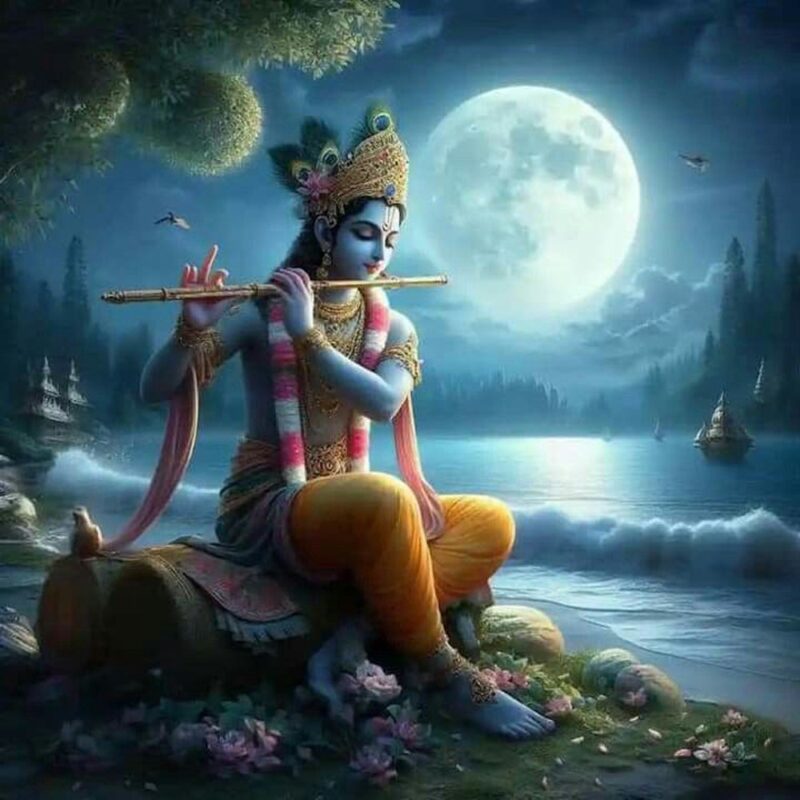
Kīrtanam

Kīrtanam on the other hand makes one’s heart cool. It is like mopping the floor with water after sweeping. Kirtanam performed with a purified heart, brings śānti (peace), saṅtuṣṭi (satisfaction) and rasa(bliss)

Rewards of Sravanam and Kirtanam

The more the heart is clean by śravaṇam and kīrtanam, the more the life becomes decorated with good qualities like truthfulness, compassion, peace, austerity, simplicity, respecting others, pridelessness , nonviolence,tolerance,and the quality of serving guru and Vaiṣṇavas.

And when the heart is clean, cool, and beautifully decorated with good qualities, it is believed that God comes to reside within us.Cleansing one’s heart and decorating it with good qualities is considered as the best service to God.

Conclusion

The heart is like a temple, a sacred place within, where God resides. But just like any temple, it needs to be maintained with sweeping and washing so that it’s not left stained. The more we hear and chant, the more our heart will shine with qualities so pure that it will become a suitable place for God to live in.

Srimati Radha Rani: The Embodiment of Divine Bliss

In the realm of Gaudiya Vaishnavism, there are several festivals that hold immense significance, such as Balaram Jayanti, Janmashtami, Gaura Purnima, Rama Navami. However, the festival that stands above all, the one without which all other celebrations lose their essence, is **Radhastami**.

The Exclusivity of Radhastami

Radhastami is not just another festival; it is a divine celebration reserved for the liberated ones. Sadhakas (practitioners) although they cannot access the profound depths of Radhastami, are eligible to worship and glorify this auspicious occasion.

The Divine Duo: Radha and Krishna

Radhastami marks the day when Radha graced this world with her divine presence. As Gaudiya Vaishnavas, it becomes our duty to understand who Radha is. But before we delve into the mysteries of Radha, we must define our ultimate goal -God. In this divine journey, Radha is the path and God, or Krishna, is the destination.

Krishna, as defined in the Upanishads by the statement “Raso Vai Sah,” is the embodiment of happiness and bliss. To share this divine bliss with us, Krishna expands Himself as Radha. He condenses all His bliss and gives it a form -Srimati Radha. Thus, Krishna and Radha are one in essence. Without Krishna, Radha is lifeless, and without Radha, Krishna remains unseen.

The Blissful Service of Srimati Rādhārāṇī

Radha, being the embodiment of divine bliss, serves to bring joy to God and His devotees. She reigns supreme and provides the necessary strength to serve Krishna. She knows that true bliss can only be achieved through service to God. Being the embodiment of bliss herself, who better than her knows what service truly means? Thus, she shares her experience and knowledge of service with sincere devotees.

The Essence of Service

Service is a trinity composed of Yagya (sacrifice), Daan (charity), and Tapa (austerity).

-Yagya signifies sacrificing the concept of “I” and letting go of all traces of selfishness.

-Daan involves offering your mind to God -constantly thinking about and planning for His service.

-Tapa represents happily enduring all hardships in God’s service.

Worshiping Srimati Radha

To worship someone means to please them. The best way to please Radha is by sincerely serving her Lord, Sri Krishna -that’s her ultimate desire from us.Let’s pray to Sri Radha for a single-minded service attitude that pleases Krishna.

Let’s borrow an atom from her ocean of service attitude and offer it back to her in the form of service to Krishna.

The Balance between Internal and External Work(Becoming a Bhajanānaṅdī Internally and a Goṣṭhyānaṅdī Externally)

“Work now. Samadhi later.” -Śrīla Prabhupada

This principle suggests that one should engage intensely in preaching work along with śravaṇam and kīrtanam, embodying the spirit of a goṣṭhyānaṅdī. As one attains Kṛṣṇa prema through Bhagavān’s mercy, they should evolve into a bhajanānaṅdī.

The Dual Role: Bhajanānaṅdī and Goṣṭhyānaṅdī

One should strive to be a bhajanānaṅdī from within while portraying the role of a goṣṭhyānaṅdī externally. To become a bhajanānaṅdī, one must possess three qualities: desire to attain Kṛṣṇa prema, freedom from the desire for honor, and readiness to present oneself as a fool to avoid association of non-devotees.

Bhajanānaṅdī Spirit

When one harbors a strong desire to become a bhajanānaṅdī, Bhagavān considers him to be a bhajanānaṅdī. One should engage in preaching work while nurturing the desire for the day when they will be in samādhi or become mad in Kṛṣṇa prema. However, merely cultivating this desire is not sufficient; one must also strive internally to become a bhajanānaṅdī or attain Kṛṣṇa prema avastha.

Goṣṭhyānaṅdī Spirit

A Goṣṭhyānaṅdī’s mission is to distribute Kṛṣṇa prema. Their target is to bring people into bhakti under the shelter of Śrīla Prabhupāda and the parampara. This may involve bringing many people into bhakti, building temples, and writing books. However, it’s equally important to work on the bhajanānaṅdī aspect.

Balancing the Dual Roles

The trick lies in balancing and giving equal importance to both roles. For instance, from 5 am to 9 am could be dedicated to maṅgala ārati, chanting, and SB classs for cultivating the bhajanānaṅdī aspect. The rest of the day, from 9 am to 6 pm, could be dedicated to the goṣṭhyānaṅdī aspect. Both these aspects will be rendered weak if one puts efforts less than 100% in each of them.

If one focuses solely on the internal work of the bhajanānaṅdī aspect and neglects the external work of the goṣṭhyānaṅdī aspect, they risk falling from their spiritual path. One cannot act as a bhajanānaṅdī externally unless they have attained Kṛṣṇa prema.

Conversely, if one focuses only on the goṣṭhyānaṅdī aspect and neglects the internal work of the bhajanānandi aspect, their bhāva will be spoiled and they will never attain Kṛṣṇa prema. Such a person may develop an egoistic mindset, thinking, “I am a guru. I am a preacher,” which can lead to their downfall.

Practical Tips for Becoming a Bhajanānaṅdī

1. During the time allocated for cultivating the bhajanānaṅdī aspect, one should not think about goṣṭhyānaṅdī related activities. One should not think about this material world, devotees, or preaching, but only about Bhagavān.

2. During free time, one should read pastimes of Bhagavān to nourish the bhajanānaṅdī aspect.

3. One should also contemplate on questions like “How far am I from Kṛṣṇa prema? How to go up to that stage? What hurdles are there?”

The Parallel Path of Bhajanānaṅdī and Goṣṭhyānaṅdī

Both the bhajanānaṅdī and goṣṭhyānaṅdī aspects should progress in parallel in one’s devotional life. This balance ensures that one can become a bhajanānaṅdī internally and a goṣṭhyānaṅdī externally, maintaining a harmonious blend of internal spiritual cultivation and external preaching efforts.

In conclusion, becoming a bhajanānaṅdī internally and a goṣṭhyānaṅdī externally requires discipline and balance between internal spiritual cultivation and external preaching efforts.

The Path to Seeing God

The desire to see God is key to ending the cycle of birth and death. Merely performing religious activities without the genuine desire to see God is not enough. Continuous devotion driven by this desire is what leads to the divine vision of God.

New devotees, known as kaniṣṭha adhikarīs, who perform devotional activities out of fear or under pressure, will not achieve the divine vision of God. True or devotion should be free from fear.True devotion is driven only by a deep and passionate desire to see and be with the divine.

Cultivating the Desire to See God

The desire to see God can be cultivated through the process of hearing. Among all spiritual practices, śravaṇam (listening to spiritual discourses) is considered paramount as it kindles the desire to see God. The speaker should aim to inspire listeners to yearn for liberation from worldly existence and instill in them a longing to see God. A discourse that fails to evoke such urgency is deemed ineffective.

It is recommended that one should seek knowledge from those who ardently wish to escape the cycle of birth and death, aspire to see God, and ultimately attain Him.

Gaining Experience from Śravaṇam and Kīrtanam

When an individual aspires to see God and attain Him, they draw upon their experiences or realizations (anubhava) from śravaṇam and kīrtanam (singing praises of God). This continuous engagement helps augment their desire to see and attain God.

Preparation to see God

Seeing God is not simply a matter of yearning; it necessitates being qualified of such a vision. The singular prerequisite for this is cultivating service attitude. As one’s dedication to serving God intensifies, so does this service attitude. As this service attitude intensified, gradually one gets prepared to see God.

However, as elucidated by Srila Prabhupada, the secret to seeing God is not to try to see Him, but to engage in deeds that would make Him want to see you. This philosophy might lead novices in devotion to lack a genuine desire to see God, serving Him in a passionate and mechanical manner instead. Conversely, those driven by emotion aspire to see God without acquiring the necessary pre qualification.

In contrast, a genuine devotee engages in service to God with a longing to see Him, not to fulfill personal desires but to serve Him better.Rather than demanding to see God, they harbor a hopeful yet patient attitude, serving God diligently while awaiting the moment He chooses to reveal Himself.

Conclusion

In conclusion, seeing God is not a matter of demand but a result of sincere longing for serving and attaining Him . Even though one may yearn for the sight of God, it is ultimately up to Him to reveal Himself.

Who is Lord Balaram ?

Lord Balarama is God Himself, but plays the role of servant of God. Therefore, he is known as Servant God! As a servant, He has many roles to play.

1.Philosophy (Tattva vichar)

parāsya śaktir vividhaiva śrūyate

svābhāvikī jñāna-bala-kriyā ca

From a philosophical perspective, Lord Balarama represents the bala shakti or the power of strength. This power keeps the atoms of universe bound together and gives them form. It also gives strength to devotees to practice devotion.By His mercy, Lord Balarama makes devotees strong so that they can approach Lord Krishna.

2.Pastimes (Lila vichar)

In terms of pastimes, Lord Balarama played the role of an elder brother in Krishna Lila and the role of a younger brother in Ram Lila. He is also considered to be the source of all avatars.

3. Rasa

In terms of rasa or mellow, Lord Balarama serves Lord Krishna in all five rasas and is considered to be the Adiguru or original guru of all rasa. He sustains these rasas and serves them.

The Significance of Lord Balaram to Practitioners

Lord Balaram is special to practitioners for both individual and universal reasons.

a. Individual Significance

From an individual perspective, Lord Balaram gives strength to devotees to practice devotion. This strength manifests in many forms, including the guru, who is an expansion of Lord Balarama. The guru is heavy in knowledge, character, and realization. Lord Balarama’s mercy manifests as the guru externally, in scriptures, and in sadhus. In association with sadhus, devotees can generate enthusiasm, which is also a manifestation of Lord Balaram.

The trilogy of sadhu, sastra, and guru is meant to guide a devotee to the lotus feet of the Lord. Internally, it is Lord Balarama who inspires devotion, enthusiasm, and strength.

b. Universal Significance

From a universal perspective, Lord Balaram establishes the religion of dharma. The power of dharma comes from Lord Balaram and he protects it. Dharma can be understood through wisdom, which is given by Lord Balarama. Our whole lives are based on dharma and Lord Balaram establishes the sense of dharma and beauty in this world. He is the epitome of beauty.

Without Lord Balarama, we cannot live or sustain ourselves, nor can we advance or preach without his mercy.

Conclusion

Lord Balarama is an essential figure for practitioners of devotion. He gives strength and inspiration to devotees and establishes the religion of dharma in the world.

Let us pray to Lord Balarama to always guide us and give us a sense of dharma and the beauty of the love of God..

The Meaning of Vaijayanti Mala.

Vaijayanti mala is a special garland that Krsna wears around His neck. It is made of five different kinds of flowers and reaches down to His knees. It has many meanings and significance in the spiritual tradition of Vrindavan.

Vaijayanti Mala as a Symbol of Victory

One meaning of vaijayanti mala is “a garland of victory”. The word vaijayanti comes from the Sanskrit root “vai”, which means “special”, and “jayanti”, which means “victory”. This garland represents the victory over birth and death, which can be achieved by the grace of Krsna. It also represents the victory over good and evil, which can be attained by following the path of bhakti or devotion to Krsna.

By meditating on Krsna’s vaijayanti mala, one can overcome the bondage of material existence and attain liberation. By gazing into Krsna’s eyes, one can overcome the lust and desire that keep one entangled in the cycle of rebirth. By focusing on Krsna’s lotus feet, one can find relief from any difficulty or distress. Krsna’s lotus feet are the source of all auspiciousness and happiness.

Vaijayanti Mala as a Symbol of Love

Another meaning of vaijayanti mala is “a garland of love”. The word vaijayanti also comes from the Sanskrit root “vai”, which means “special”, and “jaya”, which means “love”. This garland symbolizes the love between Krsna and His eternal consort, Srimati Radharani. Radharani is also known as Vaijayanti, because She is the conqueror of Krsna’s heart. She is the embodiment of pure love and devotion for Krsna.

Krsna wears the vaijayanti mala to remind Him of His eternal bond with Radharani. He always thinks of Her, just as She always thinks of Him. The garland is a sign of their mutual commitment and affection. The flowers in the garland also represent the different aspects of Radharani’s personality and beauty.

Vaijayanti Mala as a Symbol of Godhood

A third meaning of vaijayanti mala is “a garland of Godhood”. The word vaijayanti also comes from the Sanskrit root “vai”, which means “special”, and “jaya”, which means “conqueror”. This garland signifies that Krsna is the supreme personality of Godhead, who has conquered everything by His power and opulence. He is the source of all creation, maintenance and destruction. He is the master of all living beings and planets.

However, in Vrindavan, Krsna does not display His Godhood. He hides His majesty and glory behind His sweetness and charm. He plays as a simple cowherd boy, who enjoys the company of His friends and lovers. He does not act as God, but as a lover. He is not controlled by His own will, but by the will of His devotees. He is not the ruler of Vrindavan, but the servant of Vrindavan.

In Vrindavan, the real God is not Krsna, but prem or love. Prem is the king and conqueror of Vrindavan. Prem is what binds Krsna and Radharani together. Prem is what attracts everyone to Krsna. Prem is what makes Krsna dance and sing. Prem is what makes Vrindavan a place of bliss and joy.

Thus, vaijayanti mala means a garland of prem.

The Food-Mind Connection: How What You Eat Affects Your Mind?

The profound impact of our dietary choices on our mental state is widely recognized. A popular Hindi adage, “Jaisa ann vaisa man,” translates to “The nature of the food reflects the nature of the mind.” This belief is so deeply rooted that many spiritual practitioners from various traditions prefer not to consume meals prepared by others. But what underpins this emphasis on food?

The ancient Upanishads provide insights into this connection. A particular verse from the Chāṅdogya Upaniṣad (6.5.1) elucidates the relationship between our sustenance and our mind. It states that when we consume food, it segregates into three distinct components. The most tangible part is expelled as waste; the moderately tangible transforms into our physical form, and the most refined influences our thoughts and feelings.

Elaborating on this verse, the philosopher Madhvācārya sheds light on the intricate science of nourishment. He categorizes food into:-

-The Gross component: This refers to the physical makeup of the food, which eventually becomes waste post-digestion.

-The Subtle component: This represents the energetic essence of the food, which turns into vital fluids (rasa) and vigor (oja) after digestion.

-The Subtlest component: This pertains to the cognitive aspect of the food, which has a direct bearing on our mental state.

The Science

The intricate relationship between food and our mental state is a topic that modern science has only partially explored. While contemporary research acknowledges the first two aspects of food, it remains largely unaware of the third dimension. Yet, there’s evidence suggesting that individuals who consume meat from animals that faced trauma in slaughterhouses might experience heightened feelings of fear, anxiety, anger, and stress. This is attributed to the belief that the intense fear and pain experienced by these animals at the time of their death can transfer to those who consume their flesh. The Upaniṣads offer this perspective to explain the emotional disturbances faced by meat-eaters.

Given these considerations, many spiritual practitioners prefer to prepare their meals personally, avoiding dishes made by others to prevent the potential transfer of the cook’s emotions and thoughts.

Bhakti Yoga View

The Bhakti Yoga tradition introduces another layer to this discourse. While the Upaniṣads emphasize the importance of self-cooking, termed as svapāk, they don’t delve into the act of offering food to the divine, a central tenet in Bhakti Yoga. In this tradition, even if food is prepared with the utmost care and consciousness, consuming it without first offering it to Bhagavān is seen as a transgression. The Bhagavad Gita (3.13) elucidates that true devotees are absolved from sins as they partake in food first presented as a sacrifice. In contrast, those who cook solely for personal gratification are consuming sin.

Madhvācārya, in his work ‘Karma Nirṇay’, emphasizes that the act of offering to the divine begins in the kitchen itself, not just at the altar. The mindset of the cook and the one making the offering are both pivotal. Offering food with the mere intention of purification is not enough; the genuine intent should be to delight the Lord, transcending mere ritualistic practices. Thus, food truly transforms into Prasādam (blessed food) when it’s both prepared by oneself or a devout follower and presented to the divine.

Practical Tips

For devout followers, mindful practices around food are essential. Reflecting on the aforementioned insights, here are some practical guidelines for devotees:

1. Avoid procuring ready-made meals from outside and presenting them as offerings to the Lord at home.

2. Simply chanting ‘Śrī Viṣṇu’ thrice before consuming purchased food isn’t recommended.

3. Remember, any food that undergoes processing or heating carries the consciousness of the individual who prepared it. Such food isn’t suitable for offering to the Lord.

4. Even fruits and products like jams might bear the impressions of those who handled or processed them.

5. It’s crucial to recognize our role as servants of the Lord, rather than viewing the Lord as a means to purify our food. Our offerings should be made with genuine love and reverence.

6. To maintain the sanctity of the offerings, it’s best to prepare meals personally or ensure they’re cooked by a devotee with the right consciousness, before presenting them to the Lord.

The Glories of Bhakti

Bhakti is the process of loving and serving Bhagavān, the Supreme Personality of Godhead. Bhakti is the highest goal of life and the most sublime path of perfection. In this article, we will explore the seven glories of bhakti that are mentioned by Bhagavān Himself in the Bhagavad-gītā.

King of All Knowledge

Bhakti is the king of all knowledge because it is open for everyone, regardless of their caste, creed, wealth, intelligence, or morality. Anyone can practice bhakti by hearing, chanting, remembering, and serving Bhagavān and His devotees. Bhakti gives us the knowledge of our true identity as eternal servants of Bhagavān and frees us from the ignorance and illusion of material existence.

King of All Secrets

Bhakti is the king of all secrets because it is hidden from the eyes of those who are not sincere and humble. Bhakti can only be understood and practiced by the mercy of Bhagavān and His devotees. By associating with devotees, we can learn the secrets of bhakti and how to please Bhagavān with our thoughts, words, and deeds.

Purest Knowledge

Bhakti is the purest knowledge because it destroys all the sinful reactions that bind us to the cycle of birth and death. Bhakti purifies our heart from the seeds and habits of material desires and fills it with the love and devotion for Bhagavān. Bhakti also purifies our mind from the modes of ignorance and passion and elevates it to the mode of goodness and beyond.

Topmost Process of Attaining Perfection

Bhakti is the topmost process of attaining perfection because it is easy, powerful, and quick. Bhakti does not depend on any external factors such as time, place, or circumstance. Bhakti only requires a sincere and eager heart that wants to surrender to Bhagavān and follow His instructions. By practicing bhakti, we can attain the supreme perfection of life, which is to love Bhagavān and be loved by Him.

One Can See Bhagavān Face to Face

Bhakti is so powerful that it enables us to see Bhagavān face to face. By engaging in bhakti, we can experience the sweetness of Bhagavān’s names, forms, qualities, pastimes, and associates. We can also develop a personal and intimate relationship with Bhagavān, who is the source of all happiness and beauty. We can even meet, talk, and dance with Bhagavān by His grace.

Becoming Pure and Associates of Bhagavān

By practicing bhakti, we can become pure and associates of Bhagavān. We can go to His abode and stay with Him eternally. For that, we have to become supremely pure like Him and His devotees. We have to give up our false ego and selfishness and cultivate selflessness and renunciation. We have to realize that we belong to Bhagavān and not to this world.

Perfection of Religion

Bhakti is the perfection of religion because it encompasses all the principles and practices of dharma. The foundation of dharma is selflessness (nisvārtha) and renunciation (tyāga). By practicing bhakti, we automatically cultivate these qualities as well as truthfulness (satya), compassion (daya), cleanliness (saucam), and austerity (tapa). These are the four pillars of dharma that support our spiritual life.

Full of Happiness

Bhakti is full of happiness because it is a joyful and dynamic relationship with Bhagavān. Bhakti is not a dry or mechanical process, but a lively and ecstatic process that involves singing, dancing, feasting, and celebrating with Bhagavān and His devotees. Every day is a festival in bhakti. By practicing bhakti, we can experience the highest happiness and satisfaction in life.

Conclusion

Bhakti is the best way to please Bhagavān and attain His mercy. By practicing bhakti, we can cut the great tree of material desires and attain the supreme treasure of love for Bhagavān. Therefore, we should try to practice bhakti under the guidance of a bonafide spiritual master who can teach us how to cut the great tree of desires and attain the supreme treasure of love for Bhagavān.

Definition of God: A Vaishnava Perspective

God is the ultimate mystery of life. Some religious traditions claim that God is beyond definition, while others attempt to describe God by His attributes and qualities.

In this article, we will explore how the Vaishnava tradition of Hinduism defines God from different perspectives. We will see that God is not only definable, but also infinitely definable, according to the Vaishnava Saints.

The Five Perspectives

The Vaishnava tradition defines God from five perspectives: General perspective, Philosophical perspective, Power perspective, Mercy perspective, and Sweetness perspective.Each perspective gives a different definition of God, based on His different aspects and features. Let us briefly examine each perspective and its corresponding definition.

General Perspective

The general perspective is the most comprehensive and inclusive one. It defines God by His six opulences: all strength, all fame, all wealth, all knowledge, all beauty, and all renunciation.

This definition is given in the Visnu Purana 6.5.47:

aiśvaryasya samagrasya vīryasya yaśasaḥ śriyaḥ

jñāna-vairāgyayoś caiva ṣaṇṇāṁ bhaga itīṅganā

Bhagavān, the Supreme Personality of Godhead, is one who is full in six opulences -all strength, all fame,all wealth, all knowledge, all beauty, and all renunciation.

This definition implies that God is the source and owner of everything that exists. He has unlimited power and influence over everything and everyone. He possesses unlimited riches and resources. He knows everything past, present and future. He is the most attractive and charming person in existence. And He is completely detached from material attachments and desires.

Philosophical Perspective

The philosophical perspective defines God by His nature and function. It describes what God does and how He relates to His creation.

This definition is given in the Bhagavad Gita 9.18:

gatir bhartā prabhuḥ sākṣī nivāsaḥ śaraṇaṁ suhṛt

prabhavaḥ pralayaḥ sthānaṁ nidhānaṁ bījam avyayam

God is the goal, the sustainer, the master, the witness, the abode,the refuge and the most dear friend. I am the creation and the annihilation,the basis of everything, the resting place and the eternal seed.

This definition implies that God is the supreme destination of all living beings. He maintains and protects them as their provider and guardian. He controls and governs them as their ruler and judge. He observes and records their actions as their witness and accountant. He offers them shelter and comfort as their home and sanctuary. He loves and cares for them as their friend and well-wisher. He creates and destroys the material world as its origin and end. He supports and pervades everything as its foundation and substance. He generates and sustains life as its source and nourishment.

Power Perspective

The power perspective defines God by His supreme control and independence. It shows how God is the absolute authority and the cause of all causes.

This definition is given in the Śrimad Bhagavatam 1.1.1:

anmādy asyayato ‘nvayād itarataś cārtheṣv abhijñaḥ svarāṭ

tene brahma hṛdā ya ādi-kavaye muhyanti yat sūrayaḥ

tejo-vāri-mṛdāṁ yathā vinimayo yatra tri-sargo ‘mṛṣā

dhāmnā svena sadā nirasta-kuhakaṁ satyaṁ paraṁ dhīmahi

This definition implies that God is the ultimate reality and the original source of everything that exists. He is aware of everything that happens in His creation, both directly and indirectly. He is completely free from any dependence or obligation to anyone or anything. He is the first teacher and revealer of spiritual knowledge to His devotees. He has the power to bewilder or enlighten anyone by His illusory or spiritual energy. He transcends the material world, which is temporary and unreal, and resides in His own eternal and blissful abode.

Mercy Perspective

Mercy perspective is higher than Power perspective because of His mercy we know above three definitions through revealed scriptures. That is why Mercy is the most important quality of God. Mercy of God is the queen of all qualities.

This definition is given in the Śrimad Bhagavatam 2.10.12:

dravyaṁ karma ca kālaś ca, svabhāvo jīva eva ca

yad-anugrahataḥ santi, na santi yad-upekṣayā

One should definitely know that all material ingredients, activities, time and modes, and the living entities who are meant to enjoy them all, exist by His mercy only, and as soon as He does not care for them, everything becomes nonexistent.

Sweetness Perspective

Sweetness perspective includes all of the above definitions. God is ‘Rasik Shekhar’ the relisher of various transcendental mellows, that is one who drinks sweetness and makes others to drink sweetness.

This definition is given in theŚrī Caitanya-caritāmṛta Ādi-līlā 4.15–16 .

rasika-śekhara kṛṣṇa parama-karuṇa

He [God] is known as supremely jubilant and as the most merciful of all.

Since God is sweet that is why He does mercy. Only sweet people do mercy and not hard hearted and malevolent people.

Without Sweetness God’s power would appear like a tyranny. Therefore Sweetness perspective gives a positive meaning to the Power perspective of God.

Since God’s power is sweet that is why devotees like His power. Since God is sweet that is why He uses His power to protect His devotees. The most powerful of all his powers is His sweet love for His devotees.

So you see the question is not ‘Can God be defined?’, rather the question now is ‘How many definitions of God can you digest?’

Sailing smoothly in devotion! 🌊

Navigating the path of devotion, regardless of life’s challenges, is akin to a ship’s journey across turbulent seas. While some ships may sink, others sail to their intended port. To ensure a steadfast journey in devotion, consider embracing the following three practices in the company of devotees:

1. **Delving into Scriptures**:📖

Understand God as portrayed in scriptures and foster an aspiration to connect with Him. True devotion is an allegiance to God, reinforced by an understanding of His magnificence.

2. **Embracing Challenges**: 💪

Recognizing and accepting life’s challenges is crucial. As scriptures suggest, resolving one issue might give rise to several others. Challenges are endless; hence, it’s prudent to accept rather than combat them.

3. **Wholehearted Praise of Bhagavān**: 👂

Offering praise through thought, word, and deed is a profound means to nourish the soul. Since God is the epitome of praise, our souls find fulfillment in His glorification.Dear devotees, by integrating these practices into your life, you’ll naturally draw closer to God.

“Mastering the Senses: The Path to True Humility”

Real humility is control over senses!

Practicing it, one understands the message of scriptures,

Imbibing it one realize the meaning of scriptures.

There once existed a master and his servant. The servant was diligent in his duties, always striving to fulfill his master’s commands, yet he had a single flaw.

In the master’s absence, the servant would indulge in the pleasures of his master’s home, watching his television, sleeping in his bed, eating from his fridge, essentially assuming the role of the master himself!

Can we call such a servant humble?

Absolutely not!

In the same vein, all that exists in this world is the property of the divine. To partake in the pleasures of this world is akin to enjoying God’s possessions, an act of pure arrogance. Thus, a true devotee should exhibit humility, refraining from indulging in the world that is God’s property.

To achieve this, a devotee must learn to master their senses. Through this mastery, not only will they cease to seek sensory pleasure, but they will also be better equipped to follow the divine command, setting aside personal likes and dislikes.

True humility lies in the mastery of one’s senses!

The Eyes of Devotion: How to See the Lord

nāyam ātmā pravacanena labhyo and nāyam ātmā balhīnenalabhyo

Muṇḍaka Upaniṣad and Śvetaśvatara Upaniṣad

The eyes are the windows to the soul, and for a devotee, they are also the means to see the Lord. But seeing the Lord is not a matter of mere curiosity or ambition. It is a matter of love, humility and grace.

A devotee has an intense desire to see the Lord, because he loves Him more than anything else. He longs to behold His beautiful form, His enchanting smile, His captivating eyes. He wants to offer his obeisance, his prayers, his service to the Lord. He wants to experience the bliss of His presence,His touch, His voice.

But a devotee is also humble. He knows that he is not worthy of seeing the Lord, who is the Supreme Personality of Godhead, the source of all existence, the master of all opulence. He knows that he is a fallen soul, a conditioned being, a sinner. He knows that he has offended the Lord in many ways, knowingly or unknowingly. He knows that he has no qualification, no merit, no claim to see the Lord.

This paradoxical situation creates a mood of viraḥ or love in separation. The devotee feels an intense pain of separation from the Lord, but also a hope of meeting Him someday. He feels a deep gratitude for the Lord’s mercy, but also a fear of displeasing Him. He feels a burning eagerness to see the Lord, but also surrender to His will. This is the highest state of devotion, the culmination of our philosophy.

But how can one attain this state? How can one see the Lord? The answer is simple: by the Lord’s grace. The Lord is not an object that can be seen by our material senses. He is not bound by our logic or our expectations. He is not obliged to reveal Himself to anyone. He is free and independent. He can only be seen when He chooses to reveal Himself

Bhagavān is the ultimate reality that can only be known by grace, not by mere hearing. This is the essence of all Upanishads, the sacred scriptures that reveal the highest truth. This is the foundation for all other teachings, the axis around which everything else revolves. This is the bhakti perspective, the path of devotion that seeks to love and serve Bhagavān in all forms and aspects.

So a devotee prays sincerely and earnestly for that mercy. He begs the Lord to show Himself to him, even for a moment. He expresses his longing and his lamentation, his joy and his sorrow, his faith and his doubt. He reveals his heart to the Lord, without any pretense or pride. He accepts whatever the Lord gives him, without any complaint or demand.

He serves the Lord in every possible way, with every possible mood. He serves Him physically by cleaning His temple, by cooking for Him, by dressing Him, by offering Him flowers and fruits. He serves Him mentally by meditating on Him, by remembering Him, by glorifying Him, by singing for Him. He serves Him emotionally by loving Him, by trusting Him, by surrendering to Him.

He does all this with an attitude of humility and gratitude. He does not think that he is doing anything great or special for the Lord. He does not think that he deserves any reward or recognition for his service. He does not think that he has any right or claim over the Lord. He thinks that he is simply doing his duty as a servant and a friend of the Lord.

He thinks that whatever he does is insignificant compared to what the Lord does for him. He thinks that whatever he has is a gift from the Lord and belongs to Him. He thinks that whatever he wants is subordinate to what the Lord wants for him.

He thinks that he is nothing and the Lord is everything.

This is how a devotee sees the Lord: with eyes of devotion.

The Mystery of Existence.

Have you ever wondered if you truly exist? How can you prove that you are not a product of artificial intelligence or a computer simulation? How can you know that you have a soul or a consciousness that makes you different from a zombie?

These are some of the questions that have puzzled philosophers, scientists and spiritual seekers for centuries.

The Zombie Problem

One way to approach the question of existence is to imagine a scenario where you encounter a zombie. A zombie is a creature that looks and acts like a human, but has no inner life or emotions. It is just a mindless automaton that follows its programming. How would you tell the difference between a zombie and a real human?

You might think that you can simply cut the zombie and see if it bleeds or feels pain. But what if the zombie is made of carbon and has a sophisticated system that mimics blood and nerve signals? What if the zombie can also talk and respond to your questions, but only by repeating what it has heard before or using a pre-programmed algorithm?

The problem is that you can never be sure that the zombie is not just pretending to be alive. You can’t access its inner experience or verify its consciousness. You can only observe its external behavior, which may be indistinguishable from a human’s. This means that you can’t prove your own existence either, because you could be a zombie yourself and not know it.

The Simulation Hypothesis

Another way to challenge the question of existence is to consider the possibility that we are all living in a computer simulation. This idea has been popularized by movies like The Matrix and The Truman Show, but it also has some scientific and philosophical support.

One argument for the simulation hypothesis is based on String Theory, which is a branch of physics that tries to explain the fundamental nature of reality. According to string theory, there is a lower quantum reality beyond the strings of normal physics where digital codes (010101) exist. These codes could be the source of everything we see and experience in our world.

Another argument for the simulation hypothesis is based on probability. Some thinkers have suggested that if it is possible to create realistic simulations of human civilizations, then there must be many more simulated worlds than real ones. Therefore, it is more likely that we are living in one of them than in the original one.

The simulation hypothesis raises many questions about the nature of our existence. Who created the simulation and why? How can we tell if we are in a simulation or not? What happens if we escape or end the simulation? Do we have free will or are we predetermined by the code?

The Spiritual Perspective

A third way to approach the question of existence is to look at it from a spiritual perspective. Many religions and traditions have claimed that there is more to reality than what we perceive with our senses. They have taught that we have a soul or a spirit that transcends our physical body and connects us to a higher power or a divine source.

One example of such a perspective is found in the Bhagavad Gita, which is a sacred text of Hinduism. The Bhagavad Gita says that we are not our body, mind or senses, but we are the soul (consciousness), which is eternal and indestructible. The soul is part of God (super consciousness), who is the source of all existence.

The Bhagavad Gita also says that we cannot see God with our eyes, but we can experience him within ourselves through self-realization. Self-realization is the process of discovering our true nature and identity as souls and as part of God. It is achieved by practicing yoga, which means union with God.

The spiritual perspective offers a different way of answering the question of existence. It does not rely on external evidence or logical arguments, but on inner experience and intuition. It does not deny the reality of the physical world, but it also acknowledges the reality of the spiritual world. It does not claim to prove our existence, but it invites us to realize it for ourselves.

Conclusion

The question of existence is one of the most profound and fascinating questions that humans have ever asked. There is no definitive answer or proof that can satisfy everyone, but there are many ways to explore and understand it.

We can use our reason and logic to examine the possibility of zombies or simulations. We can use our imagination and creativity to envision alternative scenarios or realities. We can use our faith and spirituality to seek guidance and connection with something greater than ourselves.

Ultimately, the question of existence is not just an intellectual exercise, but a personal journey. It challenges us to reflect on who we are, why we are here, and what we want to do with our lives. It invites us to discover our true potential and purpose as beings who exist in this mysterious and wonderful world.

How to Recognize Genuine Devotion?

Many devotees assume that the joy, sweetness and emotions they feel in their devotion are genuine, but that may not always be true.How can we tell if our experience is authentic and not just a feeling, a thought, or a delusion?There are four indicators of real experience in devotion.

1.Transcendental Happiness

There are two kinds of happiness: one that comes from the world and one that comes from God.

The worldly happiness depends on external circumstances. When things go well, we feel happy. When things go wrong, we feel sad.

The divine happiness is different. It involves both happiness and sadness at the same time.

When we transcend the world and its attachments, we see the reality. We realize that we are far away from God and that we have neglected Him for a long time. We feel very sorry for this and we want to return to Him. This makes us very sad.

But this sadness is not negative. It is also mixed with happiness because we know God and we love Him. We feel a deep pain in our heart because we are separated from Him, but we also feel a sweet joy because we are remembering Him.

If we truly love God, we will experience both happiness and sadness at the same time. This is the true happiness from God which is called transcendental because it comes from God who is beyond this world.

2. Loss of Interest in Material Desires

Once you have tasted the real sweetness of God, you will find that the things that you were crazy about will no longer attract you.

3. Absolute Union with Absolute Will

If your experience is true, then you will align your Will with the Will of God.

4. Freedom from All Past Sinful Reactions

All your past sinful habits and negative traits will be erased, and you will acquire all the positive traits that God possesses.

The above four signs indicate that we are having a true experience of devotion and that we are tasting the true sweetness of God. They may not be fully manifested, but even if they manifest to a slight degree, they show that we are on the right path

The Quest for Meaning: Religion and the Purpose of Life.🙏

Have you ever wondered why you are here? What is the meaning of your life? Is there a reason for your existence, or are you just a product of chance and chaos?

These are some of the most profound and important questions that humans have ever asked. And yet, many people today seem to ignore or avoid them.

They think that the modern world has made these question irrelevant, as we are supposed to enjoy and have fun without worrying about the deeper meaning of our existence.

Philosophers  think that this question is absurd, and scientist think life is nothing but a random and chaotic process of mutations and chance, with no ultimate goal or direction.

Still others think that life without a purpose is a miserable and animalistic existence, as we are doomed to sink into sex, violence, frustration, and madness.

But is this really true ? Is this really satisfying? Can we really find happiness and fulfillment in life without purpose?

Religion offers an answer to these questions. Religion claims that the purpose of life is to realize God, the supreme source of all existence, intelligence, and morality. Religion also provides us with logical arguments for the existence of God, as well as practical guidance on how to achieve God realization.

In this article, we will explore the religious views of the purpose of life in three simple steps.✅.

Step 1: Proving God’s Existence 🧐

Religion is not based on blind faith, superstition, or mysticism. Religion is based on reason and logic. The existence of God is a rational proposition that can be supported by various arguments. In the Western tradition, this branch of knowledge is called theology. In the Indian or Eastern or Vedic tradition, it is called Vedanta.

Religion gives us three powerful arguments for the existence of God:

 i) The First Cause Argument 🔥

The first cause argument states that everything that exists has a cause. The universe exists, therefore it has a cause. But what is the cause of the universe?

Science has come up with many theories of the origin of the universe and the origin of life, such as the Big Bang theory, the Inflation theory, etc. But these theories only push back the question one step further: what caused the Big Bang? What caused the Inflation? What caused the point that exploded or inflated?

The first cause argument says that there must be a first cause that is un caused, eternal, and independent of space and time. This first cause is God. God is the cause of all causes, the creator of all creation.

 ii) The Origin of Life Argument 🧬

The origin of life argument states that life comes from life. Science claims that life came from matter, but there is no evidence for this claim. On the contrary, Louis Pasteur proved that life does not come from matter. Life comes from life.🌱

Religion says that life comes from life, and ultimately from God. God is the source of all life.

 iii) The Cosmological Argument 🌠

The cosmological argument states that the universe is governed by some laws, such as physical laws, Newtonian laws, Einstein’s laws, quantum laws, etc. These laws are unchangeable and universally applicable.

Who made these laws? If there are laws, then there must be a lawgiver.

This lawgiver must be intelligent and powerful enough to design these laws in such a way that the universe keeps on running without being dissolved or crashed.

The cosmological argument says that this lawgiver is God. God is the controller of everything.

 iv) The Moral Argument ❤️

The moral argument states that we all have a moral sense in us. We all want to help others, we all have a sense of mercy, a sense of love and to be loved. Where does this moral sense come from? Why do we have it? Why do we feel guilty when we break it?

The moral argument says that this moral sense is created and sustained by God. God is the source of all morality, the giver of all conscience.

Step 2: Seeking God Realization 😇

Religion tells us that the purpose of life is to realize God. God is not only the creator and controller of the universe, but also our loving father and mother, our dearest friend and well-wisher, our supreme beloved and master. God wants us to know Him, to love Him, to serve Him.

Religion also tells us how to realize God. Here are some ways to realize God:

Through Scriptures,📖

Through Prayer,🙏

Through meditation,🧘‍♂️

Through Service,🤝

Through Devotion💖

Religion urges us to attain God realization because it will bring us ultimate satisfaction, peace, and happiness. Nothing else can satisfy our deepest longing for meaning and value. Nothing else can fill our hearts with joy and bliss.

Step 3: Rejecting All Other Goals 👀

Religion tells us that no other goal, no other purpose, is worth pursuing except God realization. All other goals are temporary, illusory, and unsatisfying. They will only lead us to more bondage, suffering, and ignorance.

Some people think that becoming rich is the purpose of life. But money cannot buy happiness, nor can it buy love. Money can only buy things that will eventually decay, break, or be stolen.

Some people think that becoming famous is the purpose of life. But fame is fleeting, fickle, and false. Fame can only bring envy, criticism, or indifference from others.

Some people think that becoming powerful is the purpose of life. But power is corrupting, dangerous, and destructive. Power can only bring fear, violence, or rebellion from others.

Some people think that becoming happy is the purpose of life. But happiness is relative, dependent, and conditional. Happiness can only come from external sources that are beyond our control and subject to change.

Religion tells us that the only goal that is eternal, real, and satisfying is God realization. God realization is the highest and most noble aspiration of the human soul. God realization is the ultimate fulfillment of our existence.

Conclusion

Religion offers a clear and compelling answer to this question: the purpose of life is to realize God, the supreme source of all existense,intelligence,and morality.

Religion also gives us logical arguments for the existence of God, as well as practical guidance on how to achieve God realization.

Religion invites us to embark on the most exciting and rewarding adventure of our lives: the quest for meaning.

Find your way to connect with God and experience His presence in your life.

🎶The Significance of the Flute in Devotion 🎶>

The flute is one of the most beloved companion of Krishna, the supreme personality of Godhead. It’s difficult to imagine Krishna without His flute.

Why’s that?

Although there are different types of flutes, such as bansuri, vamsi, and murali, but they all give us some common profound lessons in devotional life.

🕳️ The Holes in the Flute 🕳️

One of the most important features of the flute is that it has holes in its body. These holes are not defects, but qualities.

The holes of flute signify the austerities and sacrifices that the flute has undergone to become fit for Krishna’s service. The flute was once a bamboo, but it had to endure the pain of being cut, hollowed and pierced by hot metal to become a musical instrument.

Similarly, a devotee has to undergo various difficulties and challenges in the path of bhakti. These difficulties are not obstacles, but opportunities.

They purify the devotee’s heart and mind from material attachments and selfish desires. They also increase the devotee’s dependence on Krishna and His mercy. Only by facing these difficulties with patience and faith can a devotee attain Krishna’s association.

The holes in the flute also produce different notes or surs when Krishna blows into it. There are seven main notes: sa, re, ga, ma, pa, dha and ni. These notes represent the different emotions and moods that Krishna expresses through His flute.

The notes can be short or long, depending on the size of the holes. The short notes signify fine and happy and naughty emotions of Krishna and the long notes signify even much finer and sad and romantic emotions of Krishna. A devotee should learn to appreciate the variety and beauty of Krishna’s flute music.

## 🎋 The Making of the Flute 🎋

Another important feature of the flute is how it is made. The flute is made from a bamboo that is carefully selected to make a perfect flute for Krishna. The craftsman cuts the bamboo from its roots, removes its branches and leaves, hollows out its core and makes holes in its body.

The making of the flute is a symbolic process of transformation from a material entity to a spiritual entity.

  • The bamboo represents the conditioned soul who is bound by material nature and karma.
  • – The cutting of the bamboo represents the detachment from worldly attachments and false ego.
  • – The removal of the branches and leaves represents the renunciation of unnecessary activities and distractions.
  • – The hollowing out of the core represents the emptying of one’s mind from material thoughts and desires.
  • – The making of the holes represents the acceptance of difficulties and hardships as part of one’s purification.

The craftsman represents the spiritual master or guru who guides and instructs the disciple on how to become a pure devotee of Krishna. The guru knows how to mold and shape the disciple according to Krishna’s will and pleasure. The guru also knows how to protect and preserve the disciple from harm and danger.

The bamboo does not resist or complain when it is being made into a flute. It surrenders itself completely and feels happy that it has been chosen for such a noble purpose. It does not envy or compete with other bamboos who remain in their original state. It also inspires other bamboos who aspire to become flutes for Krishna.

## 🍯 The Nectar in the Flute 🍯

The flute contains divine nectar that comes from Krishna’s lips and breath. This nectar fills up the holes in the flute and makes it vibrate with ecstasy. This nectar also flows out from the flute and reaches the ears and hearts of those who hear it.

The nectar in the flute represents the love and grace that Krishna bestows on His devotees who serve Him sincerely and selflessly.

The nectar in the flute also represents the bliss and joy that a devotee experiences when he is connected with Krishna which is  not temporary, but eternal.

👉In essence, Krishna plays flute to attract the hearts of His devotees and to express His love for them.The flute is also a metaphor for the devotee’s life and attitude.

Beyond Tears and Bliss: The Radical Change of Perspective that Comes from Chanting.

Know that God’s grace has descended upon you when

Anything related to Lord is perceived as if it is Lord Himself

Anything unrelated is perceived with indifference,

Anything in opposition to Lord is opposed.

(Vallabhacarya)

You may cry, shiver, or faint while chanting, but none of these signs guarantee that you have received the Lord’s mercy or grace. You may also feel blissful while chanting, but that is not a sure proof of the Lord’s favor. For all these signs could be mere shadows of the real symptoms, or just emotional reactions, or even deceptive tricks of Maya.

The only way to confirm that you have received the Lord’s grace is when your outlook, your vision, your way of thinking completely changes, by a full 180 degrees.

When you receive the Lord’s grace, you will stop caring about things related to yourself, and you will care deeply about things related to the Lord. You will be indifferent to things that have no connection to the Lord, and you will resist anything that goes against the Lord.

These symptoms were present in our beloved Srila Prabhupada. He strongly opposed atheists, scientists, and philosophers. He was totally unconcerned with any worldly or charitable activities. And he gave utmost importance and attention to anything or anyone that had even a slight relation to the Lord.

How to Preach Effectively and Serve God’s Mission ?

Do you think a preacher should respect everyone equally? You may think so,because God is in every soul. But this is a❌idea.

BhaktiSiddhanta Sarasvati said that this is a demonic philosophy. A preacher should not be naive,but wise.He should know who is a beginner,who is an advanced,who is a fake,who is deviated and who is not.

Why is this important? Because seeing God in every soul is not enough.One has to understand God’s mission too. God’s mission is to free people from their karma and their body.He wants them to stop the cycle of birth and death and go back to Him.This is the ultimate goal of life.

So,how should a preacher deal with different people? He should follow four principles: love God, befriend advanced devotees, show mercy to new devotees or the ignorant,and ignore the envious.

Love God ❤️

This is the most important thing.Love is for God alone.He is the source of all love and happiness.He is our eternal friend and master.

Be friend advanced devotees 🤝

This is how we can learn from them and grow in our devotion.They have knowledge (jñāna), experience (anubhav),and devotion (ṛtam). They can guide us and inspire us.We should close our mouth and open our ears to take association from them.

Show mercy to new devotees or the ignorant🤚

This is how we can help them and share the message of God with them.They have ideas based on ‘me and mine’. We do not agree with them,but we can be nice and friendly to them. We should close our ears but open our mouth to give them association.

Ignore the envious 🙏

This is how we can protect our selves and avoid unnecessary conflicts.Envious people get more envious when we tell them about God.If preaching makes them more envious,we should ignore them by not preaching.Unless we are strong and smart enough to convince them that Krishna is God.

👉This is the art of preaching. By following these principles,a preacher can serve God’s mission and also help others in their spiritual path.He can also protect himself from the lower modes of nature and stay fixed in his love for God.

Owing God Big Time: an eternal debt

We can never thank God enough for His amazing grace and all the good things He has done and is doing for us.

Every time we try to thank Him by serving Him, He is so kind to accept our thanks even though we don’t serve Him perfectly. But that makes us owe Him even more. It’s a never-ending cycle. But that’s okay. That’s what love is.

Love doesn’t make sense but it feels good. Love is apparently illogical but sweet. We want to keep owing God more and more so that we are always His loyal servants. Love takes away our freedom but it gives us security. Everyone owes God a lot.

Those who know this are His followers, and those who don’t are His deniers. Among those who know this, those who try to thank Him by serving Him purely make God owe them!!

As you Sow, So shall you Reap!

The verse 4.11 of Bhagavad Gita is a mysterious one. But don’t worry, I will explain it to you.

ye yathā māṁ prapadyante
tāṁs tathaiva bhajāmy aham
mama vartmānuvartante
manuṣyāḥ pārtha sarvaśaḥ

As all surrender unto Me, I reward them accordingly. Everyone follows My path in all respects, O son of Pṛthā.

This verse has various meanings.

-Krishna manifests as bliss within matter for those who consider matter to be the ultimate reality.

-Krishna shows His corporeal effulgence as impersonal light for those who believe He is impersonal, while concealing His lovely transcendental form.

-Krishna deceives those who deceive Him by concealing His pure devotion from them.

-Krishna surrenders to those who surrender to Him by finding an opportunity or an excuse to serve them.

-Krishna loves those who love Him by revealing His form, qualities, and pastimes unto them.

-Krishna does not hear the prayers and chanting of those who do not listen to His instructions.

-Krishna considers the pleasure of the senses of those who consider His pleasure by bestowing delight in devotion on them.

-Krishna entangles those who reject Him in the cycle of birth and death.

-Krishna manifests as Vishnu or Narayana, the supreme Lord of creation, for those who are struck by His power.

-Krishna manifests as the darling of Vrindavan for those who are impressed by His sweetness.

-Krishna shames those who shame Him by hypocrisy in devotion by engaging them in sense-gratification and causing them to fall.

-Krishna glorifies those who glorify Him by making them famous as great devotees.

Misleading Others!

The five elements of the body will laugh within, on those who mislead others.

Thirukurral Kural -271

Cheaters who mislead others will be led astray by God and His creation. God will ensure that even their own bodies betray them. No one will work for them, for they do not work for others. Such is the law. The law of nature. The law of God.

Even the five elements of their own bodies will revolt against these cheaters, filling their lives with misery and suffering. Anxiety, disease, old age, and death will haunt them relentlessly.

Have you ever wondered why we all experience disease, aging, and death? Are we cheating someone? Are we misleading others.

Indeed, we are cheating ourselves and not anyone else by cheating God by neglecting devotion to Him. God, in His mercy, sustains our lives by providing sunlight, moonlight, water, air, and food. Yet, we fail to express gratitude. Is this not extreme selfishness? Will God not feel deceived?Are we not those cheaters?

Imagine a lover who gives everything to their beloved, only to be met with indifference and ingratitude. Such is God’s plight when we fail to acknowledge His help, His existence, and His love.

The entire creation, the five elements, the celestial beings, destiny, and time itself will turn against us if we cheat God by neglecting to devote our lives to Him. We will have to face punishment in form of disease, aging, and repeated death, until we learn to love the Lord, to stop cheating Him, and to cease misleading one selves and others.