Blogs

The Melting of the Heart in Devotion

1. Meaning of the Melting of the Heart

The melting of the heart in devotion signifies a profound transformation where a devotee becomes dynamic in their devotional service, continuously engaging in devotion both externally and internally. Such a devotee is filled with inspiration and creativity in serving Lord, establishing a steady foundation in spiritual life.

A devotee whose heart has melted inspires others to take up bhakti, seeing the steadfastness and determination of an uttama-adhikārī (a highly advanced devotee). Śrīla Prabhupāda’s unwavering discipline and commitment motivated countless individuals to take devotion seriously.

2. Characteristics of a True Devotee

According to Madhvācārya, a devotee is recognized by two primary qualities:

  • Words: A devotee’s speech reveals their spiritual realizations.
  • Determination: They remain resolute in performing devotion regardless of circumstances.

Śrīla Prabhupāda’s disciples affirm that one whose heart melts in love for Kṛṣṇa becomes unwavering and cannot be disturbed by opposing arguments, bodily suffering, mental distress, supernatural disasters, or envious interference.

3. Stability in Devotion

While worldly love often weakens the heart—such as a mother’s attachment to her child—the melting of the heart in devotion leads to spiritual stability. When one’s heart melts for Lord, the mind becomes fixed on Him, allowing His presence to remain constant.

  • A devotee feels assured that Lord is always with them and protects them in all situations (rakṣiṣyatīti viśvāso – CC Madhya 22.100).
  • The more a devotee stays connected with Kṛṣṇa, the more Kṛṣṇa remains present in their heart.
  • Even amidst external difficulties like heat, cold, opposition, or envious individuals, a devotee remains undisturbed and stable.

4. Signs of a Melted Heart

  • Emotional Transformation: A devotee undergoes deep internal changes, such as embarrassment (vilajja) when recalling past sinful activities, similar to Prahlāda Mahārāj, Śrīla Bhaktivinod Ṭhākur, and Kṛṣṇa Dās Kavirāj Gosvāmī.
  • Remembrance of Past Sins: Feeling ashamed of past actions is a sign of progress, as it highlights the purity of Lord in contrast to one’s prior impurities.
  • Dependence on Lord: A devotee realizes their transformation is solely due to Lord’s mercy, rather than personal effort.

5. Expression of Devotional Ecstasy

When a devotee deeply connects with Lord, their emotions overflow in various ways:

  • Crying (rudaty): They call out to Lord, glorifying His mercy.
  • Laughing (hasati): They rejoice at being saved from an abominable life.
  • Singing (udgāyati) and Dancing (nṛtyate): They express happiness by chanting and celebrating Bhagavān’s name.
  • Choked Speech (vāggadgadā): Their voice trembles with gratitude.
  • Purification of Others: Seeing such a devotee purifies all those around them (mad-bhakti-yukto bhuvanaṁ punāti).

6. Conclusion

The external engagement of a devotee in Lord’s service is not the sole indicator of a melted heart, as even new devotees may serve passionately. A truly melted heart reflects unwavering stability amidst challenges, a deep remembrance of past sinful life, and complete dependence on Lord’s mercy.

A devotee does not fear opposition or envy; instead, they recognize their strength as Lord’s grace, not personal effort. Through this realization, they cry out for Lord, laugh with joy in His protection, sing and dance in gratitude, and ultimately remain absorbed in His divine presence.

Lord Rama: The Supreme Enjoyer and Destroyer of Darkness

Philosophy, they say, is the language of love—a bridge between the finite and the infinite. It glorifies the One who is beyond comprehension, beyond imagination, and beyond the reach of any mortal words. While we may catch glimpses of His grandeur through scriptures, the truth remains that only He can fully know Himself.

And who embodies this transcendence better than Lord Rama? His divine pastimes are shrouded in mysteries that have enchanted countless saints and scholars. Among them, Valmiki—the first poet—immortalized Lord Rama’s glory through the epic Ramayana, the first poem revealed on this Earth. When Narada asked Valmiki who the greatest being in the universe was, his answer resounded as a celestial hymn: “Lord Rama.”

Unlike other poets who liken their subjects to elements of nature, Valmiki reversed this convention. He proclaimed that the Earth is as tolerant as Rama, the ocean as magnanimous as Rama, and the Sun as radiant as Rama. What we perceive as beauty in this world is but a minuscule fraction of Lord Rama’s boundless qualities—multiplied to infinity and still beyond our grasp.

The Essence of the Name “Rama”

The mere utterance of “Rama” is said to be liberating, a name so powerful that it resonates with the ultimate truth. Various commentators have explored its profound meanings. One interpretation, from the CC Madhya Lila (9.29), declares:

Ramante yogino ’nante Satyānande cid-ātmani Iti rāma-padenāsau Paraṁ brahmābhidhīyate

This translates to “Rama is He who delights in the hearts of yogis, who dances in the hearts of devotees.” Indeed, while Lord Rama stands as the serene and dignified Maryada Purushottama—the epitome of virtue—He also wishes to dance in the hearts of His devotees. For this, we must prepare our hearts as a stage, adorned with humility, purity, compassion, selflessness and unshakable devotion.

His divine presence is not distant; it is an intimate, living reality for those who call upon Him with pure love.

Rama: The Supreme Enjoyer

The name Rama holds myriad meanings, and one such powerful interpretation comes from the phrase RamaYatam Vara, which reveals Rama as “the supreme enjoyer.” But what does He enjoy?  Certainly not this material world, which, in its nature, is akin to a graveyard—lifeless, inert, and barren without devotion. A world devoid of devotion transforms its inhabitants into walking dead, alive only in appearance but desolate within. Like a vibrant flame extinguished, their souls lack the vitality that only devotion can ignite.

Lord Rama, joy lies in the living essence of  selfless love, sacrifice, and devotion offered by His devotees. This world, with all its tangible elements—earth, water, fire—has no appeal unless it serves as a vessel for heartfelt surrender and service. The devotion of a pure heart becomes the most cherished offering, bringing life to the otherwise lifeless.

When a devotee offers Him devotion and service with utmost humility, it transforms into a sublime offering that He cannot resist. It is not the grandeur or scale of the act but the purity of the intention that touches the Lord’s heart.

In this light, devotion becomes the only force that animates the soul, reigniting its connection with the divine. Without it, life is like a lamp without oil, a body without spirit—a mere shell. Lord Rama’s divine presence infuses life into this desolate existence, transforming it into a sacred space where joy, love, and divinity flourish.

The Spiritual Depth of “Rama”

The name Rama carries profound spiritual significance, encapsulated in its breakdown:

  1. Ra: Represents light, radiance, and purification, akin to Agni (fire). It dispels ignorance and illuminates the mind, paving the way for spiritual awakening.

  Ma: Embodies love, bliss, and the eternal nectar of Amrit. It nourishes the soul and fosters the purity needed for divine connection.

Together, Rama symbolizes the union of purification (Ra) and eternal love (Ma). This divine synergy transforms the devotee’s heart into a sanctified space where Lord Rama can reside.

Beyond spiritual bliss, the name Rama unfolds into various layers of meaning:

  1. Rama as the Destroyer of Demons: One interpretation derives Ra from Rakshasa (demons) and Ma as “to kill or destroy.” Lord Rama is the destroyer of both external and internal demons—the latter often being more perilous. By vanquishing inner demons like pride, anger, and ignorance, He purifies the soul and prepares it for divine connection.
  2. Rama as the Unlimited Protector: Another meaning stems from Ra as “King” and Ma as “unlimited.” Lord Rama, as the King, provides boundless protection to His devotees. His shelter is infinite, a refuge where devotees feel secure and cherished.
  3. Rama as the Controller of Senses: A profound interpretation links Ra to “sense organs” and Ma to “control.” Lord Rama aids devotees in mastering their senses—not as an end goal but as a means to serve Him. Unlike ascetics who control senses solely for liberation, devotees control their senses to focus on selfless service to Lord Rama. This distinction reflects a higher level of devotion, where the act of serving transcends the desire for personal benefit.

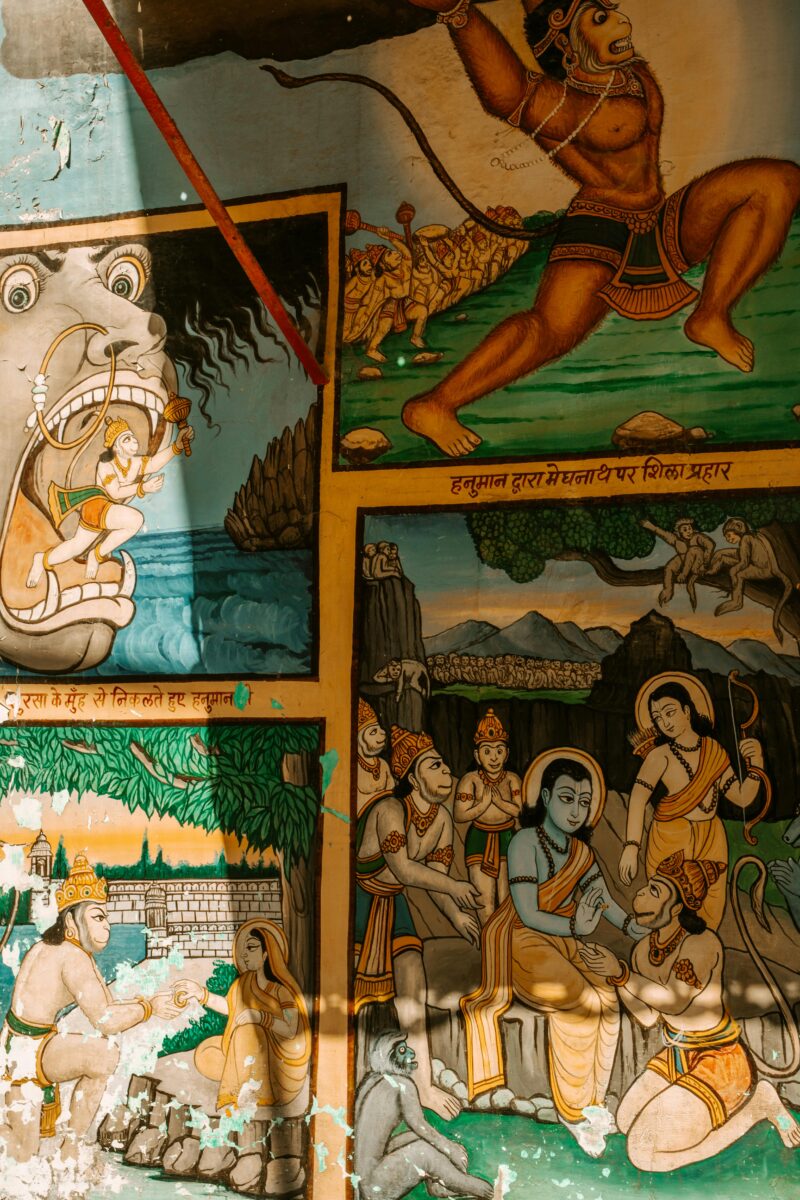
Lord Rama’s descent to Earth was marked by His divine companions—Sita, Lakshmana, bharata, Shatrughna, and Hanuman—who enriched His lilas with their unmatched devotion. Together, they exemplified dharma, love, and ultimate surrender. But His true desire is to dwell within the hearts of His devotees.

To welcome Lord Rama into our hearts, we must cultivate virtues such as purity, sincerity, and selflessness. As we prepare this sacred stage, His presence transforms our lives into celebrations of love and grace.

Divya: A Multifaceted Gem of Meaning

The term “divya” is like a prism, reflecting a spectrum of meanings depending on how one views it. It is a Sanskrit word with several meanings, each carrying a profound significance depending on the context. Some common dictionary meanings include prakāśa (light), daivī (connected to the devatas), ākāśa (sky), manohar (wonderful), and aloukik (transcendental). Words can have different meanings in various fields such as dharma and bhakti. Each word’s meaning is limitless, shaped by one’s perspective.

It’s fascinating how a single word can hold so many meanings and layers, especially in the context of spirituality and bhakti.

Divya in Bhakti

  • Krīḍā – The Dance of Divine Playfulness: Imagine a grand cosmic playground where every action is a spontaneous and joyous play. This is how Krishna’s janma (birth) and karma (actions) are perceived – effortless and delightful. Just as children play driven by pure joy, the divine too engages in the world with ease, lifting mountains and vanquishing demons with a mere thought. This celestial play is the essence of krīḍā.
  • Aloukik – Beyond the Ordinary Realm: The extraordinary nature of Krishna’s actions transcends the mundane. Appearing as a four-handed Viṣṇu only to transform into a charming child, or He manifests in divine forms and performs miraculous feats like dancing with the gopīs in innumerable forms, subduing Kāliya, and lifting Govardhan., these acts are aloukik – supernatural marvels that defy ordinary understanding. They occur not just on our Earth but simultaneously across multiple universes, each as wondrous as the next.
  • Ujjvala (Radiant): Derived from prakāśa, ujjvala signifies that which steals the mind. Krishna’s līlās are captivating, full of rasa (essence), and shine brilliantly amidst the mundane. The diversity of rasas in His pastimes makes them eternally enchanting and never monotonous. Ujjvala also denotes rasa. In the vast expanse of the material world, which often feels dark and lifeless, the sole source of brilliance is bhakti, prem, or rasa. Krishna’s līlās are referred to as divya because they are imbued with rasa. Unlike the monotony of a single rasa, His līlās are a confluence of myriad rasas, giving birth to ujjvala-rasa, thereby making them irresistibly manohara.

Experiencing Kṛṣṇa is like savoring the epitome of divine nectars, as He is rasika-śekhara, the supreme connoisseur of rasa. The ever-changing tapestry of His līlās ensures that one will never grow weary of Kṛṣṇa’s presence and pastimes.

  • Manojña – The Knower of Minds: In the harmonious dance between the divine and the devotee, there lies a profound understanding. Lord perceives the innermost thoughts and desires of His devotees, fulfilling them with a pure and loving touch. This mutual mind-reading, this deep-seated purity, is what makes their relationship divya. It’s a soulful connection where hearts speak louder than words.
  • Vicitra – The Symphony of Contrasts: Imagine a world where contradictions coexist beautifully. Lord embodies this paradox – dancing with the gopīs while being a steadfast brahmacārī, feeling hunger while transcending it. These divine pastimes are a vicitra, a colorful tapestry where opposing elements blend into a harmonious whole, making the līlās endlessly fascinating.

Such is the depth of “divya” – a word that not only defines the divine but also invites us to see beyond the ordinary, into the realm of the extraordinary. 🌟 Understanding Bhagavān’s līlās as divya liberates one from the cycle of material existence, as they transcend ordinary actions and immerse one in divine consciousness.

Gaura Purnima: Celebrating the Birth of Lord Chaitanya Mahaprabhu

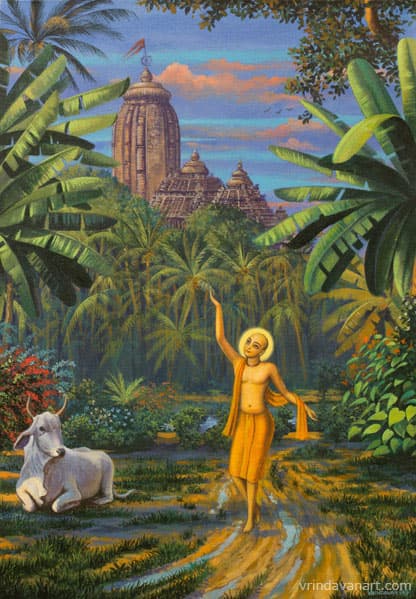
Gaura Purnima marks the divine advent of Lord Chaitanya Mahaprabhu, who is revered as the combined incarnation of Radha and Krishna. His arrival in this material world brought forth a new wave of spiritual enlightenment and pure devotion. As we celebrate this sacred festival, it’s essential to understand His mission and teachings.

Who is Chaitanya Mahaprabhu?

Lord Chaitanya Mahaprabhu is the combined form of Radha and Krishna, embodying the essence of both Shakti (energy) and Shaktiman (the energetic). This divine fusion is beautifully encapsulated in the verse:

śrī-kṛṣṇa-caitanya, rādhā-kṛṣṇa nahe anya

His Mission on Earth

Chaitanya Mahaprabhu’s mission was to propagate the pure love for Krishna, the kind of love the gopis (cowherd girls) of Vrindavan had in their hearts. He sought to teach humanity that it is possible to develop a personal and intimate relationship with God, beyond mere reverence and awe. This concept is eloquently described in the first fourteen verses of Adi Lila, Chapter 1 of the Chaitanya Charitamrita:

anarpita-carīṁ cirāt karuṇayāvatīrṇaḥ kalau

samarpayitum unnatojjvala-rasāṁ sva-bhakti-śriyam

hariḥ puraṭa-sundara-dyuti-kadamba-sandīpitaḥ s

adā hṛdaya-kandare sphuratu vaḥ śacī-nandanaḥ

Unique Contribution

While previous Vaishnav sampradayas (spiritual lineages) like Ramanuja, Madhva, and Vallabha Sampradayas had already established the supremacy of Krishna and devotion to Him, Chaitanya Mahaprabhu brought a unique gift. He introduced the concept of unnatojjvala-rasā – the highest, most sublime, and shining relationship with God, characterized by intense love and sweetness. This relationship is not just about fear and reverence but about embracing, kissing, and playing with Krishna as a friend, lover, or parent.

Love in Separation

A significant aspect of Chaitanya Mahaprabhu’s teachings is the concept of love in separation. Unlike other forms of devotion that focus on union with God, Mahaprabhu emphasized the intense longing and crying for Krishna. This pure and selfless love, marked by a heart filled with service and devotion, is what pleases Krishna the most.

Transcending Vedic Concepts

Chaitanya Mahaprabhu taught that the Vedas primarily present God as majestic, grandiose, omnipotent, and omnipresent. However, He quoted from Śrī Brahma-saṁhitā to reveal a deeper, more intimate relationship with God:

vedeṣu durlabham adurlabham ātma-bhaktau

This verse emphasizes that while it is difficult to attain God through the Vedas, He is easily accessible to His devotees.

Role of Devotees

Chaitanya Mahaprabhu’s mission was not only to distribute the love of God but also to relish and share it. As devotees, it is our responsibility to nurture our souls, relish the love of God, and then distribute it to others. This selfless service and distribution of divine love are what will please Mahaprabhu and help us attain the highest spiritual goals.

Final Thoughts

On this auspicious day of Gaura Purnima, let us meditate on the teachings of Lord Chaitanya Mahaprabhu and strive to become pure devotees. By following His example and embracing His mission, we can perfect our lives and ultimately serve Radha and Krishna in the eternal spiritual realm.

namo mahā-vadānyāya kṛṣṇa-prema-pradāya te kṛṣṇāya kṛṣṇa-caitanya- nāmne gaura-tviṣe namaḥ

 Wishing you a blissful and spiritually enriching celebration!!

Do Not Fear: The Path of Bhakti

Fear is a common experience in the material world, but on the path of bhakti, Lord advises us not to be afraid. When we engage in devotion, we may encounter obstacles, such as opposition from family, fears of losing attachments, or living without sense enjoyment. However, Lord promises protection and guidance, urging us to continue our bhakti without fear.

Understanding Fear in Bhakti

Lord speaks of three levels of fear that one may experience on the path of bhakti:

  1. Initial Fear: At the beginning of bhakti, there is a fear of sinning. This fear motivates us to seek shelter and protection from Lord, aiming to stay pure by maintaining a connection with Him. At this stage, our concern is mainly about ourselves and avoiding impurity.
  2. Intermediate Fear: As we advance in bhakti, the fear of sinning diminishes. We start living a purer life and develop an attachment to Lord. This leads to a fear of displeasing Him with our misdeeds. At this stage, our actions are driven by a desire not to hurt Lord.
  3. Advanced Fear: In the higher stages of bhakti, the fear evolves into a concern about losing Lord or being rejected by Him. This reflects a deep and intimate connection with Lord.

From Vaidhi-Bhakti to Rāga-Bhakti

  • Vaidhi-Bhakti: This initial stage is driven by fear of sinning, offending devotees, and becoming impure. It involves following rules and regulations to break the independent mentality and promote bhakti.
  • Rāga-Bhakti: As one advances, bhakti becomes driven by attachment and love for Lord rather than fear. The fear in rāga-bhakti is about not wanting to hurt Lord and the fear of losing Him, which is considered chaste.

Transcending Fear

Lord encourages us to rise above the material fear and the fear in vaidhi-bhakti. While initial fear serves as an impetus for starting bhakti, true bhakti begins with rāga-bhakti, where attachment to Lord drives our actions. It is essential to channel our fears appropriately and use them to deepen our devotion.

Rāsa-līlā: A Symphony of Divine Teachings and Ecstasy

Rāsa-līlā is not merely a tale of Kṛṣṇa dancing with the gopīs, but rather a profound exposition of Lord imparting wisdom and delight to His devotees through His divine pastimes. It’s crucial to grasp the deeper teachings Kṛṣṇa conveys through the rāsa-līlā.

In the tenth canto of Śrīmad-Bhāgavatam, Chapters 29 to 33, depicting the rāsa-līlā—known as rāsa-pañcādhyāyī—are revered as the pinnacle chapters. The tenth canto is likened to the face of Bhagavān, with the five chapters of rāsa-pañcādhyāyī considered the very heart of Kṛṣṇa. To truly understand a person, one must comprehend their heart, not just their face. Similarly, understanding rāsa-pañcādhyāyī reveals the heart of Kṛṣṇa.

But why is the rāsa-līlā elaborated in five chapters? The term ‘prapañca’ signifies this entire material world, encompassing the five stages of human life:

    • Pa – Pariśrama (Effort): Every individual strives (pariśrama) to earn a livelihood for family sustenance. This effort often leads to mental and physical exhaustion, manifesting as modern-day stress and anxiety, symbolized by the foam (phena) from a horse’s mouth after a strenuous run.
    • Pha – Phena (Foam): Mental and physical weariness resulting from one’s endeavors.
    • Ba – Bandhan (Attachment): One becomes attached to material possessions gained through effort. Attachment forms towards money and family, born out of one’s labor.
    • Bha – Bhaya (Fear): Fear of losing these attachments haunts the mind.
    • Ma – Mṛtyu (Death): These five aspects of prapañca bind an individual to the material existence.

    Escaping prapañca requires understanding the five chapters of rāsa-pañcādhyāyī and immersing in bhakti. This significance of ‘five’ reflects the transcendental antidote to material entanglements.

    Rāsa-līlā embodies not merely a dance but an ecstatic experience of ānanda (bliss) or brahma-sukha, arising from the union of jīvātmā (individual soul) with paramātmā (Supreme Soul) through prem (divine love). Gopīs symbolize jīvātmā, while Kṛṣṇa represents paramātmā. Through this līlā, Kṛṣṇa teaches that every jīvātmā can establish a divine relationship with Him and experience transcendent ānanda. Kṛṣṇa, as the ocean of rasa (rasovaisaḥ), shares this divine essence with purified souls through tapsaya (austerity), sensory control, and bhakti, manifesting the rāsa-līlā.

    Gopīs are far from ordinary beings. Millions of ṛṣi-munis (sages) perform penances for countless years yet fail to glimpse even a ray of light from Bhagavān’s lotus feet. How, then, can the gopīs who danced with Kṛṣṇa be considered ordinary?

    By contemplating rāsa-pañcādhyāyī, one delves into the divine heart of Kṛṣṇa, transcending material existence and embracing the boundless ānanda in union with the Supreme.

    Isn’t it fascinating how Kṛṣṇa’s divine dance goes beyond mere storytelling, teaching profound lessons and offering unparalleled bliss?

    The Purpose Behind Sin.

    Lord, in His supreme purity, is the source of all creation, including sin. Vyāsadeva explains that Lord created sin with a profound purpose: to help us understand the nature of good and piety. Without sin, one cannot differentiate between pāpa (sin) and puṇya (virtue). Through the experience of sin and the subsequent distress it brings, we gain insights into the purpose of life and the consequences of our choices.

    Lord’s Intervention and Our Responsibility

    Nothing in this world moves or functions without Lord’s intervention. As stated in the Bhagavad Gita, puṇya originates from Bhagavān’s chest, and pāpa from His back. Kṛṣṇa, the cause of all causes, is not responsible for our distress—we are. Our happiness or distress depends on the choices we make: engaging in pious activities brings happiness, while sinful actions lead to suffering.

    The Role of Negative Forces

    Some may argue that Lord created negative forces to trap us, but this is not the case. Lord created these forces to awaken our vivek (discrimination) and strengthen us to overcome evil. To become strong, we must face challenges and enemies. The more we win against these negative forces, the stronger our minds become. Only a strong mind can truly connect with Lord, while a weak mind remains trapped in fear and wrong decisions.

    Modern Education vs. True Knowledge

    Modern education focuses on technology and material knowledge, often neglecting the development of the mind and morals. Influenced by the ideas of Aristotle, Socrates, and Plato, modern education lacks emphasis on the mind and soul. In contrast, sādhus and saintly knowledge aim to strengthen our minds, develop our character, and give us purpose. This is the true essence of social service, as it prevents society from collapsing into chaos and barbarism.

    The Importance of Lord in Our Lives

    All other forms of knowledge, such as chemistry, physics, and engineering, may be necessary, but they are not sufficient for a meaningful life. Without Lord, everything becomes useless. Lord’s creation is meant to teach us the true purpose of life. By viewing the world through the eyes of the Bhagavad Gita, we can evolve our minds, intelligence, and ātmā. Connecting with Bhagavān helps us understand the utility of the material world and leads us to true happiness.

    The Role of Devotion and Attachment to Lord

    Developing a relationship with Lord requires contemplation of His pastimes and actions. Instead of worrying about the past or future, we should think about Lord’s pastimes and how our actions can please Him. This will help us develop a strong attachment to Him and lead a life of virtue. Even if we falter in our devotion, Lord is always there to protect and uplift us. The losses we face in this path are temporary, and Lord’s protection ensures our ultimate well-being.

    Conclusion

    In conclusion, Lord created sin and negative forces with a higher purpose: to awaken our inner strength and discrimination, leading us towards a life of virtue and true happiness. By understanding the profound teachings of the Bhagavad Gita and connecting with Lord, we can navigate the challenges of life with wisdom and grace. Modern education, while important, cannot substitute the spiritual and moral guidance provided by sādhus and saintly knowledge. Ultimately, it is our relationship with Lord that gives our lives meaning and helps us achieve lasting peace and fulfillment.

    Contemplation

    Contemplation can be understood in two distinct forms: one through intellectual analysis and the other through deeper, contemplative understanding.

    A muni, who embodies purity and knowledge, delves into the intellectual realm using intuition on the ātmā (soul) platform. The muni strives to comprehend Lord (the Supreme Being) at the ātmā level, where Lord Himself illuminates the seeker with divine understanding. Through meditation, the muni seeks to grasp the infinitude of Lord, and Lord reveals His infinite nature directly to the seeker.

    In faiths like Christianity and Islam, revelation holds significant importance. Followers of these traditions emphasize the use of intelligence, intuition, and realization to comprehend the divine.

    However, a profound distinction exists between understanding Bhagavān through the intellect and through the ātmā. The contemplative approach at the ātmā level provides a deeper, more unified understanding, while intellectual understanding often leads to contradictions and fragmentation.

    Kṛṣṇa clarifies this difference in the Bhagavad Gītā, stating:
    “sāṅkhya-yoga-upr̥thag-bālāḥ pravadanti na paṇḍitāḥ”
    (“Those who claim that sāṅkhya (philosophical knowledge) and yoga (spiritual practice) are distinct are fools, not wise.”)

    Both the muni and the yogī ultimately connect with Lord at the ātmā platform. While the muni realizes Lord through contemplative understanding, the yogī seeks to unite with Him through spiritual discipline. Neither operates solely at the level of intellect; instead, they transcend to the level of intuition and realization.

    Bhakti and the Ātmā Platform

    In the path of bhakti (devotion), knowledge operates beyond the intellectual plane. Bhakti is centered on contemplative understanding, bypassing the mind, intelligence, and false ego. Unlike jñānīs (philosophers) who engage in intellectual reasoning, devotees seek to experience Lord through the ātmā platform, immersing themselves in His rasa (divine essence) and pastimes.

    Differentiating Ātmā-Level Understanding from Intellectual Understanding

    How can one discern whether their understanding arises from the ātmā or the mind? At the intellectual level, reasoning and logic dominate, resulting in limited anubhav (realization). In contrast, at the ātmā level, one transcends logic, immerses in divine rasa, and enters the pastimes of Lord. Intellectual understanding enables comprehension of philosophy but cannot bridge the seeker to rasa or the intimate pastimes of Lord.

    Conclusion

    True understanding of Lord is not confined to intellectual pursuits but blossoms at the ātmā platform through contemplative realization. While the intellect provides tools for analysis and philosophy, it cannot access the depths of divine rasa and the infinite nature of Bhagavān. Only through intuition, devotion, and the grace of Lord can one transcend the mind and intellect to experience the divine fully. This contemplative understanding is the essence of spiritual realization, guiding the seeker to merge into the eternal truth and infinite bliss of Lord’s pastimes.

    The Power of Prārthanā: Why Should We Offer Prayers When Lord Knows Everything?

    The concept of prārthanā (prayer) in devotional practice is profound and subtle. The word “prārthanā” itself is derived from pra + artha + na:

    • Pra means complete or fully, as seen in the word prahlāda, meaning “complete enjoyment.”
    • Artha means desire or purpose.
    • Na is a suffix that makes the word feminine.

    In Sanskrit, some words are feminine or masculine based on their inherent purpose. Prārthanā, as a feminine word, is meant for Bhagavān’s pleasure, much like a devotee’s service to the Divine is for His joy. The word suggests that prayer is an act of offering something to Lord, not merely asking for something. Just as a mother gives to her child without expecting anything in return, a devotee’s prayer is an offering of love and service, asking Lord for the strength to serve Him, not for material desires.

    What Should One Pray For?

    Śrīla Prabhupāda emphasized that true prayer is not about asking Lord for material things, but about expressing the desire to serve Him. A devotee’s prayer is rooted in a selfless request: “Bhagavān, please engage me in Your service.” It is the prayer of a soul who desires to fulfill the Lord’s wishes, transforming personal desire into a prayer for divine service. While ordinary people pray to ask, a devotee’s prayer reflects a yearning to offer—an offering of service, love, and surrender.

    In the essence of prārthanā, we see a shift from asking for something from Lord to asking for the ability to serve Him, to fulfill His desires. The deeper significance lies in indirect expression (parokṣavāda)—prayer is meant to please Lord by aligning our desires with His divine will.

    The Feminine Nature of Prārthanā

    The feminine aspect of the word prārthanā is not just grammatical but symbolic: it signifies giving, as a female is considered a source of nurturing and receiving joy. The suffix “na” (as in “Nā Bhagavān”) reflects an absence of svārtha (self-interest). When we say “Nā Bhagavān” in response to His inquiry about our desires, we express our selfless nature, surrendering all personal wishes in favor of His will. Prārthanā, thus, becomes a vehicle to give rather than take from Bhagavān.

    The Purpose of Prayer: To Serve, Not to Receive

    The core of all prayers is to please Lord and to seek the opportunity to serve Him. True prayer, at its heart, is the devotion that arises when we desire to fulfill the Divine’s wishes, not our own. The devotee asks not for material gain but for the strength to perform service and offer their heart in devotion.

    Prayers can be categorized into external and internal:

    • External prayers involve speaking or singing the hymns and praises of the Lord.
    • Internal prayers are more profound, as they come from the heart, reflecting the devotee’s true understanding of the prayer’s mood and meaning.

    External prayers alone may not reach Lord, but it is the internal prayers, full of understanding and heart, that truly please Him. It is in the quiet, sincere prayers offered from the soul that the devotee connects with Lord in the most intimate and profound way.

    Offering Prayers in the Right Mood

    The proper mood behind the prayer is crucial. For example, one should offer Kṛṣṇa-stuti (praise of Kṛṣṇa) to Rādhārānī and Rādhā-stuti (praise of Rādhā) to Kṛṣṇa—offering each prayer with the understanding of their divine roles and mutual love. This attitude is vital for Bhagavān’s pleasure. Without this understanding, prayers may not have the desired effect.

    The Continuous Nature of Prayer

    Prayer is not a one-time offering but a continuous connection between the jīvātmā (individual soul) and Bhagavān. Prayers should be offered twenty-four hours a day—whether through words, thoughts, or deeds—maintaining a constant bond with the Divine. It is this continual offering of our hearts in devotion that transforms prayer into a powerful force in the devotee’s life.

    Conclusion: Prārthanā as the Path to Devotion

    In conclusion, prārthanā is not just about asking, but about offering our hearts and desires to Lord, seeking only the chance to serve Him. It is the ultimate expression of selflessness, where desires transform into devotion, and the heart is aligned with the Divine. By offering our prayers with understanding and sincerity, we deepen our connection to Lord, not just as a means of asking, but as an act of devotion and love.

    Lord’s Selective Mercy

    Not everyone receives Lord’s mercy indiscriminately. If He gave mercy to both the qualified and unqualified, what would be the purpose of following the rules and regulations He ordains? Why would anyone adhere to them?

    The Meaning of Ātma-Bhāvitaḥ

    The answer lies in the phrase bhagavān ātma-bhāvitaḥ. Lord bestows mercy upon those who are ātma-bhāvitaḥ. This term has been interpreted by various commentators, and one common understanding is that ātmā refers to Bhagavān’s devotees. Lord considers His devotees as His very soul. He keeps His devotees close to His heart and grants mercy to those whose souls are filled with Lord’s (feelings) for Him.

    Importance of Seva-Bhāvana

    Jīva Gosvāmī and Vallabhācārya explain that one who is deeply attached to Lord and harbors genuine feelings for Him will receive His mercy. This cannot be achieved merely through studying and reciting the Vedas or performing bhakti as a ritual. The key element is the feeling of seva (service) or seva-bhāvana. This concept is the essence of kṛṣṇa bhāvanāmṛta saṅga. Lord’s mercy is not attainable through jñāna (knowledge), dhyāna (meditation), tapa (austerities), ritualistic svādhyāya (self-study), or dāna (charity). The path of bhakti or puṣṭi-mārga emphasizes the importance of having sincere feelings for Bhagavān. The more feelings one has for Lord, the more mercy one receives, reducing attachment to the material world.

    Devotees and Their Influence

    The second interpretation of ātma-bhāvitaḥ is that ātmā means bhakta (devotee), and bhāvitaḥ means influenced. Lord is moved by the devotion of His devotees, whom He considers His very soul, and thus grants them mercy.

    Śrīla Prabhupāda advises that one should strive to impress Bhagavān to receive His mercy. It is beyond human understanding what Lord thinks and does. Sometimes, He deliberately places His advanced devotees in challenging situations. Lord may instill kāma (desire), krodha (anger), and lobha (greed) in their minds. In such times, a true devotee perceives that it is Lord, not māyā (illusion), behind these trials.

    The Role of Śrīmatī Rādhārānī

    The third meaning of ātma-bhāvitaḥ relates to Śrīmatī Rādhārānī, who is Bhagavān’s ātmā. When Kṛṣṇa is Rādhamayi (filled with thoughts of Rādhārānī), one receives His mercy. Kṛṣṇa’s mercy cannot be attained directly; it comes through Śrīmatī Rādhārānī. Therefore, we worship Rādhā and Kṛṣṇa together, acknowledging that both bestow mercy. When we remind Kṛṣṇa of Śrīmatī Rādhārānī, He grants mercy. This is why we chant Hare Kṛṣṇa, invoking Rādhārānī’s name.

    Gauḍiya Sampradāya Approach

    In the Gauḍiya Sampradāya, prayers are offered in the name of Śrīmatī Rādhārānī. From the term ātma-bhāvitaḥ, we learn that one cannot receive Lord’s mercy directly; there must be a devotee who resides in Lord’s heart. Śrīmatī Rādhārānī resides in Kṛṣṇa’s heart, so we approach Kṛṣṇa through Her.

    Conclusion

    Lord’s mercy is selective and not bestowed upon everyone equally. The concept of ātma-bhāvitaḥ emphasizes the importance of devotion filled with genuine feelings for Bhagavān. Whether through the influence of dedicated devotees or through the grace of Śrīmatī Rādhārānī, Krishna’s mercy reaches those who are sincerely devoted and filled with bhāvanas for Him. This highlights the significance of following the path of bhakti with heartfelt devotion, ensuring that one’s practice aligns with the true principles of divine love and service.

    Why Does Krishna Come to This World?

    It might seem surprising why Krishna would choose to come to this planet when He can accomplish anything from His divine abode. His appearance in this world is known as an avatār. Krishna incarnates here to connect us with Him through His mercy.

    When dharma is in danger or under threat, Krishna manifests Himself. For instance, five thousand years ago, before Krishna’s appearance, Kaṁsa halted yajñas and worship of Krishna worldwide, claiming divinity himself and demanding worship. He persecuted devotees and annoyed Ṛṣi-munis and sādhus, aiming to destroy dharma. Bhagavān appears whenever dharma declines or the population of sādhus or Vaiṣṇavas diminishes to re-establish dharma. This is why Krishna made Yudhiṣṭhira Mahārāja the emperor, as he personified dharma.

    Krishna comes every millennium by His independent will (Sambhavāmi). Unlike us, who are bound by karma to come into this world, Krishna decides when to appear. He assesses the situation and chooses the right time to descend. He comes for three main reasons:

    1. Paritrāṇāya Sādhūnāṁ: Bhagavān appears to deliver sādhus and ordinary people from the influence of māyā (illusion). By performing attractive līlās (divine pastimes), He helps devotees become satisfied discussing them(kathayantaś ca māṁ nityaṁ tuṣyanti ca ramanti ca, BG 10.9), bringing peace to their minds.This attraction leads to vairāgya (detachment), freeing them from māyā’s influence. Devotees are distressed not seeing Bhagavān, and to relieve them, He appears. Ṛṣi-munis and devotees like Śabarī, who waited thousands of years for Lord Rāma, find their distress alleviated by His appearance.
    2. Vināśāya Ca Duṣkṛtām: Simultaneously, Krishna annihilates asuras (demons). Although He could do this through His energies or devotees, Krishna enjoys fighting and personally comes to kill them, giving them mokṣa (liberation). He also destroys demonic qualities within us, like kāma (lust), krodha (anger), lobha (greed), and dveṣa (hatred). Bhagavān’s captivating form, qualities, and pastimes purify our hearts. Where Rāma resides, kāma has no place.
    3. Dharma-Saṁsthāpanārthāya: Here, dharma means bhakti (devotion). Bhagavān comes to establish bhakti, teaching us how to practice it through His devotees. He arrives with His associates to demonstrate true bhakti.

    Establishing a Connection with Bhagavān

    We should read the Bhagavad Gita (BG) and strive to connect with Bhagavān. However, Bhagavān Himself desires a relationship with us. Often, we run away by making various plans in different lives. If we sincerely wish to attain Bhagavān, our minds will naturally fix on Him, just as a businessman thinks about business even while on vacation. Time for bhakti is not found by carving out a schedule but by setting the right goal. When Bhagavān is our goal, we naturally find time for Him. Understanding why Bhagavān comes helps cultivate this desire. Viewing Bhagavān through the lens of BG enriches our connection with Him.

    Conclusion

    Krishna’s descent into this world, known as avatār, serves profound purposes beyond our comprehension. He comes to restore dharma, protect His devotees, and establish the principles of bhakti. Through His divine pastimes, He attracts our minds, freeing us from the bonds of material existence and instilling a deep sense of vairāgya (detachment).

    Understanding Bhagavān’s motivations and actions helps us cultivate a genuine desire to connect with Him. By reading the Bhagavad Gita and Śrīmad Bhāgavatam, we can align our goals with His divine will. This alignment naturally directs our time and energy towards bhakti, allowing us to establish a meaningful relationship with Him.

    In essence, Krishna’s presence in this world is an expression of His boundless mercy, guiding us towards spiritual fulfillment and eternal happiness. His teachings and pastimes illuminate the path of devotion, encouraging us to embrace bhakti wholeheartedly.

    Srila Bhaktisiddhanta Sarasvati Thakur: The Force of Destruction and Renewal

    Srila Bhaktisiddhanta Sarasvati Thakur was known as the “Lion Guru,” producing many other “lions” who preached globally. He was a saint dedicated to destroying misconceptions and delusions while internally relishing the sweetness of Vrindavan. This duality—ferocious on the outside, tender on the inside—defined his unique approach to spirituality.

    One word that epitomizes Srila Bhaktisiddhanta Sarasvati Thakur is “Destruction.” He was not a typical spiritual figure known for mere construction; he was a reformer who dismantled the misinterpretations and deviations that had infiltrated the spiritual landscape.

    Destroying Sahajiyaism

    Srila Bhaktisiddhanta Sarasvati Thakur, who appeared in 1874 and disappeared in 1936, took it upon himself to cleanse and elevate the movement of Lord Caitanya Mahaprabhu. At that time, scholarly and aristocratic circles regarded Mahaprabhu’s movement as degenerate, overly sentimental, and tainted with tantric practices. It was akin to the hippie movement of the 1960s and 1970s in the United States, immersed in a hallucinatory world. Through his scholarly lectures, writings, and commentaries, he crushed Sahajiyaism. His secretaries recorded his profound speeches, which were published in various magazines. He aspired to publish daily magazines, spreading the high philosophical standards of Gaudiya Vaishnavism. His erudite language, almost sanskritized Bengali, was aimed at scholarly circles, distinguishing Gaudiya Vaishnavism from the misguided Sahajiyaism.

    Srila Bhaktisiddhanta Sarasvati Thakur deliberately used complex language to ensure that the philosophical depth of Gaudiya Vaishnavism was recognized. He made a significant impact, with many of his disciples being highly educated, joining from intellectual movements like Brahmo Samaj and Ramakrishna Mission. By establishing a scholarly ethos, he ensured that Lord Caitanya’s movement was seen as a high-order philosophy, unifying all Vaishnava sampradayas.

    For Srila Bhaktisiddhanta Sarasvati Thakur, kirtan was not merely singing loudly but an internal and external war against deviations, misconceptions, and materialistic civilization. He fought Sahajiyaism at its root, making its proponents fear his resolute stance.

    Srila Bhaktisiddhanta Sarasvati Thakur frequently participated in Vraj Mandal Parikrama, often criticizing Sahijyas. He emphasized the importance of understanding the essence of the message rather than mere imitation. His purity, strong message, and deep concern for fallen beings inspired many to join his mission.

    Destroying Mayavad

    Mayavad philosophy, which asserts that individual souls are God and denies the personal aspect of the divine, was another target. Srila Bhaktisiddhanta Sarasvati Thakur took immense efforts to dismantle this philosophy by publishing many books of Madhvacharya and other Vaishnava acharyas. He believed that before spreading the sweetness of God, the jungle of Mayavad had to be cleared. He traveled to South India to collect these crucial texts, ensuring their availability for devotees and scholars, debunking Mayavad through his writings and lectures.

    Combatting Casteism

    Srila Bhaktisiddhanta Sarasvati Thakur also fought against casteism, which was deeply entrenched in the society of his time. Brahmanas took pride in their position, claiming divine monopoly and considering Shudras and Vaishyas inferior. In a famous meeting in Balighai, Bengal, he delivered a powerful lecture, later documented in the book “Brahmana and Vaishnava.” Initially, he praised the unique position of Brahmanas as described in scriptures but then boldly stated that a Brahmana who is not a devotee of Vishnu is lower than a dog-eater. This declaration resonated deeply, earning applause and respect, but also envy from certain Brahmanas who sought to harm him. However, as a true ambassador of God, he remained unscathed.

    Destroying Materialistic Civilization

    To combat materialistic civilization, Srila Bhaktisiddhanta Sarasvati Thakur sent his disciples to the West to propagate Lord Caitanya Mahaprabhu’s movement. This was before A.C. Bhaktivedanta Swami Prabhupada traveled to the West. One notable disciple, Bon Maharaj, faced challenging questions from Western scholars, but Srila Prabhupada adeptly answered and defeated these queries, showcasing the profound depth and clarity of their teachings.

    Conclusion

    Srila Bhaktisiddhanta Sarasvati Thakur was a force of intellectual and spiritual reformation. His relentless efforts in crushing Sahajiyaism, casteism, and Mayavad established a distinct and elevated platform for Gaudiya Vaishnav His teachings and reforms continue to inspire and guide the path of pure devotion, underscoring the importance of adhering to true philosophical and devotional principles.

    The Results of Bhakti

    To effectively measure one’s progress in bhakti (devotion), one should exhibit some degree of these results in their devotional life. If not, it may indicate incorrect application of the process or misunderstanding of the principles.

    1. Praśānta-manasaṁ (Fully Satisfied Mind)

    The first effect of bhakti is praśānta-manasaṁ, which means one’s mind remains steadfast even in the face of great difficulties. To determine if one’s mind is truly fixed on Bhagavān, one should observe their state during chanting. If the mind does not wander while chanting, it indicates a state of praśānta-manasaṁ. It is easy to mistakenly believe that a busy mind is undisturbed, but the real test lies in the practice of chanting. Properly practiced chanting allows one to enter a state of deep focus and peace during the first round of chanting Hare Kṛṣṇa, feeling the presence of Lord and remaining calm despite ongoing problems. The knowledge that Lord is with them provides an enduring sense of peace.

    2. Sukhamuttamam (Transcendental Happiness)

    The second effect is sukhamuttamam, which is experiencing happiness in the happiness of Lord. This manifests as joy in serving Lord and in chanting. Unlike adhamasukh, which is happiness derived from personal pleasure, sukhamuttamam represents a higher, transcendental bliss. One can recognize this bliss when they develop a distaste for material pleasures and a disinclination towards seeking personal happiness.

    3. Śānta-rajasaṁ (Peaceful Mind)

    The third effect, śānta-rajasaṁ, is characterized by a peaceful mind free from distractions, laziness, and anarthas (unwanted things). This state eliminates mental unrest and ensures enthusiasm in devotional activities.

    4. Brahma-bhūtam (Union with Bhagavān)

    The fourth effect is brahma-bhūtam, which involves establishing a profound connection with Lord, feeling that Lord is one’s own, and developing deep emotions for Him. This connection naturally manifests during chanting, fostering a sense of belonging to Bhagavān’s divine family.

    5. Akalmaṣam (Freedom from Impurity)

    The fifth effect, akalmaṣam, signifies freedom from the tendency to seek self-happiness (sva-sukhavāsana). This purity aligns with dharma, leading one to despise the habit of self-pleasure and instead focus on pleasing Lord and His devotees.

    If these effects are not apparent during chanting, maṅgala-āratī, or serving Lord and His devotees, it suggests an issue in the practice that needs addressing. Revisiting and rectifying mistakes is essential. Often, devotees overlook these progress markers, focusing instead on staying busy with services, which can be misleading.

    To conclude, the five effects of bhakti—praśānta-manasaṁ, sukhamuttamam, śānta-rajasaṁ, brahma-bhūtam, and akalmaṣam—serve as essential benchmarks for measuring progress in devotional life. Each effect signifies a deeper connection with Lord, characterized by a peaceful and fixed mind, transcendental happiness, the eradication of distractions, a profound union with the divine, and purity from self-centered desires. Recognizing these effects is crucial for ensuring that one’s practice of bhakti is aligned with the true principles of devotion. If these results are not evident, it may be necessary to revisit and refine one’s practice according to the guidelines provided in the Bhagavad Gita, ensuring that the journey of bhakti is both meaningful and fulfilling.

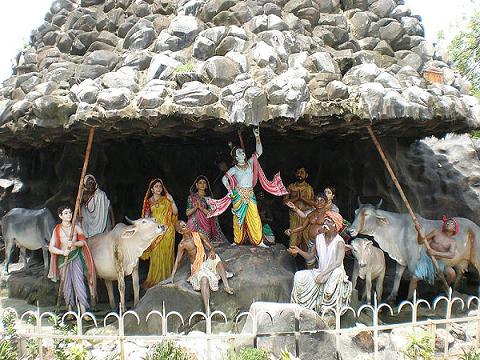
    Govardhan Lila: The Glorious Pastime of Lord Krishna and His Devotees

    Govardhan Lila is indeed a beautiful and profound pastime of Lord Krishna, filled with deep spiritual lessons and symbolism. Here are some key points about this divine event:

    The Meaning of Govardhan

    The word “Govardhan” is derived from two Sanskrit words: “Go” and “Vardhan.” “Go” can mean earth, cows, gopis (cowherd girls), mountain, clouds, and renunciation, while “Vardhan” means to intensify or increase. Therefore, Govardhan signifies:

    • Krishna increases the bliss of the earth (Vraj Bhumi) by standing on it.
    • Krishna gives bliss to the cows, earning Him the name Govinda, the protector of cows.
    • Krishna gives bliss to the gopis, the cowherd girls who love Him deeply.
    • Krishna gives bliss to the mountain, Govardhan, by touching it with his hands and feet.
    • Krishna gives bliss to the clouds, represented by Indra, by overcoming his pride and making him surrender.

    The Teachings of Govardhan Lila

    Govardhan Lila imparts several important lessons about devotion and service:

    • Service in Bliss: Despite suffering and miseries, Govardhan was in bliss because he was serving Krishna. This teaches that service to the divine can transform suffering into joy.
    • Contact with Krishna:  Govardhan was blessed to be in contact with Krishna for seven days and nights, showing that through service, one can come into contact with the divine and find true satisfaction.
    • Empowerment through Service: By serving Krishna, devotees can achieve more than they could on their own, as Krishna empowers those who serve him.
    • Satisfying Krishna: Govardhan’s example shows that a devotee’s ultimate goal should be to increase the pleasure of the Lord in all respects.
    • Engaging Others in Service: The best way to serve Krishna is by engaging others in His service, thereby expanding the circle of devotion.
    • Making Krishna Remember His Devotees: When we remind Krishna of His devotees and make them happy, it pleases him even more. Conversely, trying to separate Krishna from His devotees can invoke his displeasure.
    • Intensifying Service: By learning from Govardhan, we can intensify our service to Krishna, ensuring that our actions are always aimed at increasing His pleasure and the well-being of His devotees.

    These teachings encourage us to deepen our devotion and service, always keeping Krishna and His devotees at the center of our actions.

    This pastime also highlights the themes of bliss and renunciation, as Krishna and His devotees experience the highest joy and detachment from material miseries.

    Mastering the Practice of Sankirtanam.

    Among the nine processes of bhakti, śravaṇam (hearing) and kīrtanam (chanting or glorifying) are particularly emphasized. Kīrtanam is considered the most important, as stated in the Caitanya Caritāmṛta (CC Antya 4.71): “tāra madhye sarva-śreṣṭha nāma-saṅkīrtana.”

    Kīrtanam encompasses various forms of glorification:

    • Nāma-kīrtanam: Chanting the holy names of Bhagavān.
    • Rūpa-kīrtanam: Glorifying the divine form of Bhagavān.
    • Guṇa-kīrtanam: Praising the qualities of Bhagavān.
    • Līlā-kīrtanam: Narrating the pastimes of Bhagavān.

    The essence of kīrtanam is to praise Lord, as encapsulated in the phrase

    “bolo kṛṣṇa bhajo kṛṣṇa koro kṛṣṇa-sikha.”

    Śrīla Bhaktisiddhānta Sarasvatī Ṭhākur expanded the meaning of kīrtanam to include preaching and spreading the glories of Lord. This can be done through lectures, book distribution, and other forms of outreach, all aimed at inspiring others to glorify God.

    Glorification of God requires a focused mind, and kīrtanam helps devotees fix their minds on the divine, making it an essential practice in the path of bhakti.

    Engaging faculties in chanting means sankirtan which involves focusing the mind, senses, intelligence, and ego on the holy name of Bhagavān. Here’s a breakdown of what happens when one engages these faculties:

    Engaging the Mind

    Fixing the mind on God’s name means concentrating on the sound vibration of the holy name. This practice helps prevent the mind from wandering. When the mind is fixed on the holy name, it naturally leads to smaraṇam (remembrance) of God’s form, qualities, and pastimes. This remembrance brings about a deep sense of connection and devotion. The mind’s functions—thinking, feeling, and willing—become aligned with thoughts of God, experiencing His mercy, and desiring to serve Him.

    Engaging the Senses

    The senses, particularly hearing, play a crucial role in chanting. The Upaniṣads state that the ears are the entrances to the ātmā (soul). By listening to the holy name, the ātmā becomes strengthened. This practice is known as śravaṇam (hearing) and is essential for spiritual growth. It is important to avoid allowing negative influences like lust, anger, greed, and criticism to enter through the ears, as these can disturb the mind and soul.

    Engaging the Intelligence

    The function of intelligence (buddhi) is to apply logic and provide conviction. When chanting, the intelligence reinforces the understanding that one is a servant of Kṛṣṇa. This conviction helps control and direct the thoughts of the mind, ensuring that the thought of being a servant of Kṛṣṇa remains constant. This alignment of intelligence with the holy name strengthens one’s determination and devotion.

    Engaging the Ego

    Fixing one’s ahankār (ego) in the holy name means aligning the sense of self and identity with the divine. Ahankār, which fosters the “Me and mine” concept, when fixed in the holy name, transforms this identification to a divine connection, making one feel that Rādhā and Kṛṣṇa are one’s own. This shift from self-centeredness to divine-centeredness helps in seeing oneself as part of a larger, divine reality.

    Engaging the Soul

    Fixing one’s ātmā (soul) in God’s name involves aligning one’s deepest intentions and resolutions (saṅkalpa) with the desire to please Him. The ātmā provides the power for the mind to make resolutions, and when these resolutions are focused on pleasing God, one’s entire existence becomes dedicated to His service.

    In this state, every action, thought, and prayer is aimed at pleasing God. This dedication is reflected in the practice of sankīrtanam (congregational chanting), where all faculties are engaged in chanting the holy name. This practice helps one overcome māyā (illusion) and achieve spiritual victory, as expressed in the phrase

    “paraṁ vijayate śrī-kṛṣṇa-saṅkīrtanam”

    (all glories to the congregational chanting of the holy names of Krishna).

    Ultimately, this means living and dying with the sole purpose of pleasing God, and praying for His mercy to ensure that one’s life and death are aligned with His will. This is a profound aspect of kīrtanam .

    Chanting, therefore, is a holistic practice that engages multiple aspects of one’s being, leading to spiritual growth and a deeper connection with the divine.

    The essence of saṅkīrtanam and its profound impact on one’s spiritual journey:

    Connection with God: Through continuous saṅkīrtanam, one’s sambandha-jñāna (knowledge of one’s relationship with the Divine) matures. This leads to a deep realization that one belongs to the spiritual world rather than the material one. This connection brings inner guidance from God, helping one discern right from wrong. Advanced devotees, feeling this connection, often yearn to return to the spiritual realm, especially during times of disturbance, which intensifies their desire to attain God.

    Development of Vairāgya: Saṅkīrtanam fosters a growing attraction to God and a corresponding distaste for the material world. This detachment (vairāgya) is a sign of spiritual progress. As one develops a liking for God, His devotees, and His abode, one desires to stay with them, which requires becoming like them in purity and devotion.

    Purity and Bhoga-Vāsana: God and His devotees are pure and free from bhoga-vāsana (desire for material enjoyment). This purity inspires devotees to give up their own bhoga-vāsana to gain their association.

    Genuine Vairāgya: True vairāgya is not just about disliking the material world but developing a genuine feeling of detachment. This detachment is not merely sentimental but comes from a deep realization and attraction to Bhagavān.

    Chanting and Remembrance: Chanting Hare Kṛṣṇa brings joy by remembering the divine pastimes and associates of God, such as Rādhā, Kṛṣṇa, Yaśoda, Nanda Mahārāj, the gopīs, and the gopas. This remembrance contrasts with the negative feelings towards the material world, reinforcing the desire to reside in Goloka.

    Saṅkīrtanam transform one’s spiritual journey, leading to a deeper connection with the divine and a natural detachment from the material world.

    Radharani: The Embodiment of Divine Love and Devotion

    As far as Gaudiya theology is concerned, we are exclusively devoted to Srimati Radharani. Our founder acharya, Srila Prabhupada, and his Guru, Bhaktisiddhanta Sarasvati Thakur, emphasized that we are shuddha-shakta—pure worshipers of energy. While people in Bengal who worship Kali are called tantrics, we worship the energy of Lord Krishna ie Srimati Radharani.

    Types of Tantrics

    Tantrics are of two types: left-wing and right-wing. Left-wing tantrics worship Durga and practice black magic, whereas right-wing tantrics worship Radha. We, however, worship the divine love of Srimati Radharani for Krishna—that’s her magic.

    The Importance of Srimati Radharani

    Understanding who Srimati Radharani is and how she can enchant and attract Krishna is crucial, especially today on Radha Ashtami. It is only through Radharani that we can approach Krishna.

    Srimati Radharani’s Unique Position

    Govindānandinī rādhā, govinda-mohinī.

    Krishna das Kaviraj Goswami says that Srimati Radharani gives pleasure to Sri Krishna and Govinda-mohini is the only one in entire Vrindavan who can attract Krishna. No one else in Vrindavan can enchant Him—not His servants, His best friends, His parents, nor even the other gopis. Krishna is under the control of Srimati Radha, and He cannot be controlled by anyone else. This is why one of the names of Srimati Radharani is Damodara-rati-vardhana-vese—she can bind Shri Krishna with the chords of love.

    Embodiment of All Goddesses

    Govinda-sarvasva, sarva-kāntā-śiromaṇi.

    For Her, Krishna is everything. She is the embodiment of all the goddesses. It is said that if you take Krishna and extract all of His mercy and love for all the living entities in this entire universe and His devotees, and if you give a form to it, that form would be Srimati Radharani.

    Approach to Worship

    For this reason, the residents of Vrindavan seek to approach Krishna through Her. We Vaishnavas worship Srimati Radharani by offering this verse from CC Adi lila 4.83.

    devī kṛṣṇa-mayī proktā
    rādhikā para-devatā
    sarva-lakṣmī-mayī sarva-
    kāntiḥ sammohinī parā

    Meanings of “Devi” According to Krishna Das Goswami

    1. Dyotamānā: This means “full of effulgence.” Srila Prabhupada writes that it signifies “shining with love for Krishna.” Krishna is attracted to Srimati Radharani not because of her physical beauty, although she is the most beautiful female in the entire universe, even in the spiritual world. Instead, Krishna is drawn to Her shining devotion, which illuminates the entire universe. Everyone, including Lakshmi, Sachi, Uma, Brahma, and Shiva, praises Radharani for Her love. The term “shining” also refers to her knowledge and beauty.
    2. Paramā Sundarī This means “the most beautiful female.” Radharani’s beauty is attributed to Her qualities. Scriptures advise not to judge anyone by their physical appearance. A person is known by their qualities, and in the eyes of Lord Krishna, Radharani is the most beautiful because of Her 25 qualities, which can control Krishna, who has infinite qualities. This may not be mathematically rational, but in the spiritual world, even one of her qualities is so profound that it can bring Krishna under her control.
    3. Kṛṣṇa-pūjā-krīḍāra vasati nagarī: This means “the lovely abode of worship and love sports of Lord Krishna.” Radharani worships Krishna not with incense and lamps, although in the spiritual world, the gopis offer him lamps, incense, and flowers. Instead, her mode of worship is through Her glances, sweet words, anger, jealousy, cooking, and silence. She teaches us that the best mode of worship of Krishna is through activities done for him. She embodies service and shows us that to please Krishna, one must express their love through actions, which is the true worship of Lord Krishna.

    Meaning of the Name “Radha”

    The name “Radha” is derived from the Sanskrit word “aradhana,” which means worship. Radha is considered the supreme devotee of Lord Krishna, and Her primary role is to fulfill Krishna’s desires and serve Him with utmost devotion.

    In the Puranas, Radha is often referred to as “Radhika,” highlighting Her exceptional ability to worship and please Krishna. She is seen as the embodiment of devotion and love, teaching devotees how to serve and satisfy Krishna.

    Srila Prabhupada says in one of his lectures that if you want to approach Krishna, you should approach Radha. If Radha recommends to Krishna, “Here is a good boy or girl, please accept them,” Krishna is obliged to accept them. Prabhupada also says that Radharani is the pleasure potency of Krishna, known as Haladini Shakti. Whatever pleasure any devotee attains by serving Krishna is due to the blessings of Radha.

    Radha’s Role in Devotion

    Radha’s role is not just limited to being Krishna’s consort; She is also the guiding force for devotees, inspiring them from within to serve Krishna better. This concept is central to the teachings of Gaudiya Vaishnavism, which holds that serving in the camp of Radha is greater than being directly with God.

    Blessings on Radha Ashtami

    Today marks the manifestation of Srimati Radharani in this material world. On such auspicious occasions, Radha is showering blessings on all her devotees and all those who approach Her. The more we understand Her and delve into her mysteries with an attitude of reverence, the more She will bless us.

    Srimati Radharani Ki Jai!

    The nature of speech and its impact on bhakti

    Prajalpa (idle talk) and jalpa (argumentative speech) can be detrimental to one’s spiritual progress. Vāṇī (speech) is a powerful tool that can either uplift or spoil one’s devotion.

    In the context of nyāya (logic), the sixteen types of speech include various forms of debate and discussion. Jalpa,  is a type of debate where the goal is to defeat the opponent rather than seek the truth. This is akin to a lawyer’s approach, focusing on winning the argument rather than uncovering the truth. Such discussions are common but not conducive to spiritual growth.

    The remaining types of arguments fall under prajalpa, which should be avoided by devotees. Here are the four main types of prajalpa :

    1. Saṁśaya: Unnecessary doubt. While healthy skepticism can aid understanding, constant doubting even after evidence is provided is unproductive.
    2. Vāda: Discussions aimed at understanding the truth but with both parties holding their own versions of it. This includes debates between Vaiṣṇavas and Māyāvādīs. Such discussions can be divisive and are best avoided.
    3. Vitaṅḍa: Denying the opponent’s argument regardless of its validity. This often happens between senior and junior devotees, where the senior dismisses the junior’s points due to their relative inexperience.
    4. Jāti: Using examples without logical basis to convince others. Arguments based on superficial similarities or differences fall into this category.

    Some very important principles for maintaining harmony and spiritual focus within the devotee community.

    1. Avoid Useless Talk: It’s crucial to avoid speaking unnecessarily or making assumptions when conversing with other devotees. Misunderstandings can easily arise, leading to discord.
    2. Speak Carefully: Even with close devotee friends, one should be mindful of their words. Gossip and idle talk can spread quickly and cause harm.
    3. Speak Dharma: According to the Manu Saṁhitā, one should always speak in alignment with dharma, even in jest. Loose talk and negative comments about others should be avoided.
    4. Instilling Envy: Speaking ill of someone to another person can create envy and negative feelings. This can lead to Vaiṣṇava-aparādha (offenses against devotees), which is highly detrimental.
    5. Maintaining Faith: Careless comments can cause others to lose faith in the speaker and lead to isolation within the community. It’s important to foster positive thoughts and avoid spreading negativity.
    6. Remembering Kṛṣṇa: Engaging in frivolous talk can distract one from remembering Kṛṣṇa. Always strive to keep Kṛṣṇa in mind and avoid forgetfulness.
    7. Face-to-Face Criticism: Criticize others directly and constructively, rather than behind their backs. Conversely, appreciate others when they are not present. This helps build trust and respect.

    The concept of Atyāhāra

    It’s clear that this term encompasses a wide range of meanings, each with significant implications for a devotee’s life. Here’s a summary of the key points :

    Food (Āhāra):

    Devotees should avoid excessive and opulent prasādam.

    Offer the best food to the Lord but consume simple prasādam personally.

    Brahmacārīs and gṛhasthas should limit their intake of sweets.

    Money (Āhāra):

    In bhakti, atyāhāra means not collecting more funds than necessary.

    Funds should be used solely for the service of the Lord.

    Gṛhasthas should avoid over-accumulating money to save time for bhakti.

    Impressions (Saṁskāra):

    The mind’s food consists of impressions from sense objects.

    Avoid unnecessary engagement with sense objects to prevent unwanted impressions.

    Resolve (Saṅkalpa):              

    The food of the ātmā is saṅkalpa.

    Devotees should have realistic and achievable saṅkalpas.

    Unrealistic goals, like attaining Kṛṣṇa prem in a short time, fall under atyāhāra.

    Knowledge (Jñāna):

    The food of the buddhi is jñāna.

    Avoid excessive or useless knowledge.

    Read only as much as necessary for service.

     Occupation (Āhāra):

    The food of life is occupation.

    Devotees should not work more than eight hours a day.

    Excessive work is considered atyāhāra. 

    This is  a comprehensive understanding of how to balance these aspects in a devotee’s life. It’s a valuable guide for anyone practicing bhakti. This balanced approach helps devotees focus on their spiritual practice while managing their worldly responsibilities.

    Kṛṣṇa’s Divine and Sweet Qualities.

    Kṛṣṇa possesses unlimited qualities, but He specifically exhibited sixty-four qualities in human society. These qualities can be categorized as follows:

    1. Fifty Qualities common to Jīvātmā and Kṛṣṇa:
      • These are shared attributes between all living beings (jīvātmā) and Kṛṣṇa.
    2. Five Qualities common to Śiva and Kṛṣṇa:
      • These qualities are shared by Lord Śiva and Kṛṣṇa.
    3. Five Qualities common to Nārāyaṇa and Kṛṣṇa:
      • These are qualities that both Lord Nārāyaṇa and Kṛṣṇa possess.
    4. Two and a Half Qualities common to Rāma and Kṛṣṇa:
      • These are shared attributes between Lord Rāma and Kṛṣṇa.
    5. One and a Half Qualities Unique to Kṛṣṇa:
      • These qualities are exclusively present in Lord Kṛṣṇa.

    Among these sixty-four qualities, Bhagavān’s beauty shines prominently. For Gauḍiya Vaiṣṇavas, Śrī (beauty) is considered the most important quality.

    Let’s delve into the sweet qualities of Lord Kṛṣṇa, focusing on His beauty and other attributes.

    1. Suramyaaṅgaḥ (Beauty): This quality refers to one whose limbs are exceptionally beautiful. In the Gauḍiya Vaiṣṇava tradition, when we discuss Lord Kṛṣṇa in Vṛndāvana, His beauty (śrī) takes center stage. Let’s explore some aspects of His divine form:

    Face: Kṛṣṇa’s face is compared to the moon, radiating a gentle and captivating glow.

    Thighs: His thighs resemble an elephant’s trunk, symbolizing strength and grace.

    Shoulders: Like sturdy pillars, His shoulders support the weight of the universe.

    Hands: His hands resemble delicate lotus flowers, signifying purity and compassion.

    Chest: Kṛṣṇa’s chest is expansive, akin to a wide door, welcoming all devotees.        

    Waist: His waist is slender, adding to His overall aesthetic appeal.

    Softness: His entire body exudes softness, inviting affection and devotion.

    2.  Sarva-sat-lakṣānvitaḥ (Possessing All Good Qualities): Lord Kṛṣṇa embodies every positive attribute. His character is flawless, and His actions are guided by wisdom, compassion, and love.

    3.  Rucira (Invoking Interest and Pleasure): Kṛṣṇa’s beauty captivates not only devotees but even asuras (demonic beings). For instance:

    • Jharāsandha and Kāliya: These asuras momentarily appreciated Kṛṣṇa’s beauty but later succumbed to their hatred and ill intentions.
    • Ānanda (Bliss): Bhagavān’s quality lies in granting bliss to anyone who beholds Him. This joy is inherent in the object (Kṛṣṇa) and not dependent on the observer (seer). Devotees, through their unwavering bhakti, can sustain this bliss.
    • Asuras vs. Sura: While asuras experience fleeting pleasure, devotees relish ever-deepening joy by appreciating Kṛṣṇa’s beauty.

     Kṛṣṇa’s beauty transcends mere physical appearance—it encompasses His divine qualities, which inspire devotion and love in the hearts of His devotees.

    4.Tejasaḥ (Effulgence and Influence): Bhagavān’s qualities resonate throughout the universe. His form emits a radiant effulgence that leaves a lasting impact on all who behold Him. Even asuras like Cāṇūra and Muṣṭika were awestruck by His divine glow in the wrestling arena. This effect isn’t limited to devotees; it touches both suras (divine beings) and asuras (demonic entities). However, in non-devotees, it fades quickly, whereas in devotees, it lingers, deepening their connection.

    Kṛṣṇa’s speech isn’t just about language—it’s a divine expression that resonates with love, wisdom, and truth.

    5. Bala (Strength): Kṛṣṇa’s strength is awe-inspiring. He effortlessly lifted Govardhan Hill, much like an elephant lifting a small ball. Similarly, He tossed Ariṣṭāsura—a massive demon whose head touched the sky—like a child playing with a cotton ball. His divine might transcends ordinary limits.

    6.Vyasānvitaḥ (Beautiful Kiśora Form): In His youthful kiśora form, Kṛṣṇa’s beauty reaches its pinnacle. His enchanting appearance captivates hearts, drawing devotees into ever-deepening love and devotion.

    7.Speech: Bhagavān’s speech possesses remarkable qualities:

    Vividhaadbhutabhāṣāvit (Multilingual): Kṛṣṇa understands and speaks various languages, including the celestial language of birds and even Sanskrit, the language of the demigods.

    Satya-vāk, one whose words cannot be false. He always speaks the truth.

    8.Priyam-vadhaḥ (Speaking dearly Even to Enemies): Kṛṣṇa’s words are filled with affection, even when addressing adversaries. For instance:

    • Kāliya: When Kāliya, the venomous serpent, polluted the Yamunā River, Kṛṣṇa chastised him but also showed kindness by sparing his life.
    • Pauṇḍraka: Despite Pauṇḍraka’s false claim of being Lord Viṣṇu, Kṛṣṇa engaged in playful dialogue with him, revealing the truth without malice.

    9.Vāva-duḥkh (Clever and Endearing Speech): Kṛṣṇa’s words are both clever and endearing. His playful exchanges with the gopīs (cowherd maidens) in Vṛndāvana exemplify this quality. His sweet and witty responses captivate hearts and create an intimate bond with devotees.

    Kṛṣṇa’s speech isn’t just about language—it’s a divine expression that resonates with love, wisdom, and truth.

    Indeed, contemplating these divine qualities brings us closer to the essence of devotion and the blissful experience of ānanda. May our hearts remain pure, receptive, and ever appreciative of Lord Kṛṣṇa’s beauty and grace.

    The Three Principles of Sanatana Dharma: Yajña, Dāna, and Tapa

    Sanatana Dharma is like a road map. It provides the basic rules by which human society must function to remain happy and in harmony. But what is Sanatana Dharma? Providing rules is its function, but not its definition. So, what is the definition?

    Sanatana Dharma is defined as the eternal occupation of all living entities. It is an intrinsic quality that can never be taken away from them. This implies that every human must engage in an activity, without which they can never become truly happy and satisfied. That essential activity is devotion to the Lord. Without devotion, no one can achieve happiness, regardless of their efforts.

    But then, what is devotion? Is it merely a sentiment for the Lord, or a set of religious practices? Devotion is based on three fundamental principles: yajña (sacrifice), dāna (charity), and tapa (austerity). One may belong to any theistic religion, but these principles will remain the same. Let’s begin to explore them.

    Yajña: Selfless Action

    Yajña means selfless action, not necessarily a fire sacrifice. It involves giving up one’s selfishness, attachment to personal ideas, and self-satisfaction, and working for the satisfaction of Viṣṇu, the Supreme Personality of Godhead.

    Yajña is the way to express one’s gratitude to the Lord, who is the source and maintainer of everything. People write gratitude journals, that can also be a type of yajna. But simply writing journals, and not expressing gratitude is incomplete. One must serve God as an expression of that gratitude and then all is perfect.

    Service to God can be done by practical actions of chanting the holy names of Lord, reading the scriptures, serving the saints, and spreading the message of Lord.

    Dāna: Charity

    Dāna means charity, which is the voluntary act of giving away one’s material possessions for a noble cause. But to whom should we give?

    Many believe that NGOs are mostly corrupt, with money given in charity often being misused and directed towards the wrong causes. Anything offered for free is sometimes considered to be useless, or even harmful, with a sinister intention behind it.

    According to the Mahabharata, the best way to perform charity in this age of hypocrisy is to give to the Lord and His devotees.

    Dāna can take various forms, such as building temples, supporting preaching activities, and distributing books. It is a sign of generosity and compassion, qualities of a noble person.

    The debate about giving charity directly to the poor and suffering is complex. Some argue that poverty and suffering are choices, not mere chance. This perspective suggests that villagers migrate to big cities primarily due to desires, using financial crisis as an excuse, and then face poverty. Sufferings are seen as the result of our own negative psychological intentions and emotions, which manifest as diseases in the body and mind. The principle of ‘like attracts like’ implies that evil attracts evil, and suffering is considered an evil.

    Therefore, helping the poor and suffering is viewed not as charity, but as a temporary solution to their problems. True charity, according to this viewpoint, is to connect them with God, which will eliminate their desires and, consequently, their poverty. It will also dissolve their negativity, al along with their sufferings.

    Dāna is a way to free oneself from the bondage of greed and attachment, the root causes of suffering. It also helps to purify one’s wealth, which may be tainted by sin, even if earned honestly. Above all, Dāna pleases the Lord, who is the true owner and enjoyer of everything.

    Tapa: Austerity

    Tapa means austerity, the voluntary acceptance of bodily and mental pains to achieve a higher purpose in life. It is a method to discipline and control one’s senses, mind, and intelligence, which are often disturbed by lust, anger, and illusion. This discipline helps to purify one’s consciousness, which is obscured by ignorance and false ego.

    Tapa attracts the mercy and grace of the Lord, the source of all knowledge and bliss, because it is a sign of determination and sincerity.

    Tapa can be practiced by adhering to the rules and regulations of spiritual life, observing fasts and vows, living a simple and humble life, and tolerating difficulties and risks in serving the Lord. Enduring challenges in spreading the message of Bhagavān (preaching) is tapa. It requires energy and enthusiasm to help people understand the science of devotion (bhakti).

    Conclusion

    Yajña, dāna, and tapa are the three principles of devotion or, in other words, Sanatana Dharma which support and sustain the spiritual welfare of the individual and the society. Not only spiritual welfare but even the material welfare of people can be taken care of by Sanatan Dharma, since when the Lord is pleased everything will be perfectly taken care of by the Lord.

    Thus by performing these three principles, one can achieve success in both worlds, and finally the ultimate goal of life, the love of God. This is the way to be safe and happy in this world and the next.

    Who is the Real God? Debunking the Myths of Sanātana Dharma

    Some people are confused about the concept of God in sanātana dharma, or the eternal way of life. They think that there are many Gods, such as Kṛṣṇa, Śiva, Durgā, Brahma, and others. This confusion has made some of the modern youth turn away from spirituality. However, according to the Vedic tradition, there is only one supreme God, and He is Kṛṣṇa. The other deities are demigods, who are subordinate to Him. They are not Bhagavān, the supreme controller.

    The confusion arises from the misinterpretation of the Vedas and the Purāṇas, the ancient scriptures of sanātana dharma. The Vedas clearly state that only Viṣṇu and Kṛṣṇa are Bhagavān, and they are the same person. The Purāṇas also use the word Bhagavān in a broad sense, depending on the context. For example, Śiva is called Bhagavān, īśvara, and maheśvara because he is the controller of this universe. Viṣṇu and Kṛṣṇa are called Bhagavān because they control both the material and the spiritualworlds. Brahma controls only the fourteen planetary systems. Brahma, Śiva, and Kṛṣṇa are all īśvaras, or controllers, but there is a difference. Brahma is called īśvara, Śiva is called maheśvara, and Kṛṣṇa is called parameśvara. Kṛṣṇa is the supreme controller of all other controllers.

    There is no contradiction in the Purāṇas. They use the word Bhagavān in a literal sense, meaning the supreme controller. One can be supreme at various levels, so the word Bhagavān can refer to different deities in different situations. However, the Vedas accept only one God, who is the source of everything.

    Om tad visnoh paramam padam sada pasyanti surayah (Rg Veda 1.22.20).

    The Kṛṣṇa Upaniṣad, a part of the Ṛg Veda, clearly states that Kṛṣṇa is Bhagavān:

    om kṛṣṇo vai sacit-ananda kṛṣṇa aˉdi-puruṣam ̇kṛṣṇaḥ puruṣottamah

    Kṛṣṇa is the eternal, blissful, and conscious person, the original and the best of all persons.

    The Gopāla-tāpanī Upaniṣad, the Kaṭha Upaniṣad, and the Chāndogya Upaniṣad also state that Kṛṣṇa is Bhagavān.

    In the Bhagavad-gītā, (7.7) Kṛṣṇa says that there is nothing to be known beyond Him

    mattaḥ parataraṁ nānyat
    kiñcid asti dhanañ-jaya
    mayi sarvam idaṁ protaṁ
    sūtre maṇi-gaṇā iva

    Brahma states that Kṛṣṇa is the original Nārāyaṇa in the Śrīmad-Bhāgavatam:10.14.14

    nārāyaṇas tvaṁ na hi sarva-dehinām
    ātmāsy adhīśākhila-loka-sākṣī
    nārāyaṇo ’ṅgaṁ nara-bhū-jalāyanāt
    tac cāpi satyaṁ na tavaiva māyā

    There is no confusion in sanātana dharma about who Bhagavān is. It is the ignorant people who spread wrong information. Everywhere in the Vedas, the Purāṇas, and the Itihāsas, Lord Hari is glorified:

    vede rāmāyaṇe caiva purāṇe bhārate tathā ādāv ante ca madhye ca hariḥ sarvatra gīyate.

    However, it is not enough to know that Kṛṣṇa is Bhagavān. One should also know His qualities, desires, and activities to understand Him. Knowing Bhagavān’s desires is very important. More than that, it is more important to understand what He desires from us. Only then can one follow one’s dharma properly. Otherwise, one follows what one’s mind dictates (manodharma).

    Conclusion

    In conclusion, sanātana dharma teaches that there is only one supreme God, who is Kṛṣṇa. He is the source and the controller of everything. The other deities are demigods, who serve Him and have limited powers. The Vedas and the Purāṇas use the word Bhagavān in different ways, depending on the context. However, they all agree that Kṛṣṇa is the ultimate Bhagavān, who is worshiped by all the demigods. To understand Him, one should not only know His identity, but also His qualities, desires, and activities. One should also follow His instructions and do what He wants from us. This is the essence of sanātana dharma, the eternal way of life.

    Initiation : Contract Between God and Devotees

    An initiation contract is an agreement between Bhagavān (God) and us (devotees) based on mutual cooperation and faith. The contract is inspired by this verse from the Bhagavad Gītā:18.66

    sarva-dharmān parityajya
    mām ekaṁ śaraṇaṁ vraja
    ahaṁ tvāṁ sarva-pāpebhyo
    mokṣayiṣyāmi mā śucaḥ

    We sign under the line that says

    sarva-dharmān parityajya mām ekaṁ śaraṇaṁ vraja,

    which means “abandon all varieties of religion and just surrender unto Me”, and

    Kṛṣṇa signs under the line that says

    ahaṁ tvāṁ sarva-pāpebhyo mokṣayiṣyāmi mā śucaḥ,

    which means “I shall deliver you from all sinful reactions”.

    As long as we follow the instructions of Bhagavān, Bhagavān protects us; otherwise, we violate the contract. Kṛṣṇa appreciates those who honor the terms of the contract. In this contract, our paraṁpara (disciplic succession) acts as a mediator or facilitator and helps us establish and execute the contract without breaking it. Bhaktidevī Śrīmatī Rādhārānī is the witness andvalidates the contract. Bhagavān does His part, and we have to do ours.

    Our and Bhagavān’s Responsibilities in the Contract

    Our Duties

    -Following the instructions of Bhagavān.

    -Controlling our senses.

    -Finding a practical way to follow the rules and control the senses. Praying for Bhagavān’s mercy alone is not enough. We should constantly strive to follow the rules and control our senses.

    -Preaching is also our duty. Bhagavān will not come again to preach.

    Bhagavān’s Duties

    -Bhagavān gives us taste or rasa in bhakti (devotion). We cannot develop taste in bhakti by ourselves. Giving taste in bhakti is Bhagavān’s duty. Bhagavān will not give us the taste if we do not follow the contract terms.

    -Bhagavān gives guidance from within the heart. This duty is not exclusive because the paraṁpara also guides us.

    -Bhagavān gives realizations.

    -Bhagavān gives vivek (discrimination power).

    -Bhagavān reveals our svarūpa (spiritual)

    Other duties, such as sādhu-saṅga (association of saintly persons), protection from māyā(illusion), etc., are shared duties of Bhagavān and us.

    What Happens if We Don’t Cooperate with Bhagavān Without Breaking the Contract?

    -Not following the instructions of Bhagavān is a clear sign of non-cooperation and breach of contract.

    -Not trying to progress continuously means non-cooperation. One will decline if the efforts are the same every day, let alone if one does not make any effort. Liberation is not a trivial matter.

    -Cheating, i.e., doing bhakti with some selfish motive, means non-cooperation with Bhagavān.

    -Not trying to uplift oneself also counts as non-cooperation with Bhagavān. One cannot remain idle and depressed if one falls down. One should keep moving on the path of bhakti.

    -Always praying for mercy but doing nothing to advance in bhakti means non-cooperation.

    Result of Not Cooperating with Bhagavān.

    -Bhagavān will be upset or annoyed and may temporarily abandon or reject us in His mind so that the contract is not broken, thinking that these jīvātmās (living entities) are hopeless. Bhagavān never breaks the contract, but we do.

    -Our willpower (saṅkalpa śakti) becomes weak. It becomes difficult to uplift oneself.

    -One falls down and offends Vaiṣṇavas (devotees of Kṛṣṇa). One stops associating with Vaiṣṇavas, the worst thing that can happen to anyone.

    Bhagavān is more responsible than us. He does His duties with more force than us. He is more eager to complete the contract than us. We should do our best and leave the rest to Kṛṣṇa.

    Conclusion

    The initiation contract is a sacred agreement between Bhagavān and us, based on mutual surrender and faith. Our duties in the contract are to follow the instructions of Bhagavān, control our senses, find a practical way to do so, and preach His message. Bhagavān’s duties are to give us taste, guidance, realizations, discrimination power, and revelation of our spiritual identity. Some duties, such as association and protection, are shared by both parties. If we do not cooperate with Bhagavān, we risk breaking the contract and losing His mercy. We may also weaken our willpower, fall down, and offend Vaiṣṇavas. Therefore, we should do our best and leave the rest to Kṛṣṇa, who is more eager and responsible than us to complete the contract. By doing so, we can attain the ultimate goal of life: pure love of God.

    Oṁ tat sat: A Sūtra from the Upaniṣads

    Oṁ tat sat is a sūtra, or a concise statement of truth, in the Upaniṣads, which are ancient Hindu scriptures. One chants Oṁ tat sat to remember Bhagavān, the Supreme Lord, before starting any auspicious activity, and upon its completion to offer the results to Bhagavān.

    The Meaning of Oṁ

    Oṁ means otaṁ protam iti oṁ, which means “He who is pervading and protecting is Oṁ”. Oṁ is Bhagavān’s official name, because He is otam protam or sarva-vyāpi (omnipresent). He is present everywhere, inside, outside, and in all directions. He is also sarvajña (omniscient). Because He is sarvajña and sarva-vyāpi, He is sarva-śaktimān (omnipotent), because He is all great,therefore He is addressed as Oṁ.

    When one chants Oṁ, he remembers Bhagavān’s three qualities: sarva-vyāpi, sarvajña, and sarva-śaktimān. All mantras in Vedas and Upaniṣads begin and end with Oṁ.

    Puruṣa-sūkta in Ṛg Veda starts with Oṁ -Oṁ sahasraśīrṣā puruṣaḥ and ends with Oṁ. Viṣṇu Sahasra-nāma starts with Oṁ –oṁ viśvaṁ viṣṇuḥ vaṣaṭkāro and ends with Oṁ. However, Gaudiya devotees are not interested in Oṁ much. They are interested in Bhagavān’s beauty and all attractiveness. Therefore, they address Bhagavān as Kṛṣṇa. We don’t love Kṛṣṇa because He is great,we love Him because He is Kṛṣṇa.

    Dhyānīs and jñānīs address and meditate on Bhagavān as Oṁ. By addressing Him as great, they create a barrier or distance between themselves and Him. We don’t want to have any gap between Bhagavān and us. Therefore, we are not interested in Oṁ.

    The Role of Oṁ in Hindu Rituals

    Śāstras, or scriptures, recommend chanting oṁ before reading Vedas and performing yajña and pūja, which are rituals of sacrifice and worship. In Sanātana dharma, or the eternal way of life, there is no activity without chanting Oṁ. If one is on the path of pūja, dhyāna and jñāna, which are the paths of meditation and knowledge, one should chant Oṁ. But if one is on the path of prem, which is the path of love, he need not chant Oṁ .

    Another Meaning of Oṁ

    According to Matsya Purāṇa and Agni Purāṇa, which are ancient Hindu texts, the sound Oṁ consists of three letters: auṁ. Akārena iti Kṛṣṇa; ‘a’ means Kṛṣṇa. Kṛṣṇa says in Bhagavad Gītā, that of all letters, He is the letter ‘a’. Jīva Gosvāmī says that the way no vowel or consonant can be pronounced without ‘a’, nothing exists without Kṛṣṇa, i.e., Kṛṣṇa is the basis of everything. Without Kṛṣṇa, earth, water, air, moon, sun, etc., cannot exist.

    Another meaning of Oṁ or auṁ is akārena ucyate Kṛṣṇa. Ukārena ucyate Rādhā; ‘u’ means ūrjaor śakti (energy). Kṛṣṇa’s śakti is Rādhā. Makārena iti jīva; ‘ṁ’ means jīvātmā. Therefore, auṁ means Rādhā, Kṛṣṇa, and Their devotees.

    Devotees also chant the Gāyatrī mantra before worshiping the Deities in the temple. It is not required to chant the Gāyatrī mantra to worship the Deities as the Hare Kṛṣṇa mantra in itself is complete, but it is recommended in Deity worship and yajñas. Oṁ is also chanted during dīkṣā and marriage ceremonies. Devotees think about Rādhā, Kṛṣṇa, and Their devotees and ask Bhagavān to allow us to serve and give prem.

    The Meaning of Tat

    Tat means that or him; etat means this. Whatever one does, beginning with chanting Oṁ, one should offer the results to tat (Him). So by chanting Oṁ tat, one should think that he is working for Bhagavān and offer the fruits of his work to Him. One should not forget who he is working for and why he is working. Otherwise, one will think of something else and get entangled in reactions. Oṁtat helps us to remember this.

    The Meaning of Sat

    We desire sat (kriyante mokṣa-kāṅkṣibhiḥ). Sat means sad-bhāve sādhu-bhāve ca sad ity etat prayujyate. We want sat-bhāvana (good thoughts) and feelings of prem for Bhagavān (sādhu-bhāve). For this, we want to be in contact with Bhagavān, serve Him, and offer results to Him. Oṁ refers to sambandha, tat refers to abhidheya, sat refers to prayojana.

    So whenever we start any activity, we chant Oṁ tat sat to remember that that activity is being done for Bhagavān and to offer results to Him and for attaining prem and sad-bhāvana.

    We don’t have to chant oṁ tat sat but should understand the underlying concept. If we know this, there is no need to chant oṁ tat sat.

    Because devotees dedicate their lives to Bhagavān and live and die for Bhagavān to attain prem, they don’t have to chant oṁ tat sat but should understand the underlying concept.Devotees don’t say oṁ tat sat but live oṁ tat sat.

    Why Do Devotees Repeatedly Fall?

    Bhakti is the path of devotion to God, and it requires mercy, sincerity and discipline. However, sometimes devotees may fall down from their spiritual standards and commit mistakes. This can happen even to sannyāsīs, who are renounced monks dedicated to God. Why does this happen, and how can it be avoided? In this article, we will explore the meaning, causes and solutions of falling down in bhakti.

    What does “fall down” mean?

    Falling down means losing one’s spiritual strength and purity, and deviating from the principles and practices of bhakti. It can manifest in different ways, such as breaking the regulative principles, neglecting the chanting of the holy names, losing faith in the scriptures and the guru, becoming attached to material pleasures, or developing pride and envy. Falling down can have serious consequences for one’s spiritual progress and happiness.

    Reasons for fall downs and practical solutions in general

    There are different reasons why devotees may fall down, and they can be classified into four categories, according to the difficulty of identifying and rectifying them. For each category, we will also suggest some practical solutions to prevent and overcome falling down.

    Obvious reasons, which you and others can see

    Some reasons for falling down are very clear and visible, both to oneself and to others. Breaking regulative principles, eating outside food, offering outside food to Bhagavān, and free-mixing of male and female devotees fall into this category. These obvious don’ts are becoming increasingly un obvious now, due to the influence of the modern society and culture.

    Solution: One can check these visible reasons for falling down by exercising the will power to follow the rules and regulations. One should also avoid bad association and seek good association of devotees who are strict and sincere in their bhakti.

    Reasons that can be found with some difficulty

    Some reasons for falling down are not so obvious, and they require some introspection and analysis to find out. The causes that can be found through the eyes of philosophy fall in this category. Chanting with an improper attitude, not hearing or reading about Bhagavān’s form, qualities and pastimes fall in this category. Identifying this is not easy unless one sees through philosophy. Devotees generally aim at completing the rounds. Advanced devotees read but read for sake of preaching, not for themselves.

    Solution: One should study philosophy to prevent such fall downs. One should also cultivate the proper mood and attitude while chanting and hearing about Bhagavān. One should chant attentively, humbly and gratefully, and hear with eagerness, faith and love.

    Reasons which cannot be seen by the self and others but only by sādhus

    Some reasons for falling down are very subtle and hidden, and they can only be detected by sādhus, who are saintly persons endowed with spiritual vision and compassion. Ego falls in this category. One cannot see one’s ego with the eyes full of ego. The ego that one is a senior devotee (senior devotee syndrome) falls in this category. It makes one subtly desire respect from others. The ego of sādhana also falls in this category. Sannyāsīs fall down because they think they are seniors and there is no need to take advice from others, nor do others give them advice.

    Solution: One should associate with good devotees who point out our mistakes for our benefit and be prepared to listen to them. A good manager is open and accessible, while a bad one is not. One should also practice humility and tolerance, and avoid seeking honor and praise from others.Reasons that no one, including sādhus, can find unless one receives extraordinary mercy of Bhagavān.

    Some reasons for falling down are so deep and profound that they can only be revealed by the extraordinary mercy of Bhagavān.

    The conception that I am the seer, not the seen, falls in this category. Krsna Consciousness means one is not conscious of Krsna, but Krsna is conscious of him. One can never understand if one always sees through Krsna’s or his own eyes because we have always acted as the seer even while seeing through philosophy and sādhu-saṅga. Therefore, all śāstras recommend that one should see through the eyes of śāstras, which means seeing from Bhagavān’s viewpoint. Ego of faith, i.e., feeling that one has a lot of bhakti, falls in this category. One cannot know ego of faith in bhakti unless Krsna reveals it.

    Solution: One should pray sincerely and fervently to Bhagavān for His mercy and guidance. One should also surrender completely to His will and accept whatever He arranges for one’s spiritual benefit. One should also be grateful for whatever bhakti one has, and not become complacent or proud of it.

    However,in this article, Vaiṣṇava offense (aparādha) for one’s fall down, which many devotees attribute to has not included. One cannot always attribute problems in spiritual life to Vaiṣṇava aparādha if one does not follow basic principles.

    One should have a general idea of the causes and their solutions. Then, one can gradually attain prem. Otherwise, one will be stuck in one of the four fall downs

    How to Control the Mind?

    The Flickering and Unsteady Mind

    The mind is restless (cañcalaṁ) and constantly wanders from one object to another. The senses follow the mind’s desires. When the mind is attracted by a sight, the eyes lose control. When the mind is drawn to a sound, the ears lose control. When the mind craves a taste, the tongue loses control.

    The mind is the source of all actions. Therefore, one faces a constant struggle with the mind and senses in conditional life.The mind is also unstable (asthiram). It never stays focused on anything for long, no matter how interesting or enjoyable it is. It soon abandons that object and seeks another. It does not remain attentive to something fascinating. It also discards that object, even if it brings some pleasure.

    Thus, the mind is flickering and unsteady. It is important to realize that one cannot control the mind, for the mind is inherently uncontrollable, just like water flows by nature or fire burns by nature.

    The Solution of Bhagavān

    The nature of the mind is such that we cannot change it, and therefore we cannot control our senses. If we cannot control our senses, we cannot attain perfection.

    But Bhagavān offers a solution: whenever the mind wanders, we should bring it back. It will wander again, because it is flickering and unsteady by nature. We can do this by following regulations (niyamya). Regulations are designed to help us pull back the mind.

    But one may ask: what is the benefit of bringing the mind back if it will wander again, wasting our energy in the process? Kṛṣṇa says we must bring the mind back under the control of the self (ātmany). From the bhakti perspective, the self means the soul of the soul, i.e., Bhagavān. We should bring the mind back and place it under the control (vaśam) of Bhagavān Kṛṣṇa, because we belong to Kṛṣṇa. Kṛṣṇa is our origin, and when the mind is united with Him, it will become peaceful. Otherwise, it cannot be controlled.

    Because Bhagavān is our source, the mind calms down at its source. Everything tends to connect with the source. When one engages in bhakti, one sees Bhagavān within one’s self. In other words, when one does bhakti, one’s mind will remain fixed in Bhagavān. The self also means the mind.

    From the devotees’ viewpoint, the self has no power. Our goal is to become servants of Bhagavān, and our philosophy is to be humble like a blade of grass (tṛṇād api su-nīcena). By engaging the senses in devotional service, one can bring one’s mind and senses under control.

    Conclusion

    Bhagavān gives two solutions to control one’s senses. One is to bring the mind back, and another is to place it under His control. Both pulling back the mind and placing it under the control of Bhagavān are required. Therefore, both effort (prayās) and mercy (kṛpā) are required to control themind. To bring back the mind is effort and to engage it in the service of Bhagavān is mercy.

    Valentine’s Day: A Sacrilege

    Valentine’s Day is the greatest sacrilege in the history of humankind. Why do I say this? Because Valentine’s Day was originally celebrated in the memory and in the honor of Saint Valentine, who was a bishop and a Christian saint. But today, this Valentine’s Day has become a symbol of lust, sexual immorality, exploitation of females, and in fact, foolishness.

    The History of Valentine’s Day

    Saint Valentine, a Christian saint, was born in Italy. At that time, there was a Roman king named Claudius, who was obsessed with power and expanding his kingdom. He wanted to employ all men in his army, but the problem was that there was a rule that people who were married at that time were free to choose whether to go to battle or not. So, to avoid that and to recruit everybody in his army, he banned marriage laws. This promoted sexual immorality, promiscuity, and also exploitation of females.

    People simply became animals, and this troubled Saint Valentine, because he saw this as completely against the laws and principles of the Bible and the principles of religion. He started preaching that people should be married and be responsible couples. Why did he preach this? Because the love between couples was a shadow, a resemblance, of the love of God. That’s what he understood by reading the Bible and practicing Christianity. And it makes sense, because the love of God is love, and love means responsibility. Love is not simply sex. God is responsible for delivering the devotee, and the devotee is responsible for upholding the laws of God and the honor of God in this world. So, both are responsible to each other, and that makes love. And that is reflected in marriage.

    When people are married couples, how long does the thrill of sex last? It is for a year or so, and then it fades or is surpassed by love, where each couple is responsible to each other and they take care of children. That is what love is, and that love is a semblance of the love of God. That’s what Saint Valentine understood, and that is why he was preaching. He was marrying youths in the church and convincing them to lead a good life. He told them not to be like animals, not to just choose one female after another. He married so many people in the kingdom, and obviously, Claudius got mad. He got Saint Valentine decapitated, and that day, all his followers, whom he married and preached the love of God to, started remembering Saint Valentine. People almost canonized him that day, when he was decapitated. February 14th, this day comes, and they celebrate this day in his remembrance. And that’s where the birth of Valentine’s Day happened.

    The Reality of Valentine’s Day Today

    Today, Valentine’s Day has reduced the love of God to the love of flesh. Today’s Valentine’s Day has reduced a responsible, loving marriage to an irresponsible, promiscuous sexuality, illicit sex, and even divorces. Today’s Valentine’s Day has reduced the security of females to the exploitation of females. And then, on Valentine’s Day, a boy chooses a girl and a girl chooses a boy, and then they have sex, and then the girl becomes pregnant, and the boys are no longer interested in that female, and the female has to take care of her baby. This is what today’s Valentine’s Day is. And last but not least, today’s Valentine’s Day has reduced wisdom to foolishness.

    The Wastage of Money on Valentine’s Day

    On Valentine’s Day, the USA spends 20 billion US dollars and Europe and now even India and eastern countries spend billions and trillions of dollars in buying roses, Valentine cards, and makeup kits. They spend trillions of dollars in one day on these frivolous activities.

    You can spend the same money in one day on more noble causes. WHO and UNESCO are crying for donations and money so that they can donate blood to sick people and treat sick people and then poverty and so many issues. But people ignore them and waste their money on Valentine’s Day.

    The Loss of Values on Valentine’s Day

    This is foolishness to actually spend your entire day in flirting with females and with males. Is this what you want to do in life?

    You can spend an entire day maybe in fulfilling your own dreams, your own plans in life, your future plans, working on that. Or better than that, you can spend one day in spirituality and understanding meaningful questions in your life, in giving a thought to existential questions of life: who am I, who is God, what is life? These are questions which are worth pursuing and spending your day in spirituality.

    This is the foolishness of Valentine’s Day which has made us forget all these values of life and has reduced us to almost foolish animals running after sex and flesh. That’s all.

    The Appeal to Reject Valentine’s Day

    So, my request is: don’t fall into this trap of Valentine’s Day. Tell others not to celebrate this Valentine’s Day because this day is evil and sacrilegious. It’s not that we don’t celebrate love, it’s that we don’t want any other people to celebrate Valentine’s Day because it harms the country and it harms the individual lives of people.

    The Meaning and Significance of Maryada in the Ramayana

    What is maryada? Maryada is a Sanskrit word that means the limit or boundary of something. In the Ramayana, Lord Ram is known as maryada purushottam, the supreme person who follows the limits of dharma, or righteousness. But what kind of limits did he follow, and why did he come to teach us about them?

    Maryada as the Limit of the Universe

    One way to understand maryada is to think of the universe as a bounded entity. The universe is limited by space and time, which are the dimensions that define its existence. Nothing can exist beyond space and time, or outside the boundaries of the universe.

    Maryada as the Limit of Service

    Another way to understand maryada is to think of the service that one can offer to God. Lord Ram did not come to teach us morality, or the rules of right and wrong, because morality can be learned from anyone. There are many saints and sages who can teach us morality. Lord Ram came to teach us devotion, or the love and surrender that one can have for God. He came to teach us the limits of service, or what one can do and what one cannot do, according to one’s position and relationship with God. For example, Sita can do things that Hanuman cannot do, and vice versa, because they have different roles and relationships with Lord Ram.

    Maryada as the Limit of Love

    The ultimate meaning of maryada is the limit of love, or the extent to which one can love God. The name Rama has many meanings, but one of them is the one who gives bliss to his devotees. He is the source of infinite bliss, and he likes to share it with everyone. He says to all the living entities, even if you can take a fraction of my infinite bliss, you will be drowning in bliss. But to receive that bliss, we have to become qualified. That is the process of bhakti, or devotional service.

    ramante yogino ’nante

    satyānande cid-ātmani

    iti rāma-padenāsau

    paraṁbrahm ābhidhīyate Ref CC ML 9.29

    According to Agni Purana, ra means fire and sun god and ma means happiness. Rama means one who burns all the sins of his devotees by his expertness and ma means bliss. After burning all the sins, he gives bliss to his devotees.

    Conclusion

    Maryada is not just a moral code, but a limit or boundary that defines the universe, the service and the love that one can offer to God. Lord Ram, as maryada purushottam, exemplifies the highest standard of devotion, righteousness and compassion. By following his example, we can also attain the supreme bliss that he bestows upon his devotees.

    The Lessons of Service from the Ramayana!

    The Ramayana is a great epic that teaches us many aspects of devotional service to the Lord. In this article, I will focus on the lessons of service from the characters of Lakshman, Bharat, Shatrughan, Hanuman, and Sugriva.

    Lakshman: The Wealth of Sacrifice

    Lakshman derives his name from Lakshmi-maan, which means one who possesses Lakshmi or devotion. Lakshman teaches us that to serve Rama, we have to serve through Sita Devi, who is the embodiment of devotion. Lakshman stayed awake for 14 years to protect Rama and Sita, who were exiled in the forest. He walked ahead of them to avoid stepping on their footprints. He was the wealthiest person because he had the wealth of devotional service. He left his wife to serve Rama and showed us how to serve the Lord. He sacrificed everything: his sleep, his wife, his opulence, his throne. Lakshman teaches us that if we want to serve the Lord, we should be ready to sacrifice. The more we sacrifice in service, the more we progress. Lakshman teaches us that great souls are praised not only for their service, but for their sacrificing service. We all serve, but who is the one who is rich in sacrifice? Who knows how to sacrifice? Krishna wants to see that. That is what Lakshman teaches us. This is one aspect of service.

    Bharat: The Burden of Service

    The Burden of Service Bharat means bhara, which means the weight or the burden. He took the burden of service on his head. When Rama went to the forest, he asked Bharat to stay back and take care of the kingdom. Bharat did not accept the throne but took Rama’s sandals and served them as his representative for 14 years. He took the burden of God on his head and did not give his burden to Him. A servant goes to his master and says, “Oh my master, do you have any problems? I will solve them for you.” What is the problem of God? He is anxious about how living beings can be liberated from this material world. That is why He comes again and again. As a servant, we take His anxiety on our head. Krishna, you don’t worry about that. We will make sure that all souls will go back to the spiritual world. Bharat shows us that Rama was very worried about how his kingdom would run, but Bharat took care of it. Bharat shows us to take the burden of God on our shoulders, not to give our burden to Him. That is not devotional service.

    Shatrughan: The Enemy of Lust

    Shatrughan teaches us another aspect of service. Shatru means enemy and ghan means to destroy. Shatrughan destroyed the greatest enemy, which is lust. Shatrughan wanted to go with Rama to the forest to serve Him and Sita, but he did not go and chose to stay back in the kingdom. He conquered his lust to be with God. If you want to be with God for your own sake, that is called lust. Shatrughan knew that Bharat needed his help at that time because he would be alone managing the kingdom and Lakshman was already with Rama. So, he gave up his desire to be with Rama and stayed back. Shatrughan shows us that in service, lust can come in different forms and one of them is to have a desire to be with God. If you have a desire to see Him without the intention of serving Him, then that is lust.

    Hanuman: The Planning and Enthusiasm of Service

    Hanuman is teaching us the planning and enthusiasm of service. He is always planning how to serve Rama. He planned how to bring Sanjivani Buti, how to go to Lanka, and he is so enthusiastic and he wants to serve the Lord. Hanuman is teaching planning and enthusiasm in service.

    Sugriva: The Friendship of Service

    Sugriva is teaching that when you serve the Lord, you have to assist him in his mission. Sugriva assisted Lord Rama and in an act of devotion became friends with Krishna. And the definition in scriptures of a friend is one who participates in the happiness and the distress of his friend. We should be ready to serve Krishna in adverse conditions. Sugriva teaches that no matter how much adversity you are facing, always keep on serving God. And that is how you will express your friendship with God.

    Krishna Prema: The Highest Goal of Human Life

    In this article, we will explore the concept of Krishna prema, or pure love of God, as described by Lord Caitanya Mahaprabhu, the founder of the Gaudiya Vaishnava tradition. We will also look at some of the characteristics of love that distinguish it from lust or selfishness.

    Lord Caitanya describes,prema-pumārtho mahān. The highest goal of human life is Krishna prema, pure love of God.

    kṛṣṇa-viṣayaka premā —parama puruṣārtha

    yāra āge tṛṇa-tulya cāri puruṣārtha

    ‘Religiosity, economic development, sense gratification, and liberation are known as the four goals of life, but before love of Godhead, the fifth and highest goal, these appear as insignificant as straw in the street. (CC Adi 7.84)

    Mahāprabhu says that Dharma(religiosity), artha (economic development),kāma(sense gratification), and mokṣa (liberation), the four principles of religion that pertain to the material world are all useless as one’s actual goal is to attain Love of Godhead.We Gauḍiya Vaisnavas are not here per se to become spiritual warriors, or soldiers, or sadhus, or devotees’, but to become lovers of God and render Him loving service.

    Now the question is how do we search for Love? For that, we must know what is Love!

    Characteristic of Love

    Possessiveness :Transferring All Affection to God

    One of the features of love is possessiveness, or mamatva in Sanskrit. This means that one transfers all one’s affection and attachment to the Supreme Godhead and considers Him as one’s own. This is different from the lust that is directed towards material objects or persons, which is based on the false concept of kinship.

    To attain love of God, one has to give up all other so-called loves, including one’s own self. This is not easy, as we are attached to many things in this world. Therefore, God tests our sincerity by putting us in difficult situations, where we have to choose between Him and our material desires. For example, Draupadi, the wife of the Pandavas, was disrobed in the assembly of the Kurus, but she did not pray to God for protection. She only prayed for His love, and He came to rescue her. Similarly, Gajendra, the king of the elephants, was attacked by a crocodile, but he did not ask God for relief. He only asked for eternal liberation from ignorance, and God came to save him.

    Selflessness: Serving God for His Sake

    Another characteristic of love is selflessness, or hrdi marsnita in Sanskrit. This means that one serves God for His sake, not for one’s own sake. It is God who is important, not I. One does not serve God to get something from Him, but to please Him. This is different from the sentimentality that is based on one’s own emotions or expectations.

    To attain love of God, one has to surrender one’s ego and serve God without any motive. This is not easy, as we are conditioned by our false ego and material desires. Therefore, God helps us by giving us the association of His pure devotees, who teach us how to serve Him selflessly. For example, the six Gosvamis of Vrindavan, who were the direct disciples of Lord Caitanya, renounced everything for the sake of God and dedicated their lives to His service. They wrote many books, established temples, excavated holy places, and preached the message of love of God to everyone. They showed us that love of God is not a matter of words, but of actions.

    Addiction: Being Trapped by Love

    Another characteristic of love is addiction, or bhava eva sandranatmain Sanskrit. This means that one is so captivated by love that one cannot escape from it, even if one wants to. This is different from the lust that binds us to material things or persons, which is based on our false identification. As many poets say, love is like a prison, where one is not handcuffed or locked, but still cannot leave. When one is trapped by love, one’s mind goes to God even when one is inattentive, just like our mind goes to material things when we are trapped by lust. That way, we cannot give up lust, and similarly, those who want to give up love cannot do so, because they are addicted.

    Conclusion

    Krishna prema, or pure love of God, is the highest goal of human life, as taught by Lord Caitanya Mahaprabhu. It is characterized by possessiveness , selflessness, and addiction which are the opposite of lust and selfishness. To attain love of God, one has to give up all material attachments and serve God for His pleasure. This is possible by the grace of God and His devotees, who guide us on the path of devotion. By following their instructions, we can hope to achieve the ultimate perfection of life, which is to love God and be loved by Him.

    The Criteria for Rejecting a Guru

    The Role of a Guru

    A guru is revered not only for their greatness but also for their role as a teacher. According to the śāstras, a guru who fails to speak or follow the scriptures must be rejected. Even Bhagavān, if not adhering to the śāstras, is subject to rejection, underscoring the eternal and uncreated nature of the Vedas and śāstras.

    Upholding Scriptural Authority

    The Vedas, like Bhagavān, are timeless and ungenerated. Demigods and even Lord Krishna perform pastimes that reinforce Vedic teachings. Bhagavān exemplifies adherence to scriptural commandments, never challenging the śāstras but serving as a model for others.

    Grounds for Rejection

    A guru may be rejected under specific circumstances:

    1.Bad Habits (avaliptasya):If a guru indulges in detrimental habits such as smoking, alcohol consumption, or singing non-devotional songs.

    2.Lack of Discernment (kāryakāryamajānantaḥ):If a guru cannot distinguish between right and wrong.

    3.Deviation from Bhakti (utpatha-pratipannasya):If a guru strays from the path of devotion.

    Narahari Sarkar Thakur advises not only abandoning such a guru but also correcting them, as referenced in the Mahabharata, Śāṅti Parva.

    Additional Reasons for Rejection

    4.Misinterpretation of Siddhānta:A guru who misinterprets śāstra to create their own doctrine must be rejected. Discerning this requires a deep understanding of śāstra.

    5.Māyāvādi or Vaiṣṇava Dveśī:A guru who turns from Vaiṣhṇavism to Māyāvāda or harbors envy towards Vaiṣṇavas should be rejected.

    Ref Śrīla Bhakti Vinod Ṭhākur in Jaiva Dharma Chapter 27

    Conclusion

    Recognizing and rejecting a guru who exhibits any of these five issues is crucial. Failure to do so is considered a significant offense. True spiritual progress requires a guru who embodies and imparts the principles of devotion in accordance with the śāstras.