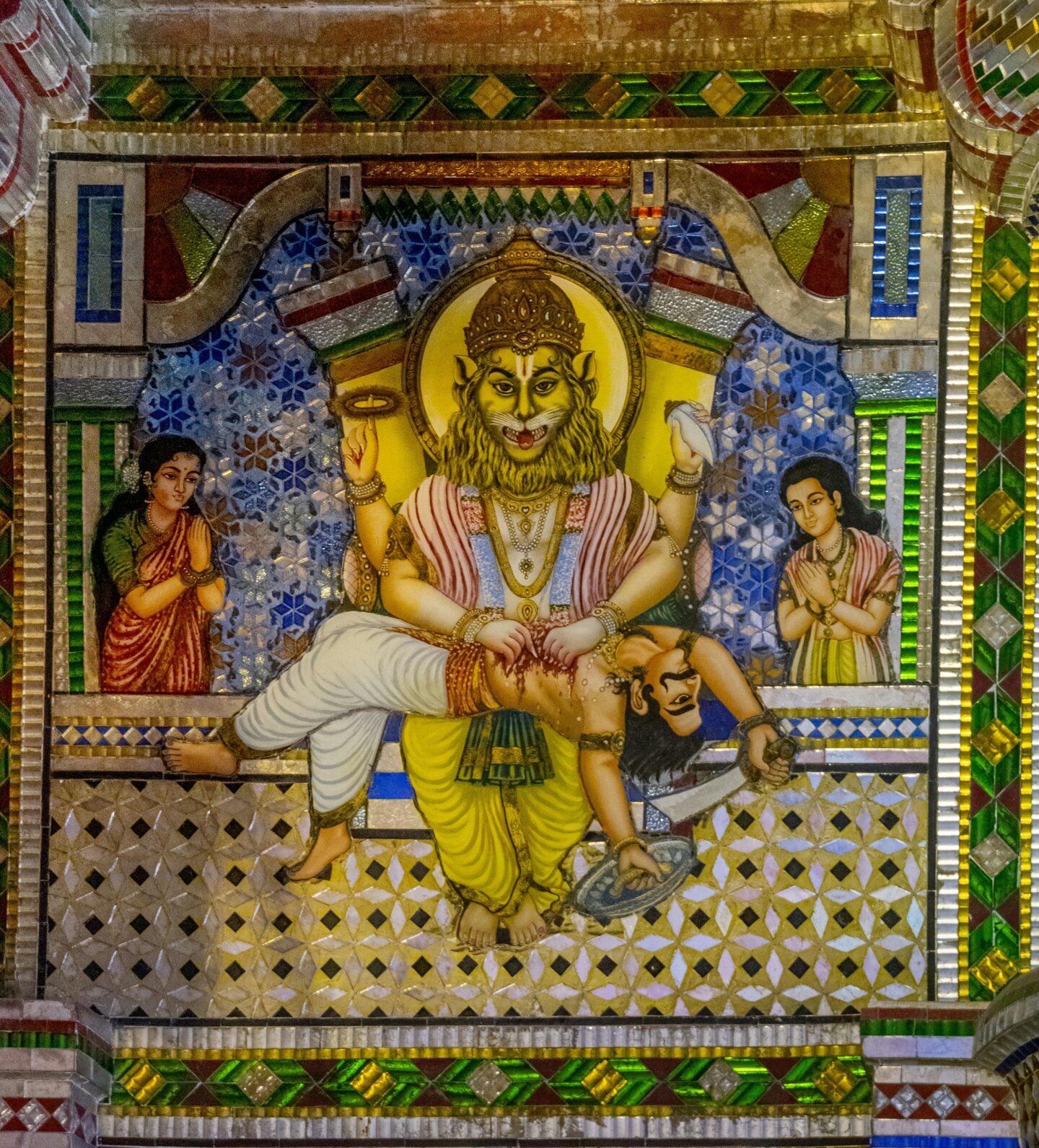
The appearance of Narasimha is not merely a historical event — it reveals essential truths about
the nature of bhakti.
1. Avatāras Reveal Specific Qualities Each manifestation of the Lord emphasizes particular qualities. Kṛṣṇa manifests prema-līlā. Rāma establishes maryādā. Narasimha, above all, reveals bhakta-vātsalya — the Lord’s profound, protective love for His devotee.
2. The Lord’s Anger Is Rooted in Love His wrath is not independent — it arises entirely from His love for His devotees. What appears as fury is, in truth, protection. A devotee looks beyond the anger to the intention behind it.
3. The Lord Is Omnipresent By emerging from a pillar — neither inside nor outside, neither animate nor inanimate — He establishes that He is present everywhere, unconstrained by place or form.
4. Śraddhā Draws the Lord Prahlāda Mahārāja remained steady through repeated danger and persecution. It is this unshaken śraddhā — not argument, not power — that drew the Lord directly to him.
5. The Power of the Holy Name Prahlāda did not rely on his own effort for protection. Remaining absorbed in remembrance of the Lord, he simply trusted — and the Lord intervened. The Name itself is the shelter.
6. From Protection to Service We may begin by approaching the Lord for protection in times of difficulty. But the deeper prayer is this: may He appear within the heart and engage us in His service.
The question is: Are we protecting ourselves, or depending on Him?