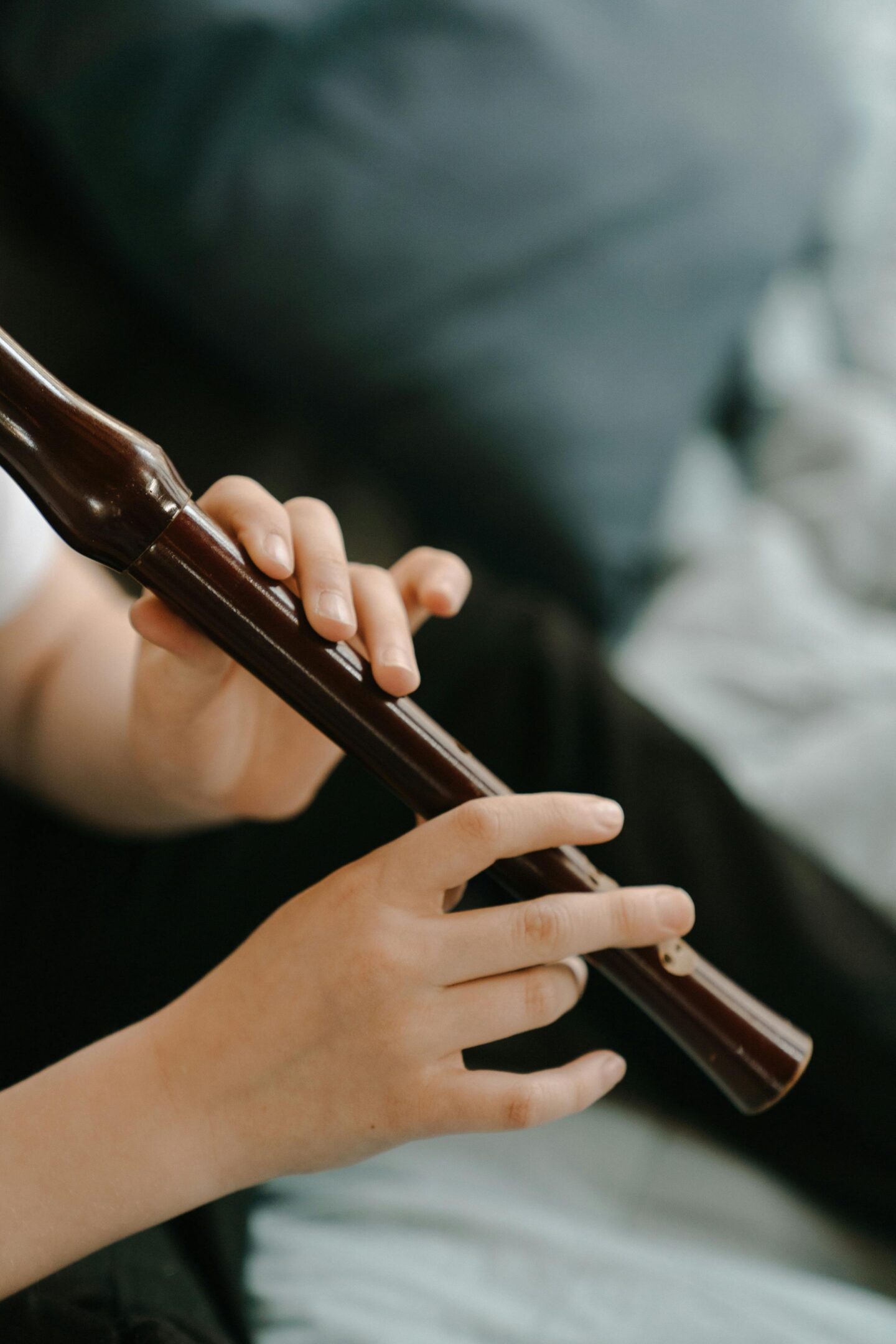
In the devotional tradition, Krishna’s flute (venu) is usually understood as an instrument of attraction. When Krishna plays the flute, the gopis are drawn to Him, the cows gather around Him, and even the demigods become enchanted. This understanding is correct—but incomplete.
The flute does not merely attract.It transforms, overturns, humbles, awakens, and liberates. Rupa Goswami, in a deeply poetic and philosophically rich verse, reveals that the flute embodies not only madhurya (sweetness) but also aishwarya (divine power). In Vrindavan, sweetness appears in the foreground, while immense power operates silently in the background. To say that Vrindavan has only madhurya and no aishwarya is a misunderstanding; both exist together,perfectly harmonized.
The Flute That Reverses the Laws of Nature
The verse begins by describing the astonishing effect of the flute on the clouds.
In Sanskrit, ambu means water, and ambu-bhṛta refers to clouds—the holders of water. Rundhan means “to stop.” When Krishna plays His flute in Vrindavan, moving clouds come to a standstill. They freeze in place, stunned by the sound.
This reveals the first power of the flute: it reverses dharma—the natural function of things.
- Flowing rivers stop.
- Immovable mountains begin to move.
- Cold becomes warm.
- Heat becomes cooling.
What is mobile becomes immobile; what is immobile begins to move. This inversion of natural law exists nowhere else in creation. The flute does what no material force can do—it changes the very nature (svabhāva) of existence.
This power is the greatest form of aishwarya.
The Flute as the Symbol of the Guru
Because the flute has the power to transform nature, the scriptures declare that the flute is the symbol of the Guru.
Just as the flute connects Krishna with the gopis,the Guru connects the soul with Krishna.
Without the flute, the gopis would never know that Krishna is calling them.
Without the Guru, the soul never understands what God wants, why He calls, or how to respond.
Thus, in Vrindavan, the flute is not merely a musical instrument—it is divine guidance made audible.
A Sound That Is Not Material
Ordinary sound cannot stop clouds, halt rivers, or move mountains. Therefore, the sound of Krishna’s flute is not material. It is aprakṛta—fully transcendental.
This sound is:
- Śabda Brahman
- Om
- Gayatri
- The voice of the Vedas themselves
At the beginning of creation, Lord Brahma received initiation not through spoken words, but through the sound of the flute. The Gayatri mantra emerged from that sound, and according to that realization, Brahma created the universe.
Thus, in Vrindavan, the Vedas are not recited—they are played.
The Flute That Destroys Ego
When the flute sound ascends to the heavenly realms, it reaches Tumburu, the greatest Gandharva musician. Even Narada Muni cannot match him.Yet Tumburu becomes completely bewildered.
He cannot identify the raga, the progression, or the structure of the melody. For the first time in his existence, his mastery fails him.
This reveals the second power of the flute: it annihilates ego, even in the most accomplished beings.
What learning cannot dissolve, the flute does effortlessly.
Beyond Knowledge: Breaking Impersonal Absorption
The flute sound then rises to Tapoloka, where the Four Kumaras—Sanaka, Sanandana, Sanatana, and Sanat-kumara—are absorbed in meditation on the formless Absolute.
Their meditation is so deep that even cosmic destruction does not disturb them.
Yet the flute breaks their trance.This reveals a profound truth:Bhakti transcends jñāna.
The flute pulls the soul out of impersonal silence and calls it toward loving service. The Guru does the same—when a devotee becomes attached to mere peace or stillness, the Guru says, “Enough. Now serve.” In the kingdom of bhakti, peace is not the goal—loving engagement is.
The Flute That Astonishes Brahma
When the sound reaches Satyaloka, even Lord Brahma is stunned.
Brahma is The source of the Vedas,The architect of the universe and is Formed entirely of Vedic sound
Yet he realizes that all the Vedas exist within a single note of the flute—the fifth note, Pa, considered the most beautiful and complete tone in music.
In that single vibration exists:All knowledge,All mathematics,All cosmic engineering
This is not theoretical knowledge—it is experienced realization.
Thus, the flute gives what the Guru gives: realized wisdom, not merely information.
The Flute That Breaks Dharma
The sound then descends to Sutala, where Bali Maharaja resides—the embodiment of dharma, patience, and surrender.Yet even Bali becomes restless.
This reveals another power of the flute:
it breaks even righteous restraint when it obstructs devotion.
Just as the gopis abandoned social and moral boundaries upon hearing the flute, the Guru breaks attachments—not only to sinful habits, but even to respectable dharma—if they stand in the way of pure bhakti.
The Flute That Moves the Unmoving
The sound reaches Ananta Shesha, who supports the entire universe. He never moves, for even slight movement would shake creation.
Yet the flute makes him spin in ecstasy.
What is eternally still begins to move.
The lesson is clear:Spiritual life must never stagnate.
The Guru never allows stillness that leads to decay. Constant engagement is life; stopping is death.
Piercing the Universe and Reaching Vaikuntha
Finally, the flute sound pierces the coverings of the universe and enters Vaikuntha. No material sound can do this.
This establishes the final truth:
The Guru alone is the bridge between the material world and the spiritual world. There is no other link.
The Seven Powers of the Flute (and the Guru)
- Transforms nature
- Destroys ego
- Breaks impersonal absorption
- Grants realized knowledge
- Breaks rigid moral boundaries
- Prevents stagnation
- Leads the soul beyond the universe
Why the Gopis Are Jealous of the Flute
The flute always touches Krishna’s lips and constantly drinks His adharāmṛta. The gopis ask:
“What austerities has the flute performed to receive what belongs to us?”
The answer is simple:
- The flute is empty
- The flute has no ego
- The flute exists only for service
Therefore, Krishna never puts it down.
Conclusion
Meditation on Krishna’s flute grants the same result as Vedic chanting, philosophical study, and prolonged austerity—because the flute contains them all.
Gaudiya Vaishnavism teaches a complete path:
- Philosophy and leela together
- Knowledge and rasa together
- Depth without dryness
When one remembers Krishna’s pastimes deeply, all philosophy naturally reveals itself.
This is the secret of the flute.