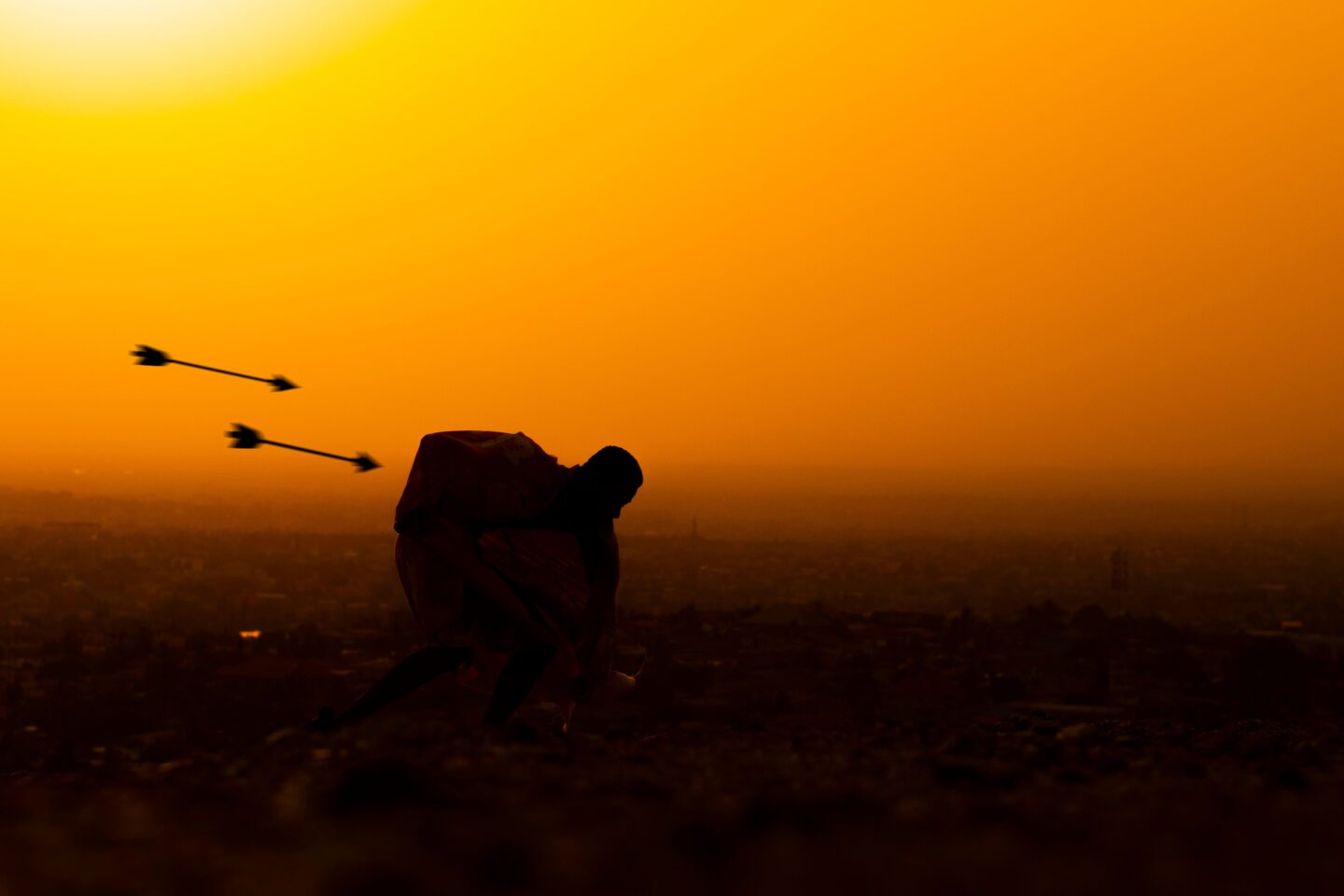
Bhīṣmadeva was lying on a bed of arrows. His body was pierced, he was in unbearable pain, and death was approaching. Yet his mind was completely absorbed in Kṛṣṇa.
His prayers teach us important lessons about bhakti.
1. Nothing Can Stop True Bhakti
Bhīṣmadeva was suffering terribly, but his devotion did not stop. He remembered Kṛṣṇa even in the most painful situation.
This is apratihatā bhakti—devotion that cannot be stopped by any circumstance.
True bhakti does not depend on favourable conditions.
2. Difficult Times Test Our Devotion
Why do we practice bhakti? For money, success, peace or for Kṛṣṇa Himself?
If someone worships Kṛṣṇa for money but loses everything, will he continue his devotion?
Bhīṣmadeva had every reason to turn away from Kṛṣṇa, but he never did.
The real test of bhakti comes when things do not go our way.
3. The Power of Bhakti Is Greater Than We Can Imagine
Meditation requires concentration and a peaceful mind. But look at Bhīṣmadeva! He was on a battlefield, surrounded by pain and death, yet completely absorbed in Kṛṣṇa.
This shows the extraordinary power of bhakti.
Bhakti does not need perfect surroundings to flourish.
4. Bhakti Begins with Surrender
Bhakti means surrendering ourselves to Kṛṣṇa. Without surrender, how can we develop a relationship with Him? And without that relationship, how can we experience love for Him?
It is not enough to know the Lord’s instructions. We must follow them.
Knowing Kṛṣṇa is important, but surrendering to Kṛṣṇa is essential.
5. Humility Attracts the Lord
Although Bhīṣmadeva was such a great devotee, he considered himself insignificant. In his prayers, he glorified Arjuna and showed deep humility before Kṛṣṇa.
The Lord personally came to see him.
The more advanced a devotee becomes, the more humble he becomes.
6. Live Like a Lion; Die Like Bhīṣmadeva
Bhīṣmadeva spent his life serving the Lord. And at the time of death, he was looking at Kṛṣṇa and remembering Him.
Everyone knows how to live, but do we know how to die?
The real preparation for death is to live a life of devotion.
Live for Kṛṣṇa, and learn to leave this world remembering Kṛṣṇa.
7. See Kṛṣṇa in Every Form
Bhīṣmadeva was remembering Kṛṣṇa as Pārtha-sārathi, Arjuna’s charioteer. Yet, while seeing this form, he was also remembering the gopīs and their love for Kṛṣṇa.
The Kṛṣṇa of the battlefield is the same Kṛṣṇa of Vṛndāvana.
The Lord may appear in different roles, but He is always the same Kṛṣṇa.
8. Śrīmad-Bhāgavatam Reveals Bhīṣmadeva’s Love
The Mahābhārata describes Bhīṣmadeva’s wisdom and his instructions on dharma. But Śrīmad-Bhāgavatam brings our attention to his devotion and love for Kṛṣṇa.
Śukadeva Gosvāmī allows us to see Bhīṣmadeva not just as a great warrior, but as a great lover of the Lord.
The special focus of Śrīmad-Bhāgavatam is the love between Krsna and His devotees.
9. Kṛṣṇa Is Controlled by the Love of His Devotees
Kṛṣṇa had promised not to take up weapons in the war. Bhīṣmadeva had promised to make Him break that promise.
And what happened? Kṛṣṇa picked up a chariot wheel and rushed towards Bhīṣmadeva to protect Arjuna!
Why? Because Kṛṣṇa could not tolerate seeing His devotee in danger.
The Supreme Lord, who controls the entire universe, becomes controlled by the love of His devotees.
Kṛṣṇa may be the master of the universe, but He is also the servant of His devotees’ love.
Bhīṣmadeva’s prayers reveal the beauty of prema-bhakti. They also point towards the highest love of the gopīs and Śrīmatī Rādhārāṇī.
Read, Remember ,and try to bring these teachings into your life.
Let circumstances change, but never let your devotion change. Let difficulties come, but never give up Kṛṣṇa.